
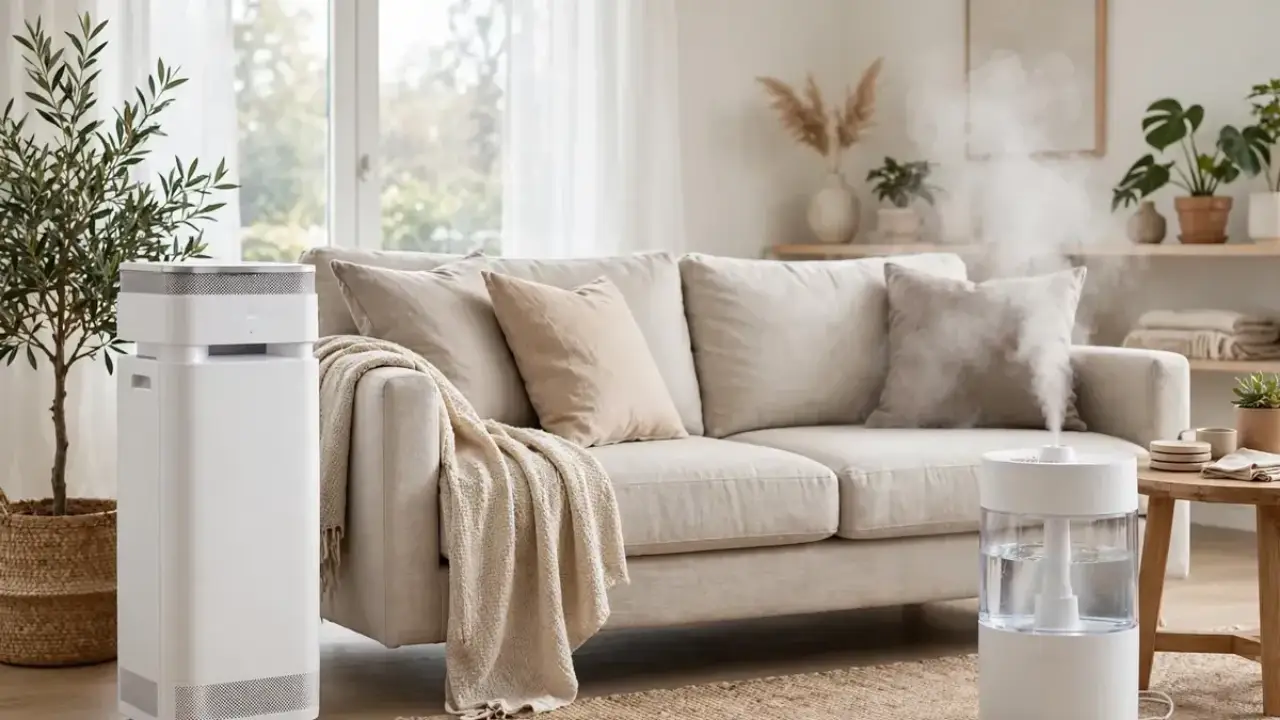
Difference Between an Air Purifier and a Humidifier: Which One Do You Actually Need?
Oct 24, 2026People shop for these two machines as if they were versions of the same thing. They are not. An air purifier cleans the air; a humidifier changes how much water is in it. One removes things from the air, the other adds something to it. Choosing between them is easy once you know which problem you actually have, and many homes, at different times of year, genuinely need both.
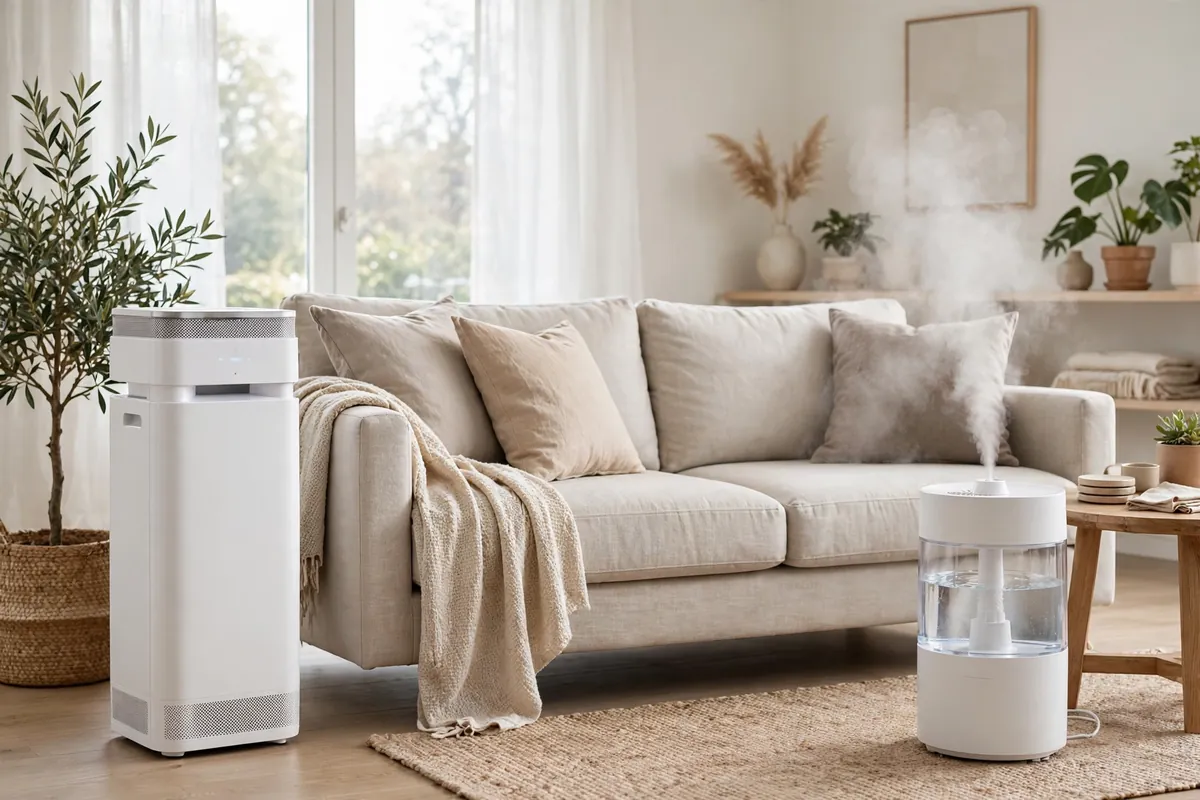
What an Air Purifier Does
An air purifier pulls room air through filters with a fan and traps what should not be floating in it. A true HEPA filter captures 99.97 percent of particles down to 0.3 microns: dust, pollen, pet dander, mold spores, dust mite allergen, and smoke particles. Many models add an activated carbon filter, which adsorbs odors and some gases and VOCs that HEPA cannot catch.
An air purifier is the right tool when your problem is what is in the air: allergies or asthma triggered by particles, dust that settles again hours after cleaning, pet dander, lingering cooking or smoke smells, or a home near a busy road. What it does not do is change humidity at all. Run one for a year and dry air stays exactly as dry.
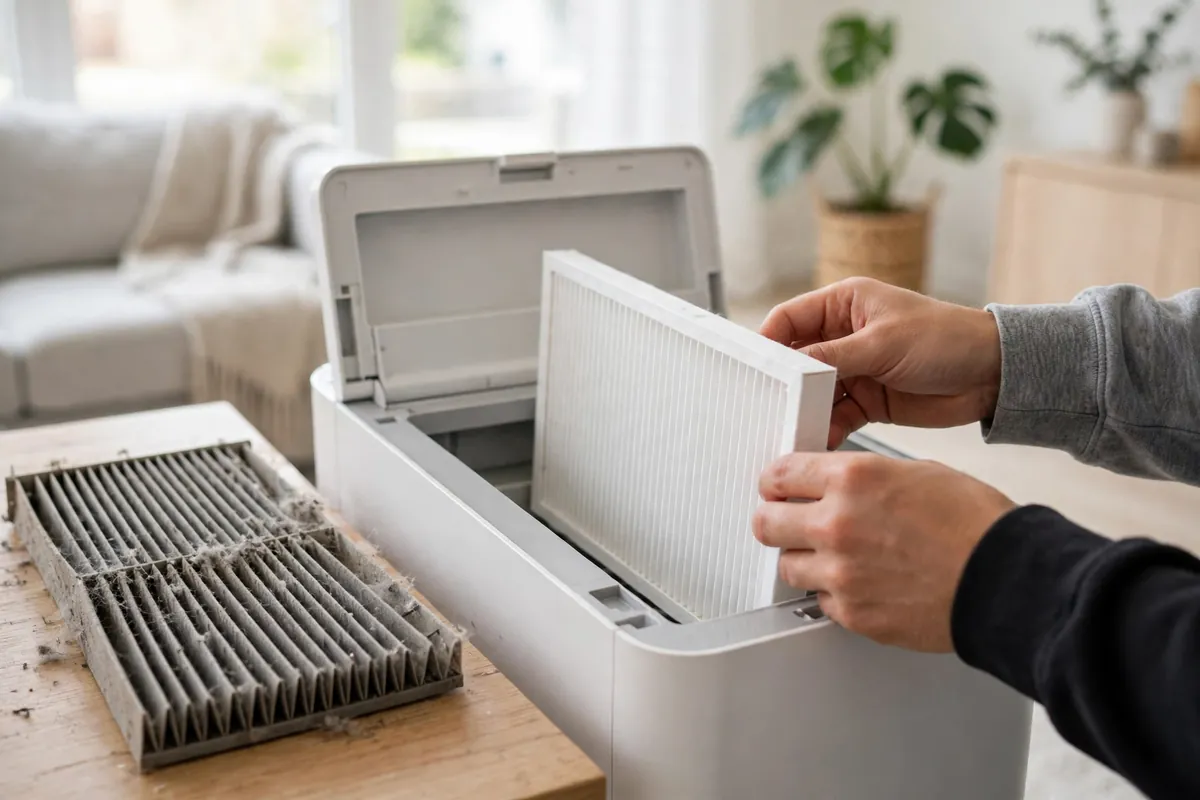
What a Humidifier Does
A humidifier adds moisture to indoor air, raising relative humidity. Evaporative models blow air through a wet wick; ultrasonic models vibrate water into a cool mist. Either way, the job is the opposite of cleaning: nothing is filtered out, water is added in.
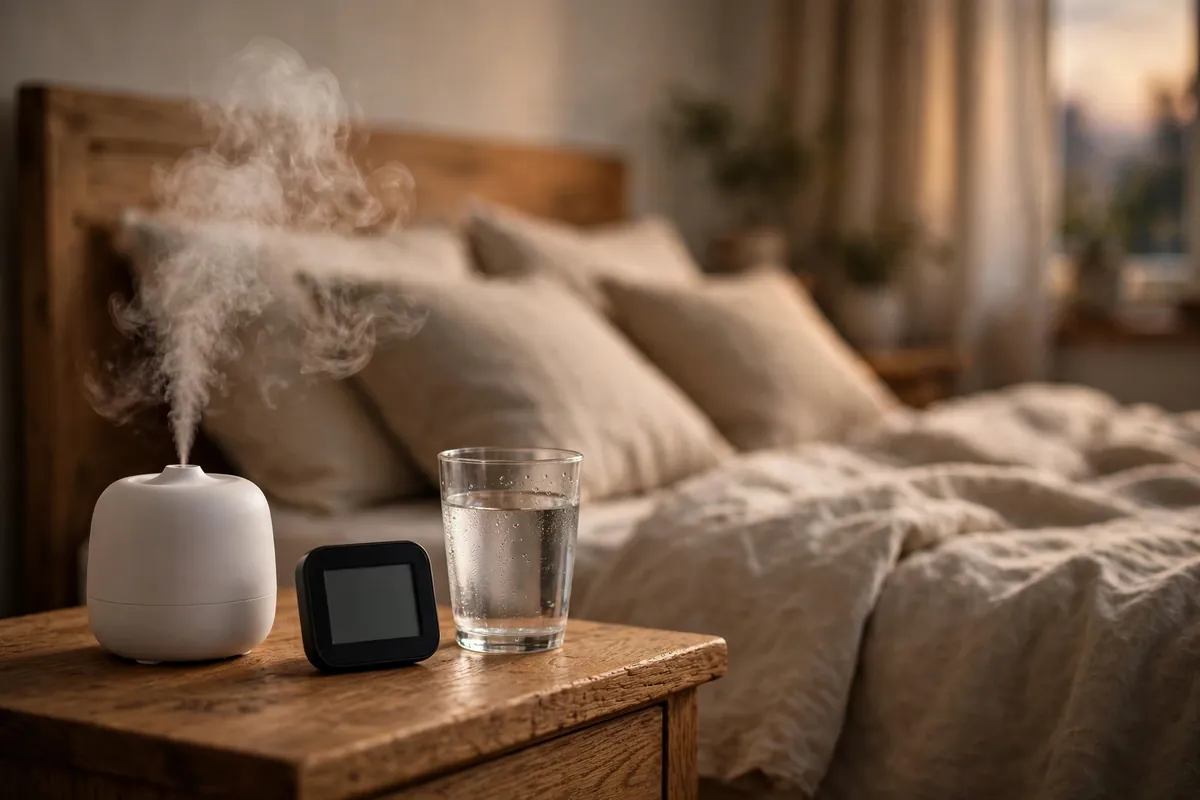
A humidifier is the right tool when your problem is air that is too dry, common in winter when heating systems run for months: dry or cracked skin, chapped lips, irritated sinuses, nosebleeds, a scratchy throat in the morning, static shocks, and even creaking wood floors or furniture. The healthy target for indoor relative humidity is 30 to 50 percent, which a simple hygrometer (about ten dollars) will measure. What a humidifier does not do is clean: it removes no dust, pollen, or allergens, and an uncleaned tank can actually add mold and bacteria to the air.
Air Purifier vs. Humidifier: Side-by-Side Differences
| Feature | Air Purifier | Humidifier |
|---|---|---|
| Main job | Removes particles and some odors from air | Adds moisture to air |
| Changes humidity | No | Yes, raises it |
| Helps with | Allergies, asthma triggers, dust, pollen, dander, smoke | Dry skin, sinus dryness, nosebleeds, static |
| Does not fix | Dry air or low humidity | Dust, pollen, allergens, odors |
| Key technology | HEPA filter, activated carbon | Evaporative wick or ultrasonic mist |
| Maintenance | Replace filters every 6 to 12 months | Refill daily; clean tank weekly to prevent mold and bacteria |
| Risk if misused | Minimal with true HEPA; avoid ozone-generating models | Over-humidifying above 50-60% feeds mold and dust mites |
| Typical cost | $80 to $400+ per room | $30 to $150 per room |
Which One Do You Need? Match the Machine to the Problem
- Sneezing, itchy eyes, and congestion from dust or pollen: air purifier. Your problem is particles, and only filtration removes them.
- Waking with a dry throat, nosebleeds, or cracked skin in winter: humidifier, and confirm with a hygrometer that your air is actually below 30 percent.
- A dusty home and dry winter air: both, which is a very common combination once heating season starts.
- Musty smells, condensation on windows, or visible mold: neither. Your air is too wet, not too dry. Adding a humidifier would make it worse; the fixes are moisture control, possibly a dehumidifier, and testing to find the source.
- A baby's nursery: often both, a purifier for particles and a cool-mist humidifier for congestion, kept scrupulously clean and monitored with a hygrometer.
Can You Use an Air Purifier and a Humidifier Together?
Yes. They do different jobs and do not interfere with each other. Two practical tips: keep some distance between them so the purifier is not pulling in the humidifier's mist directly, and watch the hygrometer. In Atlanta's humid summers, many homes need the purifier year-round and the humidifier only in the heating months; in a damp house, the humidifier may never be needed at all. Combination "purifier and humidifier in one" units exist and save space, but they usually do each job less well than two dedicated machines, and the humidifier side still needs the same weekly cleaning.
The Mistake to Avoid: Guessing Instead of Measuring
Most people buy one of these machines based on a feeling, then conclude it "doesn't work" when the real problem was something else entirely: the dry feeling was dust irritation, or the allergy symptoms were mold from a hidden leak. Before spending on equipment, measure. A hygrometer tells you your humidity in a day. And if symptoms persist, a professional indoor air quality test tells you what is actually in your air, particles, mold spores, gases, so you can fix the cause rather than treating guesses.
Frequently Asked Questions
Does a humidifier clean the air?
No. A humidifier only adds moisture. It filters nothing out, and a dirty humidifier can make air quality worse by dispersing mold or bacteria from its tank.
Does an air purifier add moisture or dry the air?
Neither. A standard air purifier with HEPA and carbon filters has no meaningful effect on humidity in either direction.
Which is better for allergies, a purifier or a humidifier?
An air purifier, because allergies are triggered by particles that filtration removes. Moist air can soothe irritated airways, but a humidifier leaves the allergens themselves in place.
Can a humidifier cause mold?
Yes, indirectly. Running one without monitoring can push humidity past 50 to 60 percent, the range where mold and dust mites flourish, and an uncleaned tank can grow mold itself. Always pair a humidifier with a hygrometer and weekly cleaning.
Not Sure Which Problem Your Home Has?
At Indoor Air Quality Services (IAQ Answers), we test Atlanta homes for particles, humidity problems, mold, and gases, then tell you plainly which fixes will actually help and which machines you do not need. Call (770) 363-2670 to arrange a test before you spend money on the wrong device.
Schedule Your Indoor Air Quality Check Today
Worried about the air inside your home? Our professional indoor air quality inspections help identify hidden pollutants, allergens, and airflow issues so you can breathe cleaner, healthier air with confidence.