Air Purifier for Mold: How Effective Is It for Indoor Air Quality?
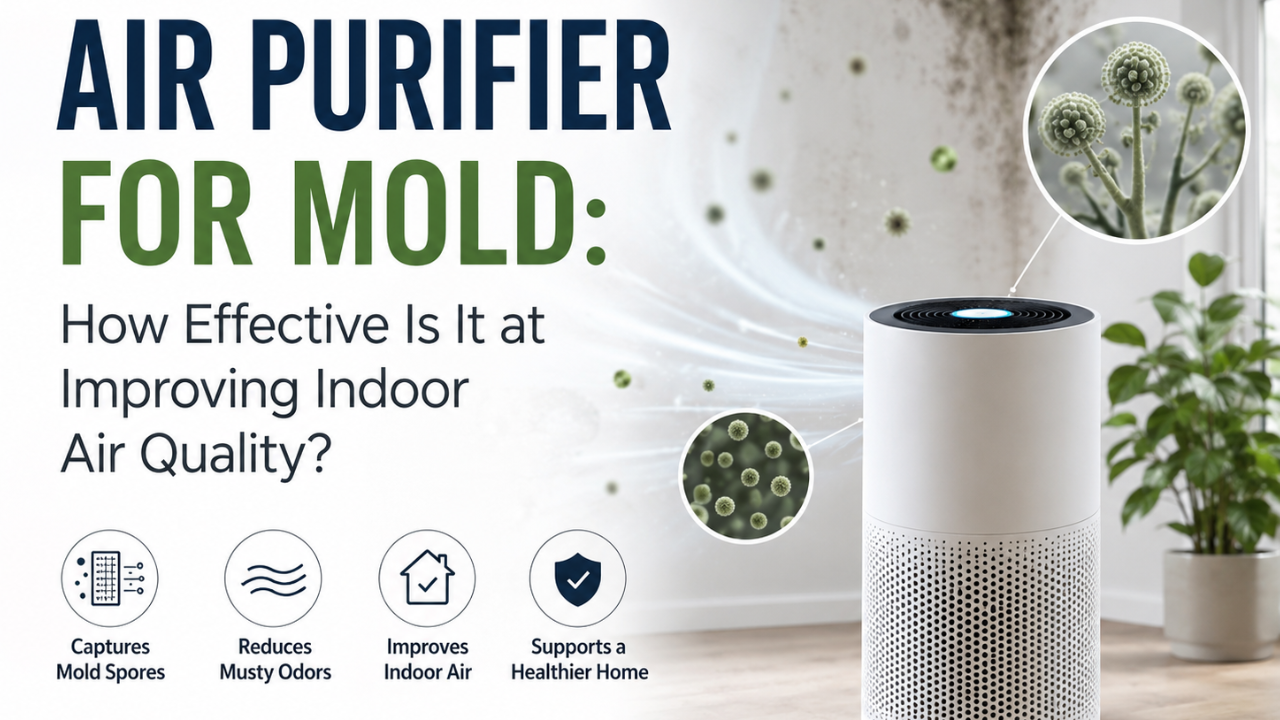
Jun 17, 2026Mold spores are microscopic, airborne, and almost impossible to avoid once they've taken hold indoors. If you've started shopping for an air purifier to deal with a mold problem, you're asking the right question: Will it actually work? Here's what air purifiers can do for mold, what they can't, and how to know if you need something more.
Can an Air Purifier Really Remove Mold From the Air?
Yes, to a point. A quality air purifier with a true HEPA filter can capture mold spores floating in your indoor air, since most spores measure between 2 and 10 microns, and HEPA filters are rated to trap particles as small as 0.3 microns. Running one continuously in an affected room can meaningfully reduce the concentration of airborne spores you're breathing in.
But "reduce spores in the air" is a very different outcome than "solve your mold problem." An air purifier filters what's already airborne. It does nothing to the mold colony growing on your bathroom ceiling, behind your drywall, or in your HVAC ducts. That colony keeps releasing new spores around the clock, so the purifier is constantly playing catch-up rather than addressing the cause.
How Air Purifiers Actually Work Against Mold
Most air purifiers marketed for mold rely on a combination of two technologies:
- HEPA filtration – physically traps spores, dust, and other particulates as air passes through a dense filter
- Activated carbon filtration – absorbs the musty odors and microbial volatile organic compounds (MVOCs) mold releases, which is why moldy rooms often smell stale even when no mold is visible
Some units add UV-C light, which can damage spores' ability to reproduce, though UV exposure time inside most consumer purifiers is too brief to reliably neutralize them. Ozone generators are sometimes marketed for mold odor, but the EPA has flagged ozone as a lung irritant, and we don't recommend them for occupied spaces.
For mold-specific use, look for a purifier with a genuine HEPA filter (not "HEPA-type" or "HEPA-like," which are looser marketing terms) paired with activated carbon, and a CADR (Clean Air Delivery Rate) matched to your room's square footage. An undersized unit running in an oversized room won't cycle the air often enough to make a real difference.
What Air Purifiers Can Do for Indoor Air Quality
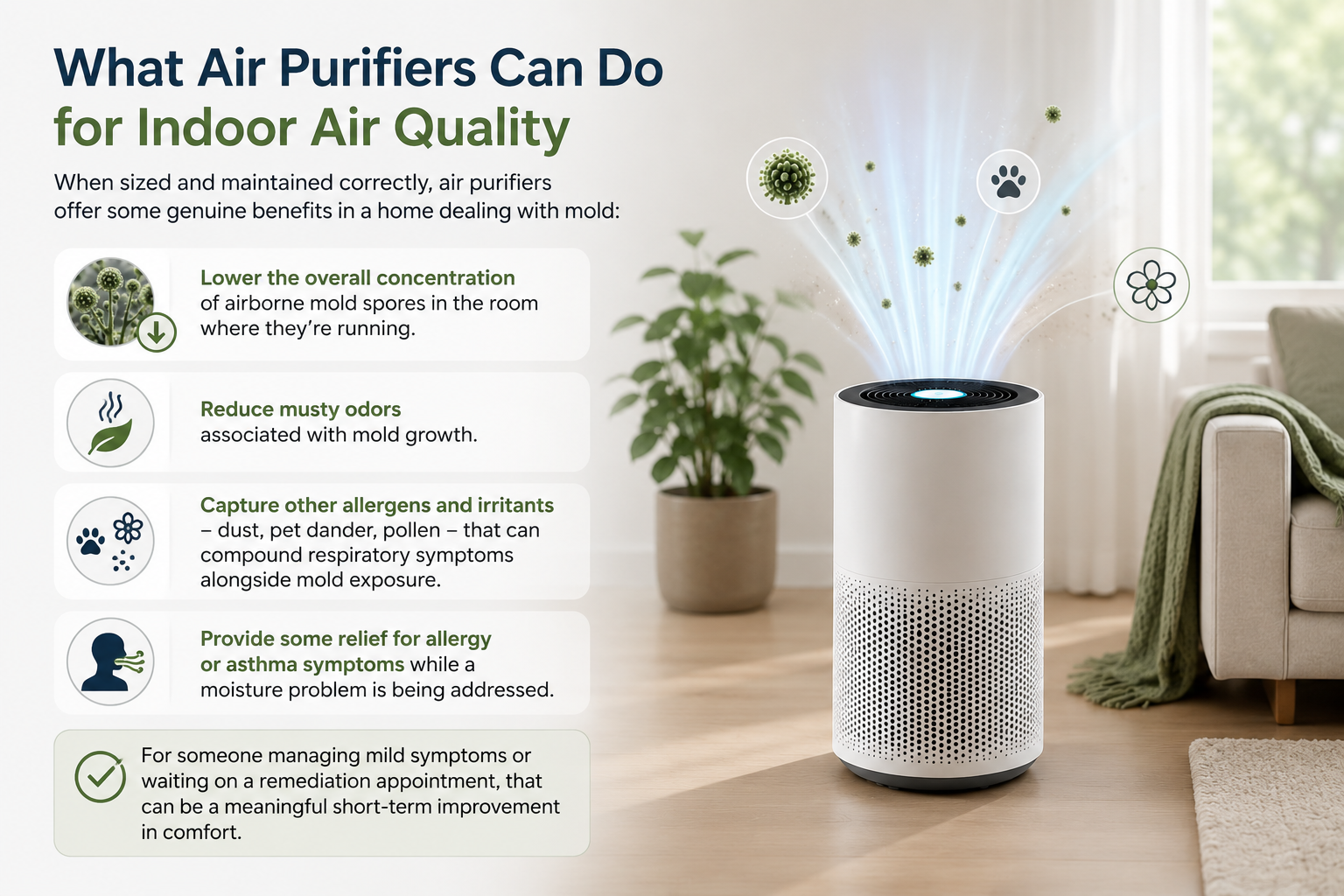
When sized and maintained correctly, air purifiers offer some genuine benefits in a home dealing with mold:
- Lower the overall concentration of airborne mold spores in the room where they're running
- Reduce musty odors associated with mold growth
- Capture other allergens and irritants — dust, pet dander, pollen — that can compound respiratory symptoms alongside mold exposure
- Provide some relief for allergy or asthma symptoms while a moisture problem is being addressed
For someone managing mild symptoms or waiting on a remediation appointment, that can be a meaningful short-term improvement in comfort.
Where Air Purifiers Fall Short
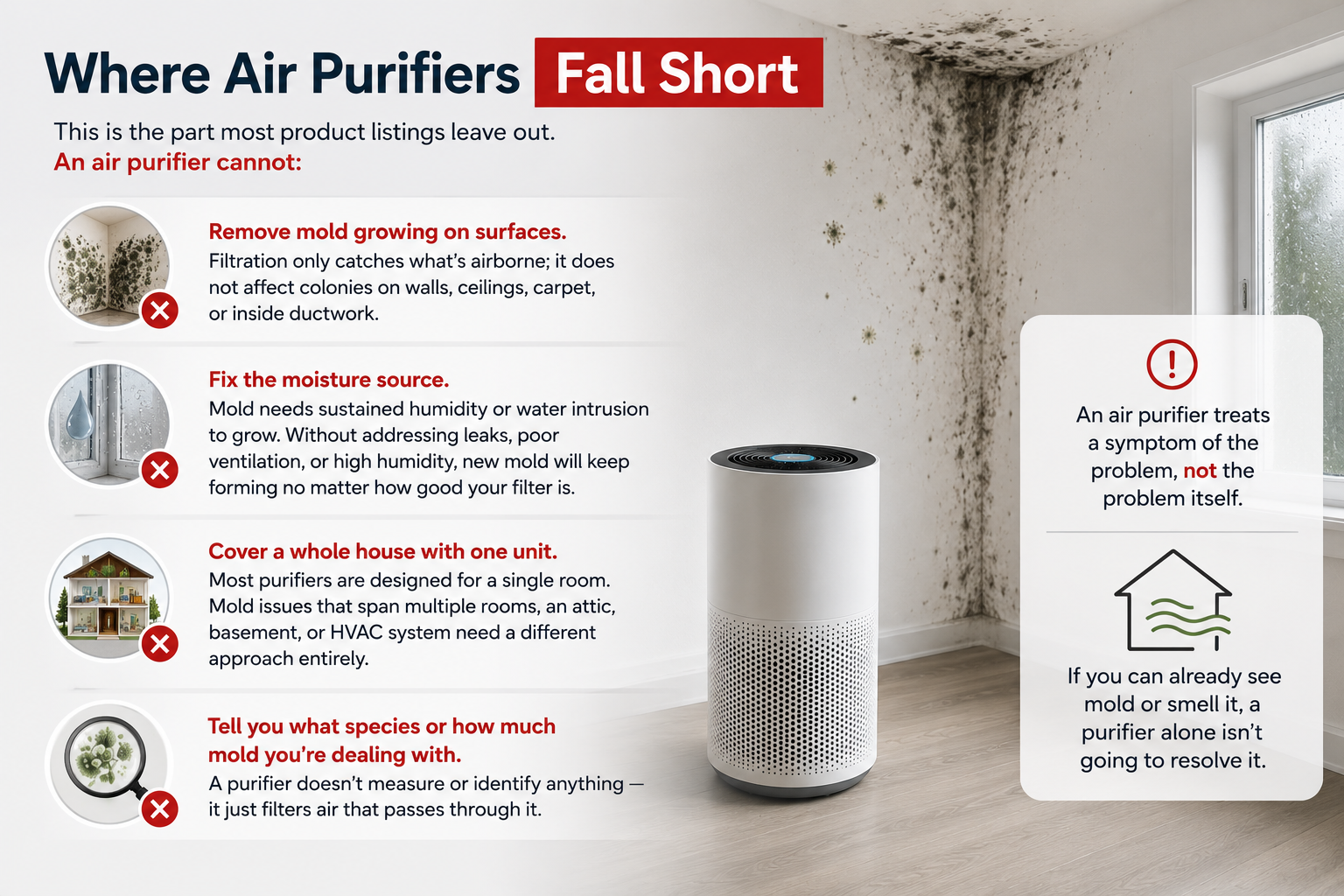
This is the part most product listings leave out. An air purifier cannot:
- Remove mold growing on surfaces. Filtration only catches what's airborne; it does not affect colonies on walls, ceilings, carpet, or inside ductwork.
- Fix the moisture source. Mold needs sustained humidity or water intrusion to grow. Without addressing leaks, poor ventilation, or high humidity, new mold will keep forming no matter how good your filter is.
- Cover a whole house with one unit. Most purifiers are designed for a single room. Mold issues that span multiple rooms, an attic, basement, or HVAC system need a different approach entirely.
- Tell you what species or how much mold you're dealing with. A purifier doesn't measure or identify anything — it just filters air that passes through it.
In other words, an air purifier treats a symptom of the problem, not the problem itself. If you can already see mold or smell it, a purifier alone isn't going to resolve it.
When You Need More Than a Purifier
If you're noticing any of the following, it's time to look past air purifiers and toward proper testing and remediation:
- Visible mold growth on walls, ceilings, or in the basement or attic
- A persistent musty smell that doesn't improve with ventilation
- Recurring allergy or respiratory symptoms that ease up when you leave the house
- A history of water damage, leaks, or flooding
- High indoor humidity readings (above 60%) regularly
In these cases, the right next step isn't a bigger purifier — it's professional mold testing to identify what you're dealing with, how widespread it is, and what's feeding it. From there, remediation addresses the actual colony and source moisture, and an air purifier can serve as a useful supplement during and after that process, not a replacement for it.
Conclusion
Air purifiers are a legitimate tool for improving indoor air quality and can measurably reduce airborne mold spores and odors in a room. What they can't do is remove mold from surfaces, fix moisture problems, or stand in for proper testing and remediation. Think of a purifier as one piece of a larger strategy, not a standalone fix.
If you're dealing with visible mold, persistent odors, or unexplained symptoms in your Atlanta-area home, an air purifier won't tell you what's actually going on behind your walls. A professional indoor air quality inspection will.
Schedule Your Indoor Air Quality Check Today
Worried about the air inside your home? Our professional indoor air quality inspections help identify hidden pollutants, allergens, and airflow issues so you can breathe cleaner, healthier air with confidence.