
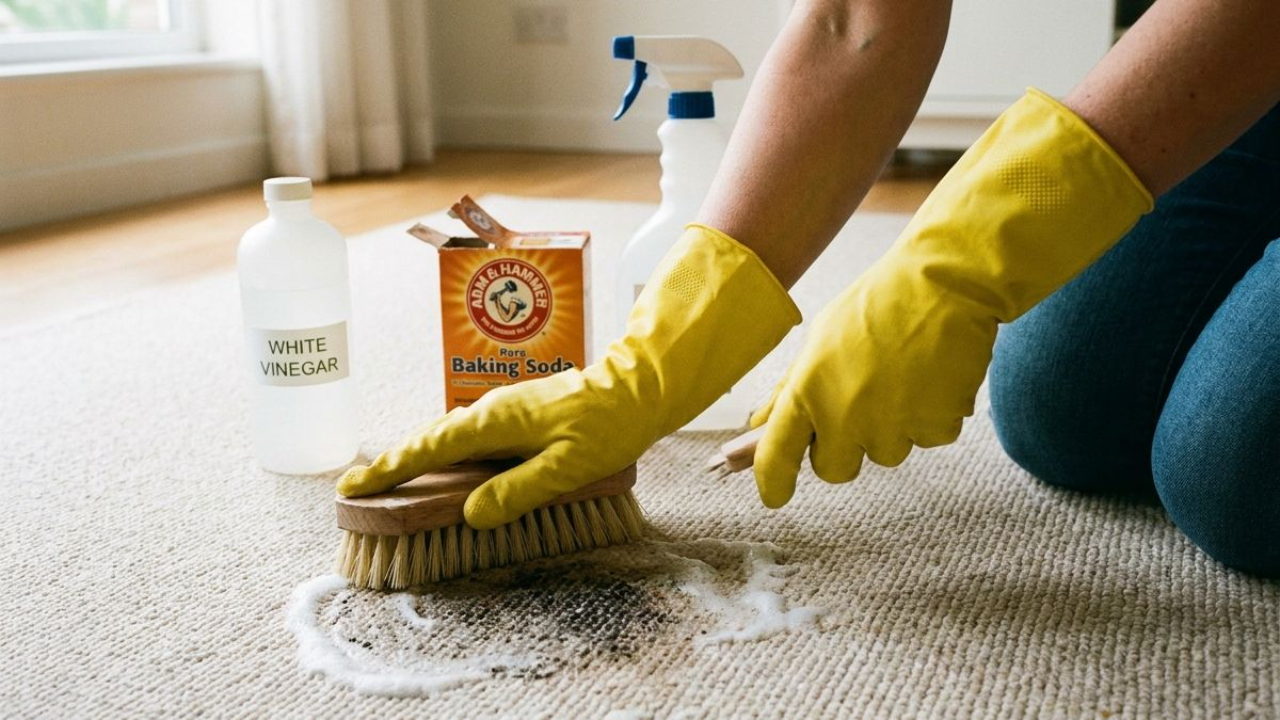
How to Get Mold Out of Carpet: A Step-by-Step Guide
Apr 27, 2026Mold in your carpet is more than just an eyesore it's a serious health hazard. If you've noticed a musty smell, dark spots, or worsening allergy symptoms indoors, your carpet may be harboring hidden mold. The good news? In many cases, you can remove carpet mold yourself with the right tools and technique.
In this guide, we'll walk you through exactly how to get mold out of carpet safely and effectively from identifying the problem to preventing it from coming back.
How to Tell If Your Carpet Has Mold
Before you start cleaning, you need to confirm you're dealing with mold. Here are the most common warning signs:
- Persistent musty or earthy smell coming from the floor
- Visible black, green, or white fuzzy spots on the carpet surface
- Increased allergy symptoms like sneezing, coughing, or itchy eyes when indoors
- Carpet that feels consistently damp or wet to the touch
Even if you can't see the mold, it may be hiding underneath the carpet or in the padding. If the smell is strong but the surface looks clean, check under the carpet near baseboards or in corners.
What Causes Mold to Grow in Carpet?
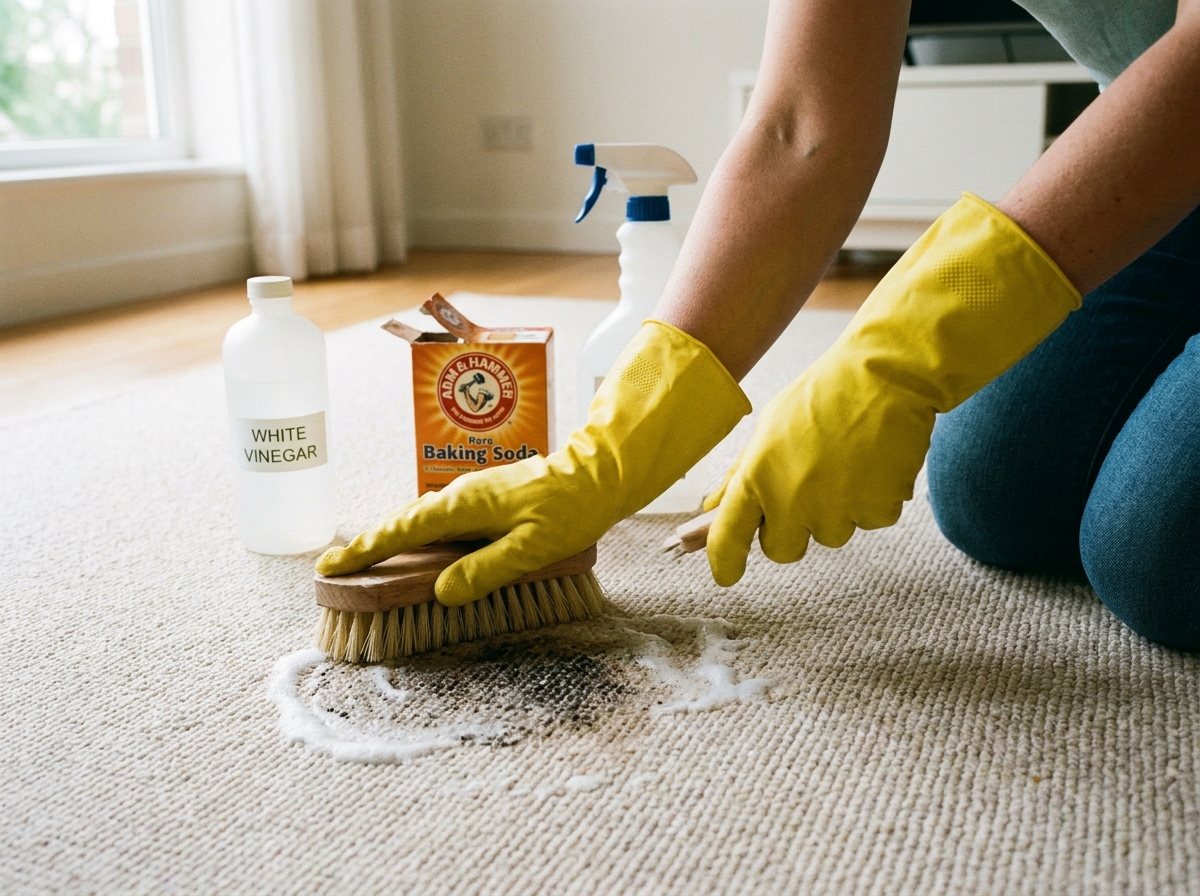
Mold thrives in moist, warm environments. Common causes of carpet mold include:
- Water damage or flooding that wasn't dried quickly enough
- High indoor humidity (above 50%) especially in basements or bathrooms
- Spills left untreated for too long
- Poor ventilation trapping moisture in the room
Tools & Supplies You'll Need
Gather these items before you begin. Most are inexpensive and easy to find:
- Baking soda (natural odor absorber and mild antifungal)
- White vinegar (kills up to 82% of mold species)
- Hydrogen peroxide (3% solution)
- Stiff scrub brush
- Rubber gloves and an N95 mask
- Fan or dehumidifier
- HEPA filter vacuum cleaner
Step-by-Step Guide to Getting Mold Out of Carpet
Follow these steps carefully for safe and effective mold removal.
Step 1: Protect Yourself First
Before touching anything, put on your rubber gloves and N95 mask. Mold spores can become airborne during cleaning and cause respiratory irritation. Open windows and doors to ventilate the room as much as possible.
Step 2: Dry the Affected Area
If the carpet is still wet, dry it first. Point a fan directly at the moldy area or use a dehumidifier. You can also use sunlight if possible move a rug outside on a dry, sunny day. Mold cannot be properly removed from a wet surface.
Step 3: Scrub Loose Mold Spores
Using your stiff brush, gently scrub the moldy area to loosen surface spores. Do this carefully to avoid spreading them further. Immediately vacuum the loosened spores with a HEPA filter vacuum.
Step 4: Apply Baking Soda
Generously sprinkle baking soda over the affected area. Let it sit for at least 1 hour (or overnight for stubborn mold). Baking soda draws out moisture and neutralizes the musty odor.
Step 5: Spray White Vinegar or Hydrogen Peroxide
Fill a spray bottle with undiluted white vinegar or a 3% hydrogen peroxide solution. Spray it evenly over the moldy area and let it sit for 10–15 minutes. Note: Do not mix vinegar and hydrogen peroxide together use one or the other.
Step 6: Scrub and Blot Don't Soak
Scrub the area again with your brush, then blot (don't rub) with a clean cloth. Soaking the carpet with too much liquid can make the problem worse by introducing more moisture.
Step 7: Dry Thoroughly
This step is critical. Run a fan or dehumidifier over the area for several hours until the carpet is completely dry. Any remaining moisture can cause mold to regrow within 24–48 hours.
Step 8: Vacuum Again with a HEPA Filter
Once fully dry, vacuum the area thoroughly with a HEPA filter vacuum to remove any remaining mold spores, baking soda residue, and dead mold particles.
When Should You Replace or Professionally Clean the Carpet?
DIY removal works well for small, surface-level mold. However, you should call a professional mold remediation service or replace the carpet entirely if:
- The moldy area is larger than 10 square feet
- The mold has penetrated through to the carpet padding or subfloor
- You suspect it is black mold (Stachybotrys chartarum)
- DIY methods have been tried but the mold and smell keep returning
Black mold is particularly dangerous and should never be handled without professional protective equipment. If you're not sure what type of mold you're dealing with, it's always safer to call in an expert.
How to Prevent Mold from Growing in Carpet
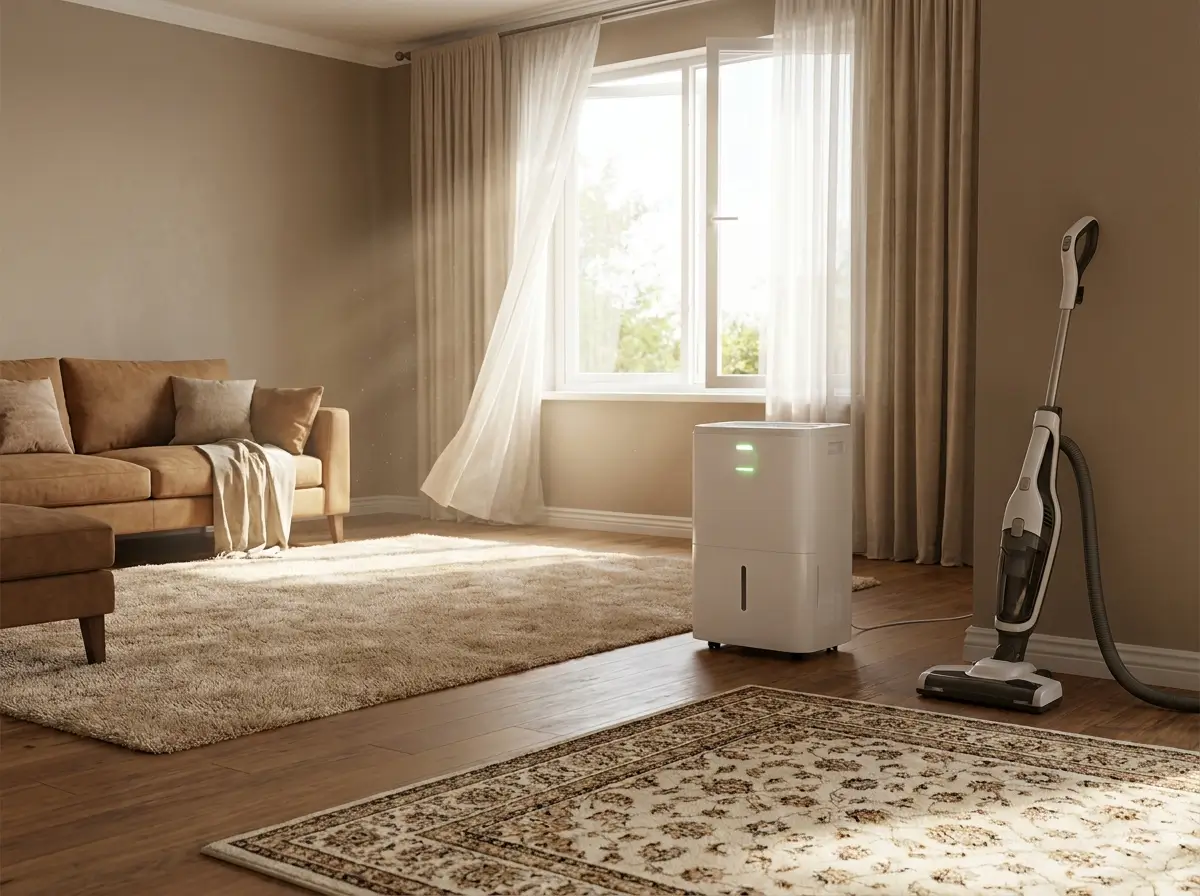
The best way to deal with carpet mold is to stop it from developing in the first place. Here are the most effective prevention tips:
- Keep indoor humidity below 50% use a dehumidifier in damp areas like basements
- Clean up spills immediately and dry the area completely
- Vacuum regularly to reduce dust and organic material that feeds mold
- Use mold-resistant carpet padding, especially in moisture-prone rooms
- Ensure good air circulation by opening windows or using exhaust fans
Final Thoughts
Mold in your carpet is a problem you should never ignore. Left untreated, it spreads quickly, damages your flooring, and poses real risks to your family's health. The good news is that with the right approach baking soda, vinegar, proper drying, and a HEPA vacuum most carpet mold can be tackled at home.
Act fast, stay protected, and make sure the area is completely dry when you're done. If the mold keeps coming back or covers a large area, don't hesitate to call a professional.
For more indoor air quality tips and home health guides, visit iaqanswers.com
Schedule Your Indoor Air Quality Check Today
Worried about the air inside your home? Our professional indoor air quality inspections help identify hidden pollutants, allergens, and airflow issues so you can breathe cleaner, healthier air with confidence.