What Is a HEPA Air Filter? Meaning & How It Works
Jul 26, 2026What Is a HEPA Air Filter?
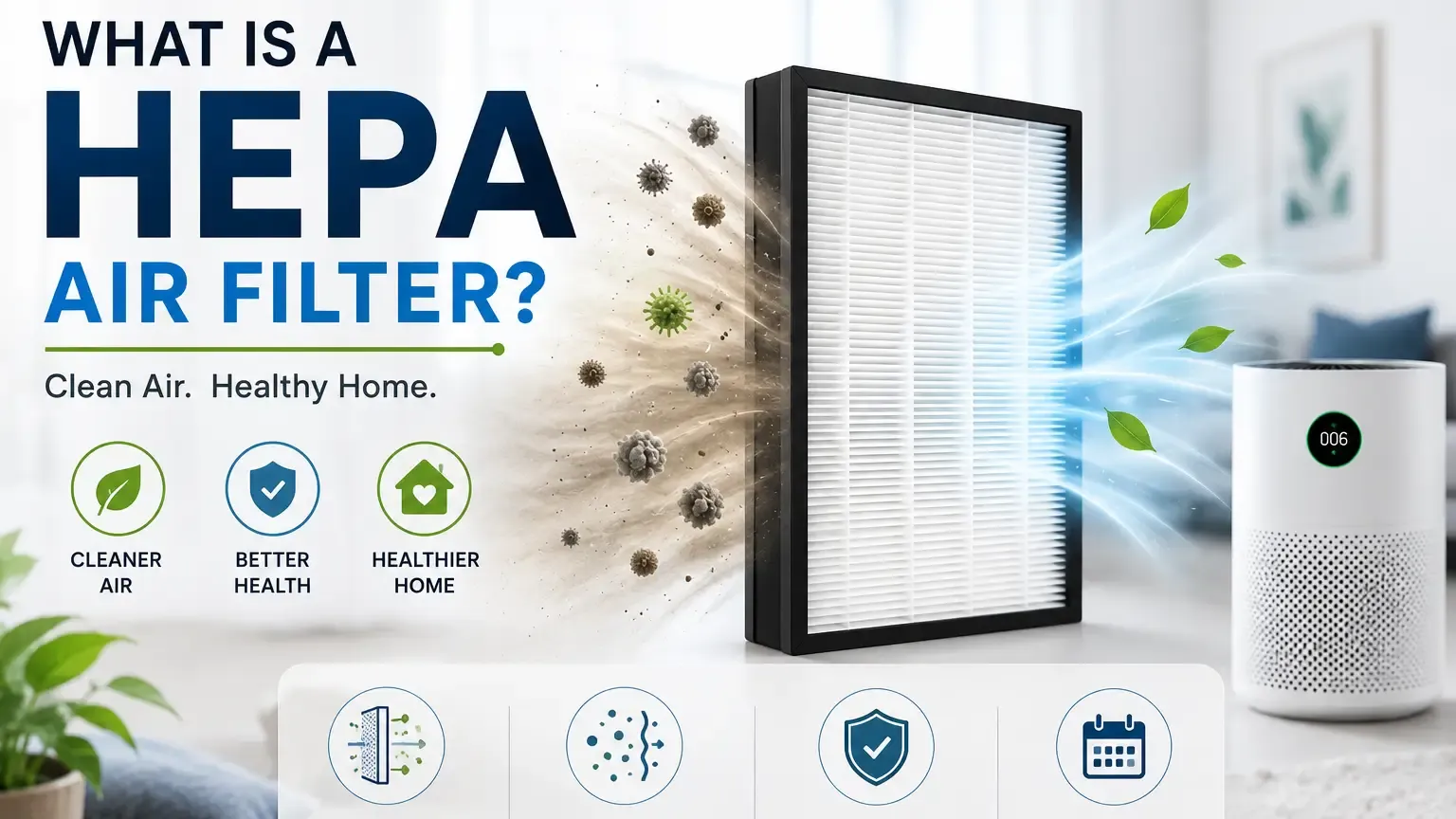
If you have ever shopped for an air purifier or vacuum cleaner, you have probably seen the word HEPA printed on the box. But what is a HEPA air filter, really, and why does it matter so much for the air you breathe at home?
In simple terms, a HEPA air filter is a type of pleated filter designed to trap extremely small particles from the air. HEPA stands for High Efficiency Particulate Air. To earn this label, a filter must capture at least 99.97% of particles that are 0.3 microns in size, according to the U.S. Environmental Protection Agency. That size is known as the hardest particle for any filter to catch, so anything larger or smaller gets trapped even more easily.
A HEPA air filter is made from a dense mat of fine glass or synthetic fibers. These fibers are arranged randomly and packed tightly together, creating thousands of tiny gaps that air must pass through. As dirty air moves through the filter, particles like dust, pollen, and pet dander get stuck in the fibers, while clean air continues on. This is why understanding how to improve indoor air quality often starts with knowing what kind of filter is doing the work.
How Does a HEPA Filter Work?
A HEPA air filter does not work like a simple screen that blocks particles by size alone. Instead, it uses three main methods to trap particles as they pass through:
- Diffusion: Very tiny particles move around in a random, zig-zag pattern. This movement makes them bump into the filter fibers and get stuck.
- Interception: Medium-sized particles follow the airflow, but if they pass close enough to a fiber, they stick to it.
- Impaction: Larger, heavier particles cannot easily change direction. They slam straight into a fiber and get trapped there.
Together, these three actions allow a HEPA air filter to catch a wide range of particle sizes, not just one specific type.
What Does a HEPA Air Filter Remove From the Air?
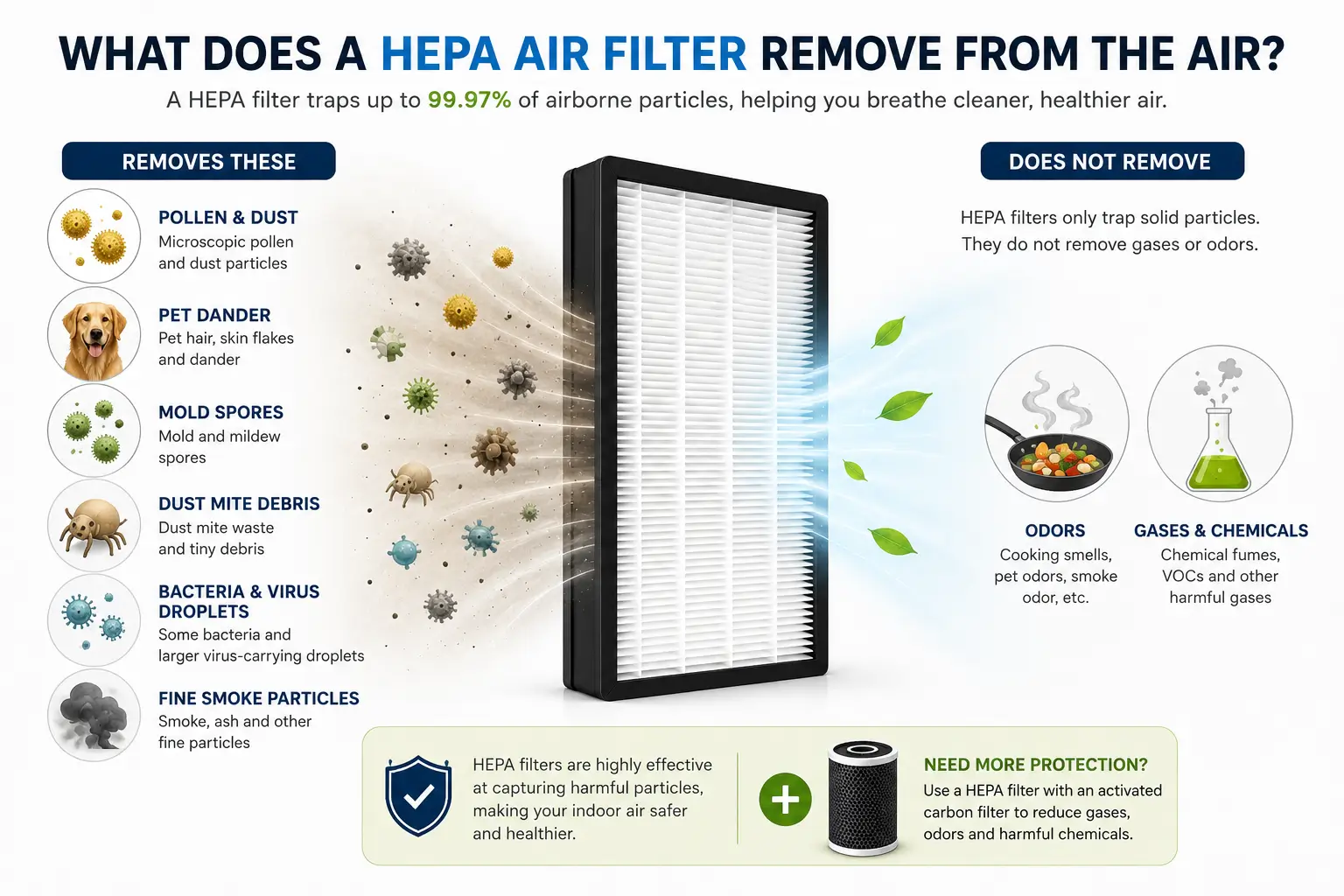
A properly certified HEPA air filter can remove many common indoor pollutants, including:
- Pollen and dust
- Pet dander
- Mold spores
- Dust mite debris
- Some bacteria and larger virus-carrying droplets
- Fine smoke particles
It is worth knowing that a HEPA air filter only traps solid particles. It does not remove gases or odors, such as cooking smells or chemical fumes. For that, you need a separate activated carbon filter working alongside it.
HEPA Air Filter vs. HEPA Air Purifier
Many people search for a HEPA air purifier when they actually mean a HEPA air filter, and the two terms get mixed up often. A HEPA filter is the actual filtration material inside a device. A HEPA air purifier is the full machine, which usually includes a fan, a pre-filter, the HEPA filter itself, and sometimes a carbon filter too. In short, the filter is one part, and the purifier is the whole system built around it.
True HEPA vs. HEPA-Type Filters
Not every filter labeled HEPA actually meets the real standard. Terms like HEPA-type or HEPA-like are marketing phrases, not certified ratings. A true HEPA air filter must be tested and proven to capture 99.97% of particles at 0.3 microns. A HEPA-type filter, on the other hand, might only capture 85% to 90% of particles, letting far more pollutants through. When shopping, look for the words True HEPA or a specific class like H13, since these confirm the filter has actually been tested.
Do You Need a HEPA Air Filter?
A HEPA air filter is especially helpful if anyone in your home deals with allergies, asthma, or sensitivity to dust, smoke, or pet dander. It is also useful in homes near wildfire smoke, busy roads, or areas with high pollen counts. If you are unsure how polluted your indoor air actually is, getting a proper indoor air quality inspection can help you understand exactly what you are dealing with before choosing a filter or purifier.
How Long Does a HEPA Filter Last?
Most HEPA air filters need replacing every six to twelve months, though this depends on how often the device runs and how polluted your indoor air is. A clogged filter loses effectiveness and can restrict airflow, so regular replacement matters just as much as choosing the right filter in the first place.
Final Thoughts
So, what is a HEPA air filter in simple terms? It is a highly tested filter that traps 99.97% of tiny airborne particles, using a mix of diffusion, interception, and impaction to clean the air you breathe. Whether you are buying a new air purifier or trying to reduce allergens at home, understanding this simple filtration standard helps you make a smarter, healthier choice for your indoor air.
Schedule Your Indoor Air Quality Check Today
Worried about the air inside your home? Our professional indoor air quality inspections help identify hidden pollutants, allergens, and airflow issues so you can breathe cleaner, healthier air with confidence.