

Do Dust Mites Bite Humans? The Truth About "Dust Mite Bites"
Oct 23, 2026Short answer: no. Dust mites do not bite humans. They do not sting, burrow into skin, suck blood, or live on your body. Yet "dust mite bites" is one of the most searched phrases in home health, because millions of people wake up with itchy red marks and no other explanation. So if dust mites are not biting you, what is actually happening to your skin? This post explains the real cause, how to tell a dust mite reaction from genuine bites, and how to reduce dust mites where they actually live.

What Dust Mites Actually Do
House dust mites (Dermatophagoides pteronyssinus and Dermatophagoides farinae) are microscopic eight-legged relatives of spiders, about 0.25 to 0.3 millimeters long, far too small to see without a microscope. They live in mattresses, pillows, bedding, carpets, and upholstered furniture, and they feed on the dead skin cells you shed every day, not on you.
They also cannot drink water. Dust mites absorb moisture directly from the air, which is why they thrive when indoor relative humidity stays above about 50 percent and struggle in dry homes. A single gram of dust can hold thousands of them, and an older mattress can hold millions. The mites themselves are harmless housemates. The problem is what they leave behind.
So Why Do People Think They Have Dust Mite Bites?
The culprit is an allergic reaction, not a bite. Proteins in dust mite droppings and in fragments of dead mites are powerful allergens. When a sensitive person inhales them or their skin rests against contaminated bedding for hours, the immune system releases histamine, producing inflammation that looks and feels like insect bites:
- Red, itchy patches or small raised bumps, often where skin touches the bed: arms, neck, face, and torso
- Hives or an eczema flare that is worst in the morning
- Itching that builds through the night rather than appearing as one sudden bite
Alongside the skin reaction, dust mite allergy usually brings respiratory symptoms that real bites never cause: sneezing, a runny or blocked nose, itchy watery eyes, coughing, and, in people with asthma, wheezing or chest tightness at night. If your "bites" come with morning congestion and sneezing fits when you make the bed, allergy is far more likely than insects.
Dust Mite Reaction vs. Bed Bug Bites
The most common real biter hiding in bedrooms is the bed bug, and the two problems get confused constantly. Here is how they differ:
| Dust mite allergy reaction | Bed bug bites | |
|---|---|---|
| What causes it | Allergic reaction to mite droppings and fragments | An insect feeding on your blood |
| What it looks like | Diffuse red, itchy patches or hives, no center mark | Distinct raised bites, often with a darker center point |
| Pattern | Spread over skin that contacts bedding | Often in lines or clusters ("breakfast, lunch, and dinner") |
| Other symptoms | Sneezing, congestion, itchy eyes, worse asthma | Usually skin only |
| Evidence in the room | None visible; mites are microscopic | Live bugs, shed skins, rusty spots on mattress seams, blood spots on sheets |
| Who is affected | Only people allergic to dust mites | Everyone the bugs can feed on |
Other real biters to rule out include fleas (usually around the ankles, especially with pets), mosquitoes, and scabies mites, which are a different mite entirely: scabies do burrow into skin and cause intense itching, especially between the fingers and around the wrists and waist, and they need medical treatment. If itching is severe, spreading, or affects several household members at once, see a doctor or dermatologist rather than guessing.
How to Reduce Dust Mites in Your Home
You cannot eliminate dust mites completely, but you can cut their numbers and the allergens they produce:
- Encase the bed. Fit the mattress, box spring, and pillows with allergen-proof encasements. This is the single most effective step, because the bed is where mites concentrate and where you spend eight hours breathing inches from them.
- Wash bedding hot, weekly. Wash sheets, pillowcases, and blankets in water at least 130°F (54°C) to kill mites, and tumble dry on hot.
- Keep humidity below 50 percent. Run a dehumidifier or air conditioning to hold indoor relative humidity between 30 and 50 percent. Below that range, mites dehydrate and populations collapse.
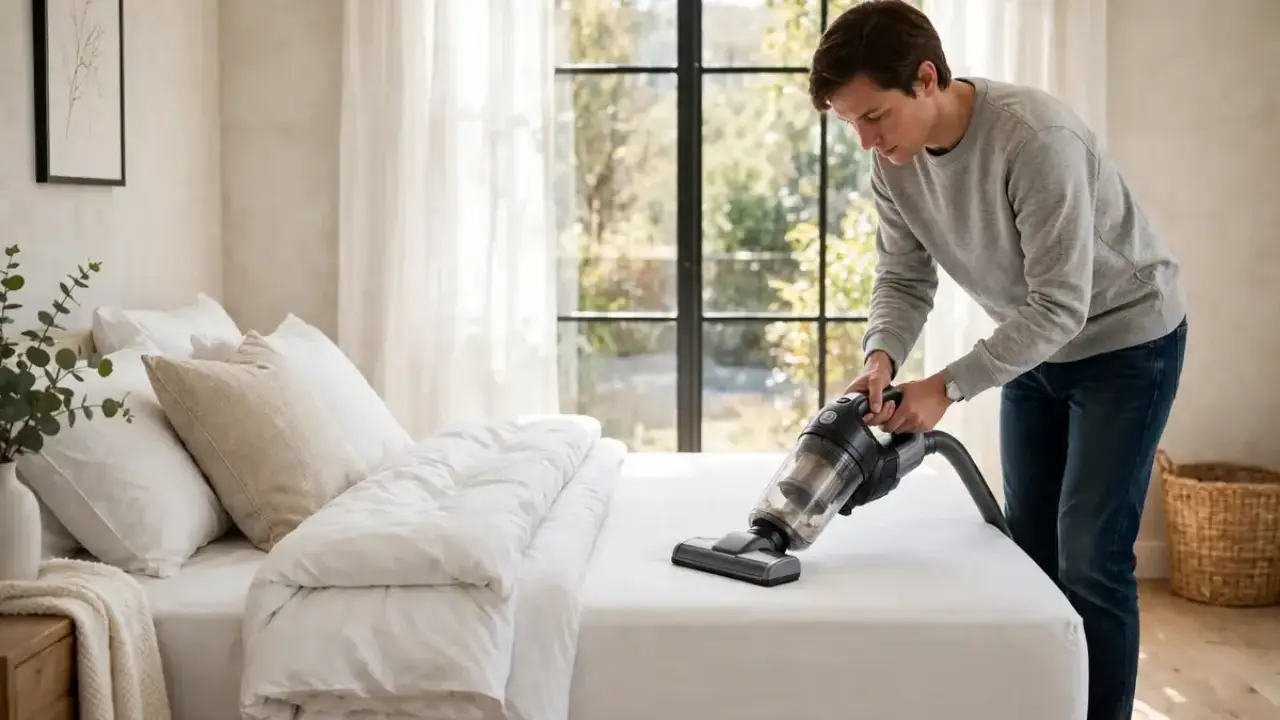
- Vacuum with a HEPA filter. Vacuum mattresses, carpets, and upholstery weekly. Ordinary vacuums can blow allergen particles back into the air.
- Reduce bedroom clutter and fabric. Fewer carpets, heavy curtains, and soft toys in the bedroom means fewer mite habitats. Wash or freeze soft toys regularly.
- Test if symptoms persist. If you have done the basics and still wake up congested and itchy, professional indoor air and dust sampling can measure the allergen load in your home and confirm whether dust mites, mold, or something else is driving your symptoms.

Frequently Asked Questions
Can dust mites live on your body or in your hair?
No. Dust mites live in bedding, carpets, and furniture and feed on shed skin there. They do not live on people. (Demodex mites, a completely different species, live in hair follicles and are normally harmless.)
Are dust mites dangerous?
They do not spread disease and do not bite, but their allergens are a major trigger for allergy and asthma symptoms, especially in children. Not poisonous, but a genuine health burden for sensitive people.
Can you see dust mites?
Not with the naked eye. At about a quarter of a millimeter long, they need a microscope. Anything you can see crawling in your bed is something else, most likely a bed bug, carpet beetle, or flea.
How do I know if my symptoms are dust mite allergy?
The pattern is the clue: symptoms worst in bed and first thing in the morning, improving away from home, plus sneezing and congestion alongside itchy skin. An allergist can confirm it with a skin-prick or blood test.
Breathe Easier in Your Own Bedroom
If your home is making you itch, sneeze, or wheeze, guessing at the cause wastes months. At Indoor Air Quality Services (IAQ Answers), we test Atlanta homes for dust mite allergen, mold, and other indoor triggers, and tell you plainly what we find and what to do about it. Call (770) 363-2670 to arrange testing and get a clear answer.
Schedule Your Indoor Air Quality Check Today
Worried about the air inside your home? Our professional indoor air quality inspections help identify hidden pollutants, allergens, and airflow issues so you can breathe cleaner, healthier air with confidence.