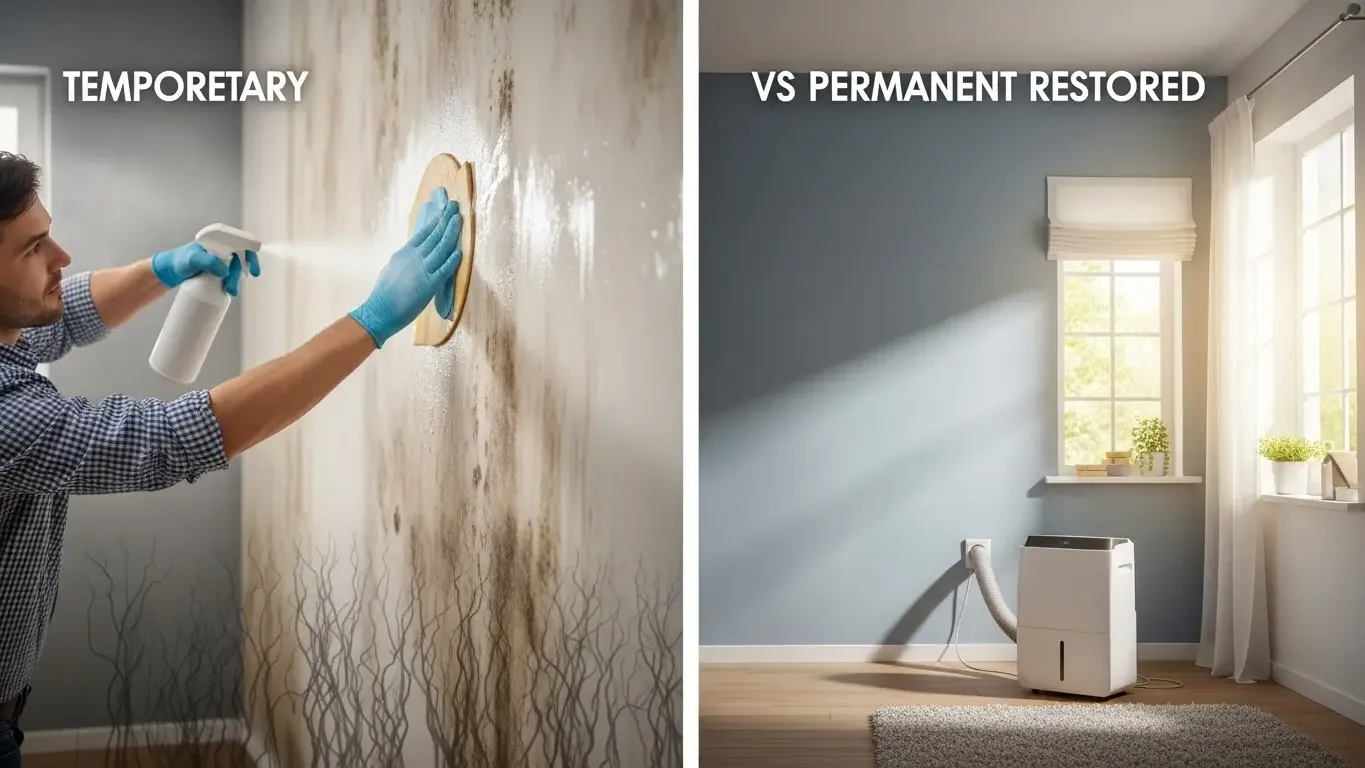
What Kills Mold Permanently vs. Temporarily
Mar 24, 2026You scrubbed it. You sprayed it. You thought it was gone and then it came back.
If this sounds familiar, you're not alone. Millions of homeowners deal with mold that keeps returning no matter what they do. The reason? Most cleaning methods only kill mold on the surface. The roots stay alive, and within days or weeks, the mold is back.
This guide breaks down exactly what kills mold permanently vs. temporarily so you stop wasting time and money on fixes that don't last.
Why Mold Keeps Coming Back
Before jumping to solutions, you need to understand why mold is so stubborn.
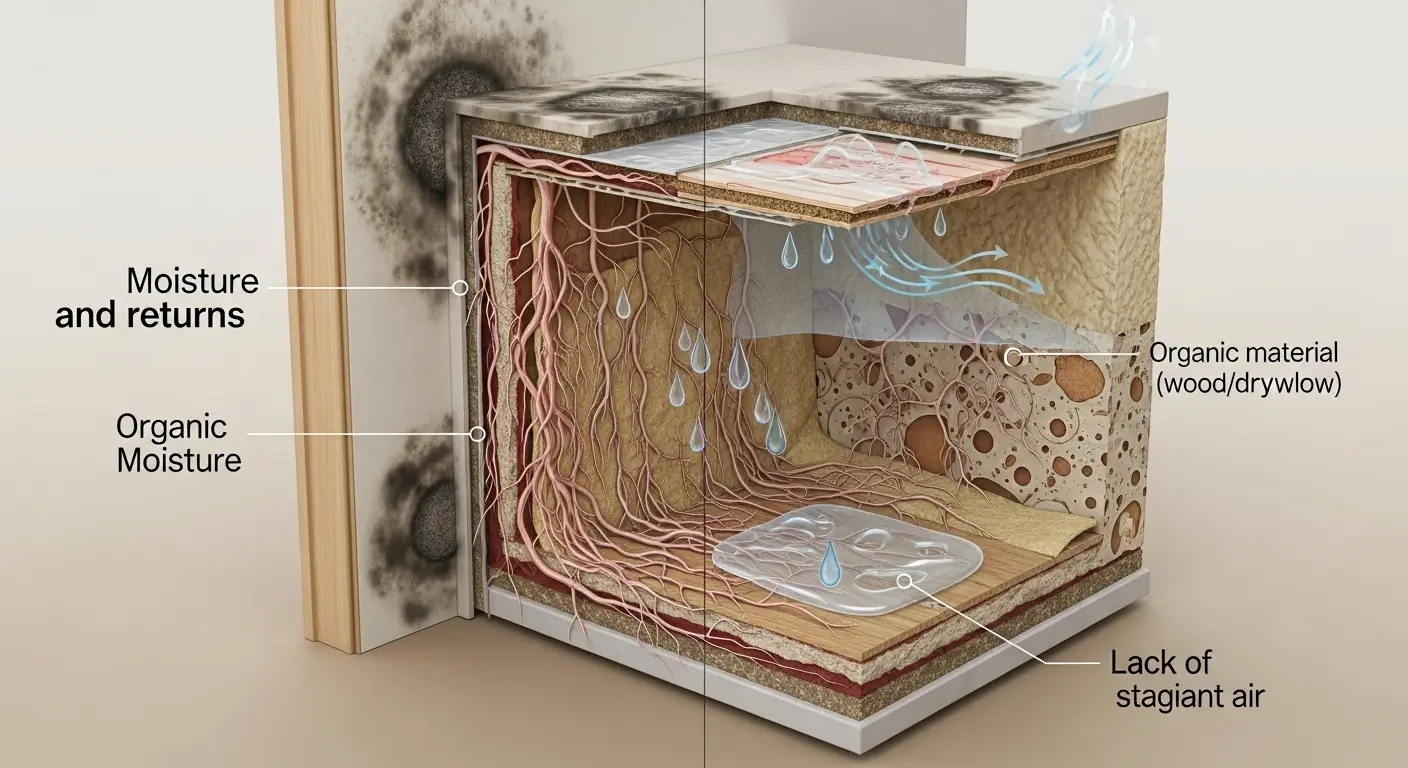
Mold isn't just a stain — it's a living organism with roots called hyphae that dig deep into porous surfaces like wood, drywall, and grout. When you wipe the surface, you remove what you can see. But the hyphae stay behind, and as long as moisture is present, mold regrows.
The three things mold needs to survive are moisture, a food source (like wood or drywall), and poor airflow. Remove any one of these especially moisture and you cut mold off at the source.
What Kills Mold Permanently
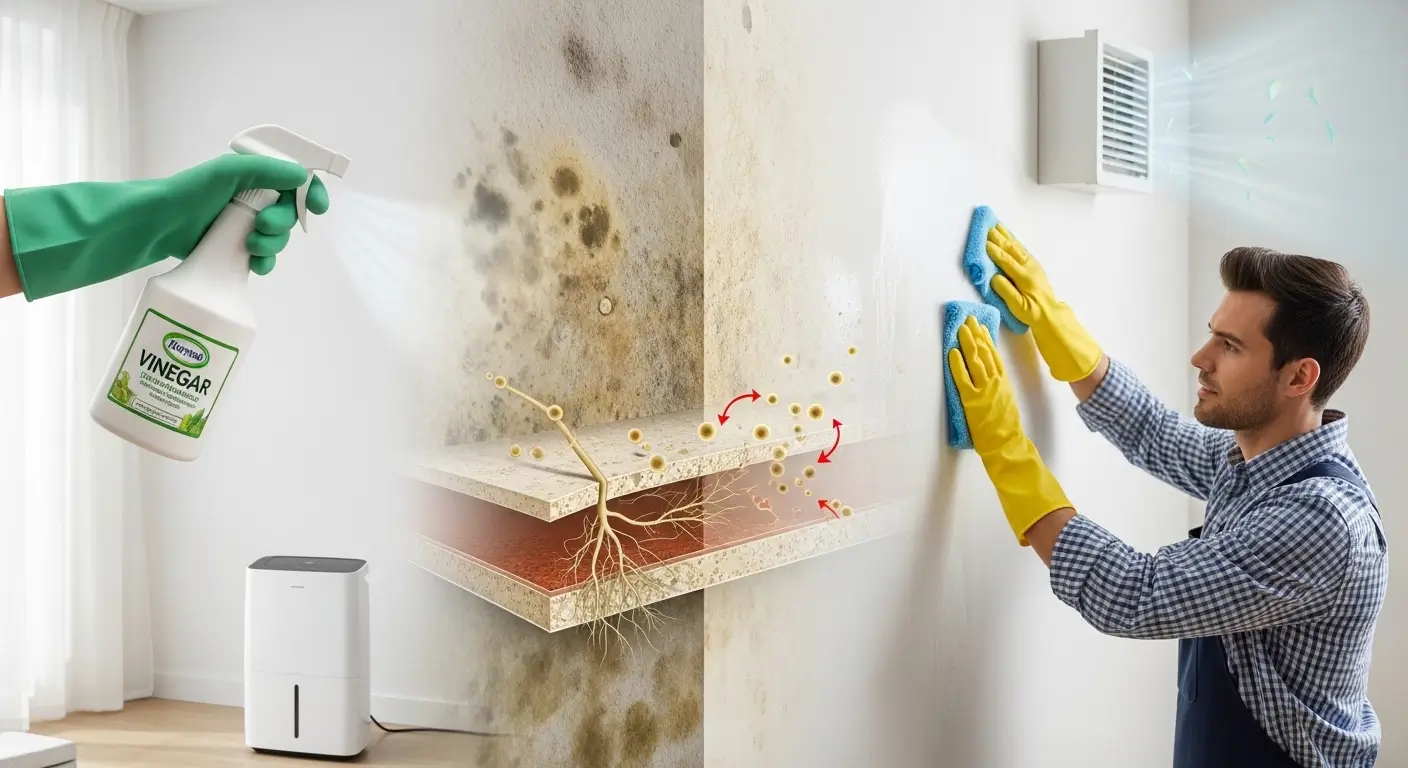
These solutions penetrate deeper, kill mold at the root, and when combined with moisture control — deliver long-lasting results.
White Vinegar Vinegar is a mildly acidic solution that penetrates porous surfaces and kills approximately 82% of mold species. Unlike bleach, it doesn't just clean the surface it goes deeper. Spray undiluted white vinegar directly onto the moldy area, let it sit for at least one hour, then wipe clean. It's safe, non-toxic, and one of the best natural mold killers available.
Hydrogen Peroxide A 3% hydrogen peroxide solution is antifungal, antibacterial, and highly effective on mold. It penetrates porous surfaces, breaks down mold at the cellular level, and leaves no harmful residue. Apply it directly, let it sit for 10–15 minutes, then scrub and wipe. It works on walls, bathroom fixtures, fabric, and kitchen surfaces.
Boric Acid Boric acid is a powerful, long-lasting mold treatment that not only kills existing mold but prevents future growth. Mix one cup of boric acid with one gallon of water, apply to the surface, scrub thoroughly, and do not rinse the residue keeps fighting mold long after application.
Commercial Mold Removers (like Concrobium) Products like Concrobium Mold Control work by physically crushing mold spores as the product dries, and leave behind an invisible shield that prevents regrowth. These are excellent for large-scale treatment and areas prone to recurring mold.
Tea Tree Oil A natural antifungal powerhouse. Mix two teaspoons of tea tree oil with two cups of water in a spray bottle. Apply, don't rinse. It smells strong initially but fades and it keeps working long after application.
Bleach vs. Vinegar vs. Hydrogen Peroxide — Which Wins?
|
Solution |
Kills Surface Mold |
Kills Root Mold |
Safe on Porous Surfaces |
Prevents Regrowth |
|
Bleach |
✅ Yes |
❌ No |
❌ No |
❌ No |
|
White Vinegar |
✅ Yes |
✅ Yes |
✅ Yes |
✅ Partially |
|
Hydrogen Peroxide |
✅ Yes |
✅ Yes |
✅ Yes |
✅ Partially |
|
Boric Acid |
✅ Yes |
✅ Yes |
✅ Yes |
✅ Yes |
|
Commercial Removers |
✅ Yes |
✅ Yes |
✅ Yes |
✅ Yes |
Bottom line: Bleach is the most popular but least effective for permanent mold removal. Vinegar and hydrogen peroxide are better natural options. For serious or recurring mold problems, boric acid or commercial removers are your best bet.
How to Kill Mold Permanently — The Right Process
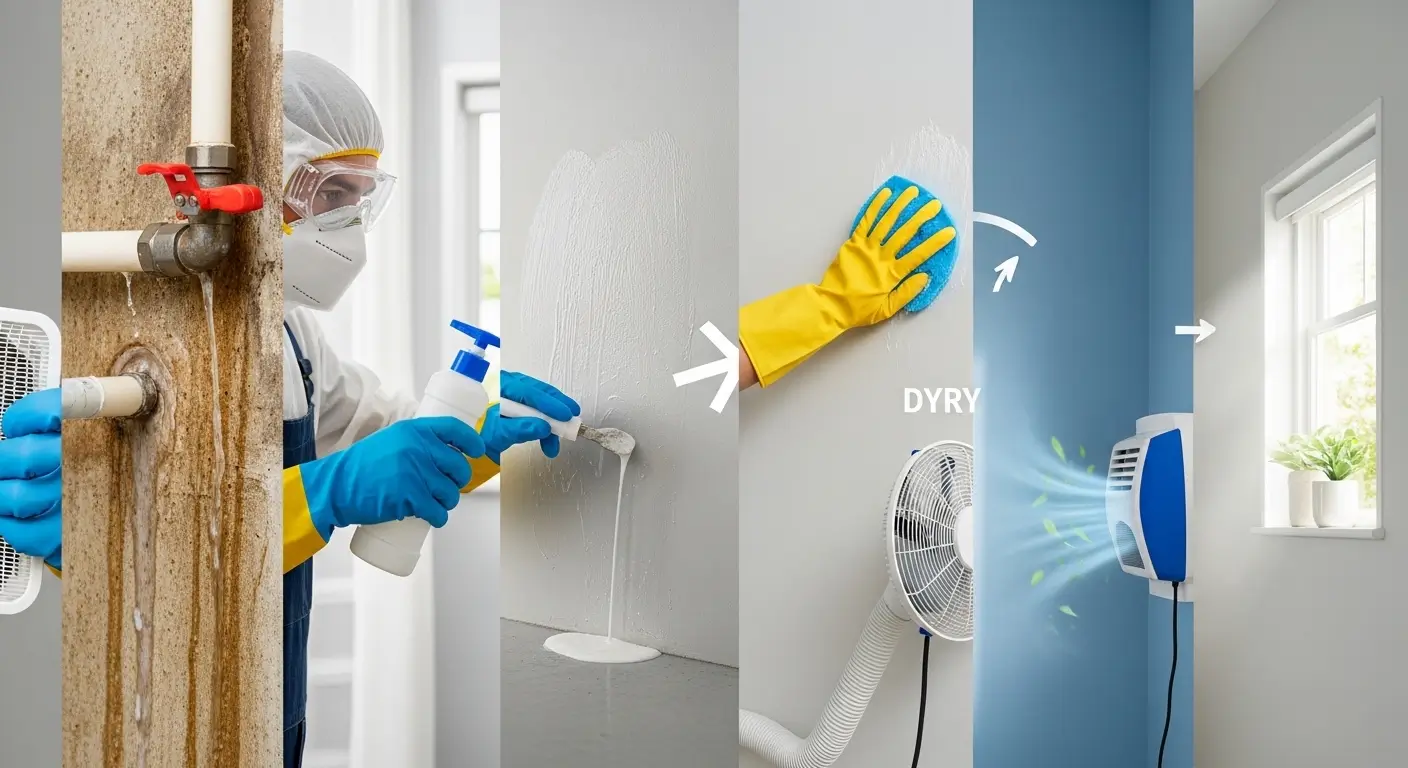
Killing mold for good isn't just about the product you use. It's about the process.
- Fix the moisture source first. A leaky pipe, poor ventilation, or high humidity will keep feeding mold no matter what you spray on it. This step is non-negotiable.
- Protect yourself. Wear gloves, an N95 mask, and eye protection before treating mold — especially black mold.
- Choose the right solution for your surface (see table above).
- Apply and wait. Most mold killers need dwell time to work. Don't wipe too soon.
- Scrub thoroughly to remove dead mold and residue.
- Dry the area completely. Use fans, dehumidifiers, or open windows. Mold cannot survive without moisture.
- Monitor and prevent. Keep humidity below 50%, improve ventilation, and inspect regularly.
When to Call a Professional
DIY mold removal works well for small patches generally anything under 10 square feet. But if you're dealing with any of the following, it's time to call a certified mold remediation specialist:
- Mold covering large areas of walls or ceilings
- Black mold (Stachybotrys) — known for serious health risks
- Mold inside HVAC systems or air ducts
- Anyone in the home experiencing respiratory issues, headaches, or allergy symptoms
- Mold returning repeatedly despite treatment
Conclusion
Most mold-fighting products give you a temporary fix a clean surface with a hidden problem underneath. To kill mold permanently, you need solutions that penetrate deep, like white vinegar, hydrogen peroxide, or boric acid combined with one critical step: eliminating the moisture source.
Schedule Your Indoor Air Quality Check Today
Worried about the air inside your home? Our professional indoor air quality inspections help identify hidden pollutants, allergens, and airflow issues so you can breathe cleaner, healthier air with confidence.