Carbon Monoxide in House Signs: How to Spot a Problem You Cannot See or Smell
Oct 22, 2026Carbon monoxide is called the silent killer for a simple reason: it has no color, no taste, and no smell. You cannot detect it with your senses at all. But a house with a carbon monoxide problem almost always shows warning signs, in the appliances, in the building, and in the people inside it. Knowing those signs can save your life.
This guide covers the common sources of carbon monoxide in a home, the physical signs around your appliances, the symptoms at different exposure levels, and exactly what to do if you suspect a problem. If you believe carbon monoxide is in your home right now, skip to the emergency steps below and act first.
Where Carbon Monoxide Comes From in a House
Carbon monoxide (CO) is produced whenever fuel burns incompletely. Any appliance that burns gas, oil, wood, coal, or charcoal can make it. In most homes, the sources are:
- Furnaces and boilers
- Gas water heaters
- Gas stoves and ovens
- Fireplaces and wood stoves, especially with blocked flues
- Portable generators, a major cause of poisoning during power outages
- Cars warming up in an attached garage
- Space heaters and gas dryers
A properly installed, well-maintained appliance vents nearly all of its CO outdoors. Problems start when an appliance is faulty, poorly ventilated, or its flue or chimney is blocked, and the gas leaks into living spaces instead.
Physical Signs of Carbon Monoxide in the House
You cannot see CO itself, but the malfunction that produces it leaves evidence:
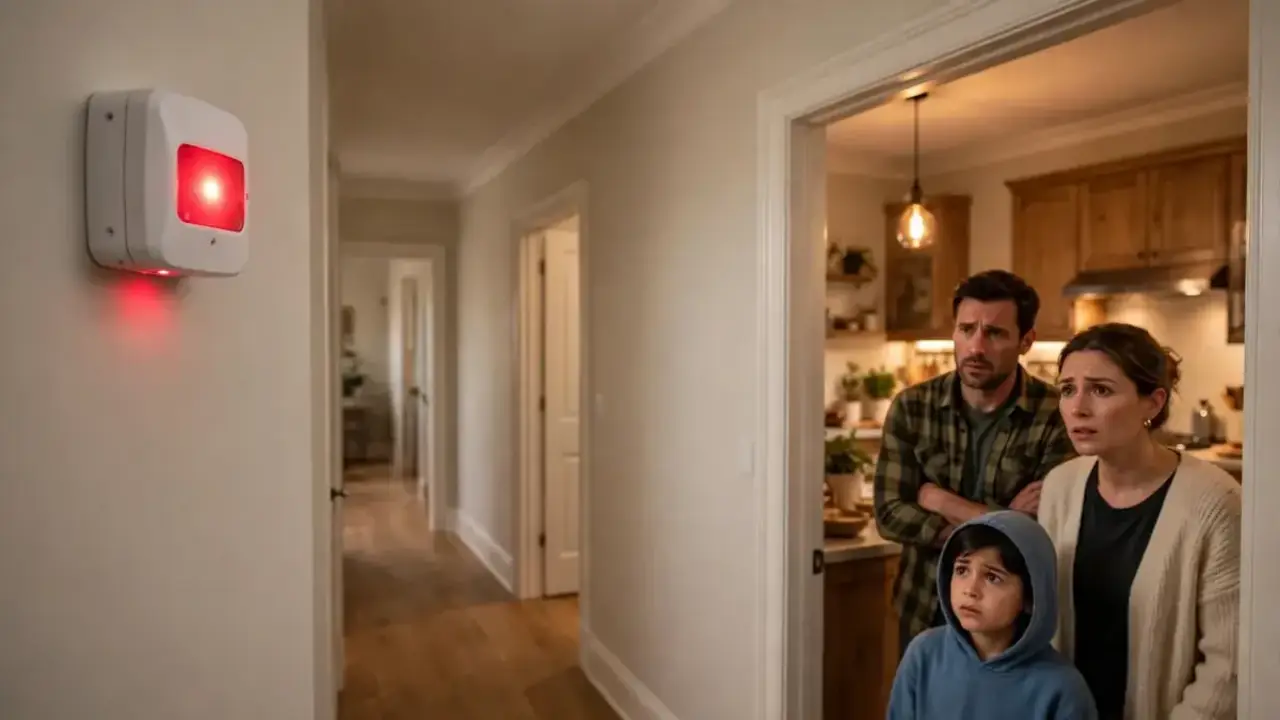
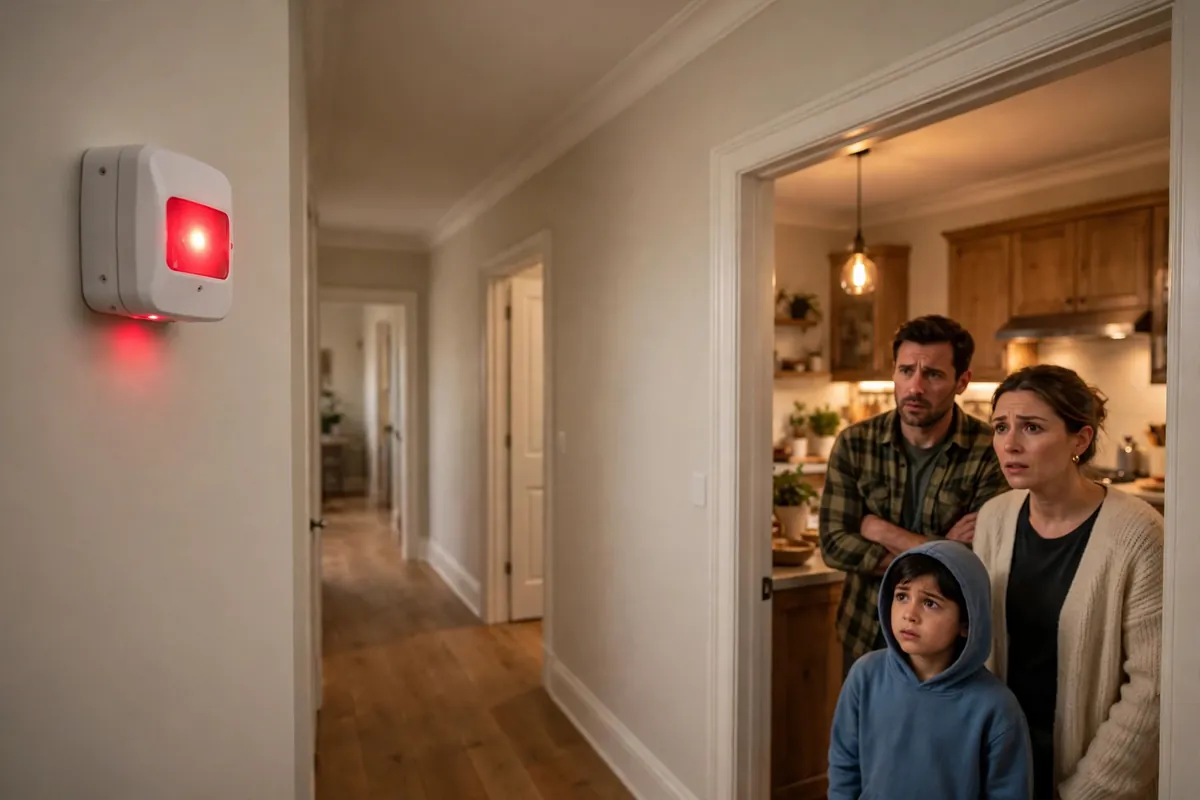
- A CO alarm sounding. This is the most important sign of all. Never ignore it or assume it is a faulty battery.
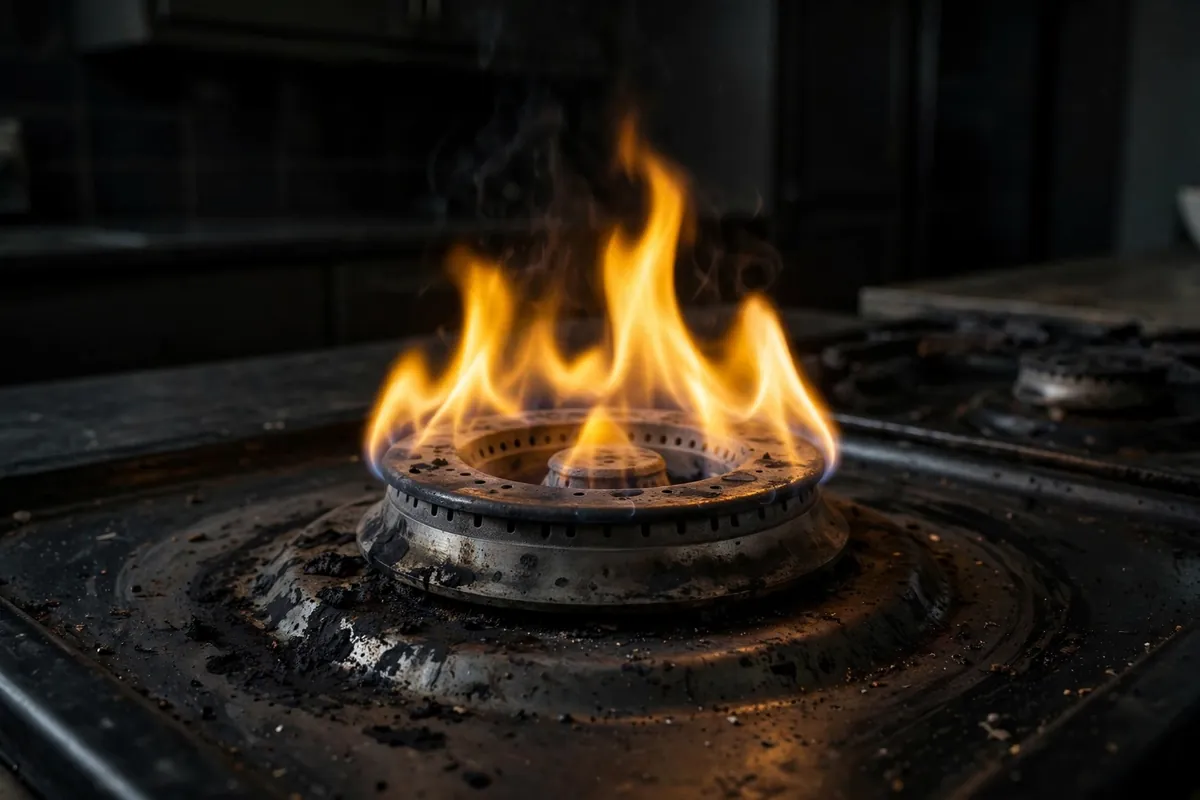
- Lazy yellow or orange flames on a gas stove or furnace burner. A healthy gas flame is crisp and blue.
- Soot or yellow-brown staining on or around an appliance, fireplace, or flue.
- A pilot light that keeps blowing out or an appliance that cuts out repeatedly.
- Heavy condensation on windows in the room where a fuel-burning appliance runs.
- A stuffy, stale smell or the smell of exhaust or smoke indoors, even though CO itself is odorless.
- Houseplants suddenly wilting and pets showing unusual lethargy at the same time people feel unwell.
Any one of these signs on its own deserves a service call. Combined with symptoms in people, it is an emergency.
Carbon Monoxide Poisoning Symptoms
Once inhaled, CO binds to hemoglobin in the blood roughly 240 times more strongly than oxygen, forming carboxyhemoglobin and starving the body's tissues of oxygen. Symptoms are often mistaken for flu, but CO poisoning causes no fever, and it improves when you leave the house. Severity depends on the concentration and how long you breathe it:
| Exposure level | Typical symptoms |
|---|---|
| Mild | Dull headache, slight dizziness, mild nausea, fatigue |
| Moderate | Throbbing headache, confusion, blurred vision, shortness of breath on exertion, rapid heartbeat |
| Severe | Vomiting, loss of consciousness, seizures, dangerously low blood pressure, can be fatal |
Three pattern clues separate CO poisoning from ordinary illness. First, several people in the home (and often pets) get sick at the same time. Second, symptoms ease outdoors or away from home and return when you come back. Third, symptoms flare while a furnace, stove, fireplace, or generator is running. Children, pregnant women, older adults, and people with heart or lung disease are harmed faster and at lower levels.
What to Do Immediately If You Suspect Carbon Monoxide
- Get everyone out. Move people and pets into fresh air right away. Do not stay inside to investigate, open every window, or collect belongings.
- Call 911 (or your local emergency number) from outside or from a neighbor's home, and say you suspect carbon monoxide. Fire crews carry CO meters and can test and ventilate the house.
- Do not re-enter until emergency responders or a qualified technician confirm it is safe.
- Get medical attention for anyone with symptoms, and mention the possible CO exposure. Hospitals can measure carboxyhemoglobin with a blood test and give oxygen treatment.
- Have the appliance inspected before using it again. The source must be found and repaired, not just aired out.
If your CO alarm sounds but nobody has symptoms, still leave and call the fire department's non-emergency line or 911. Treat every alarm as real until professionals say otherwise.
How to Prevent Carbon Monoxide Problems
- Install CO detectors on every level of the home and outside each sleeping area, test them monthly, and replace the units every 5 to 10 years as the manufacturer directs.
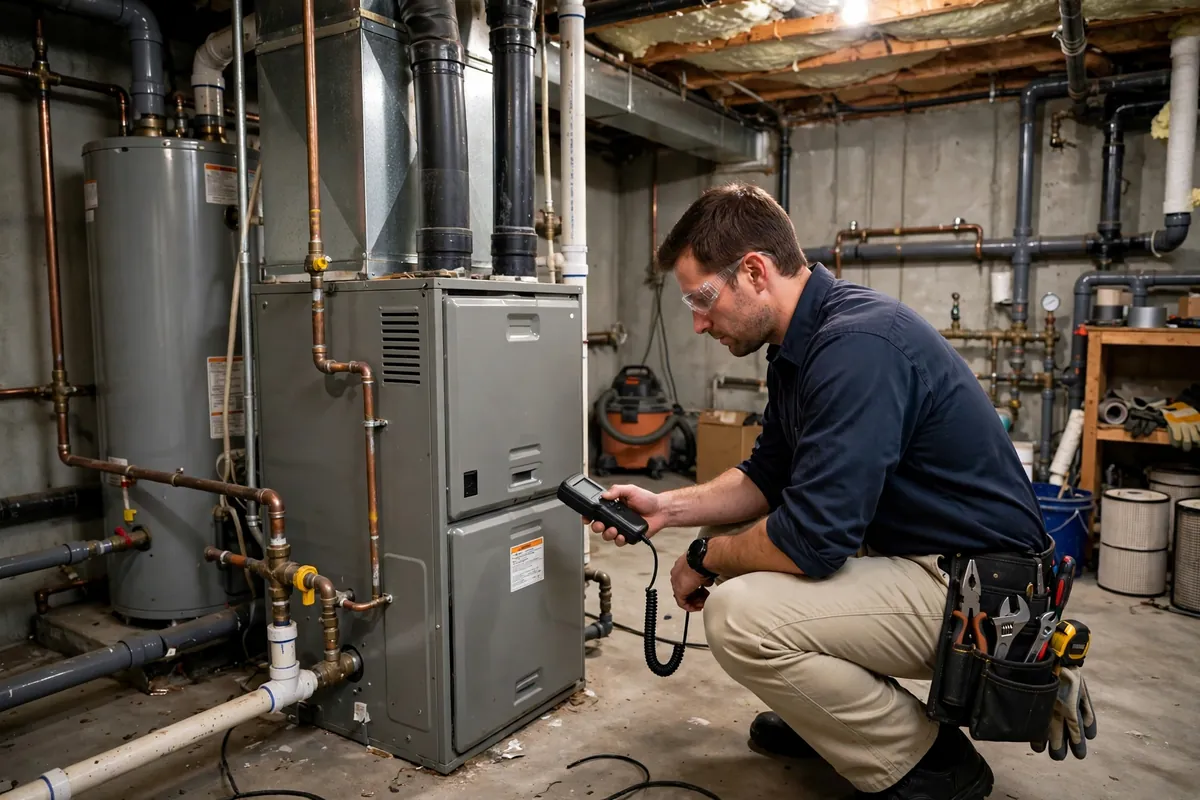
- Have furnaces, water heaters, fireplaces, and chimneys inspected and serviced every year before heating season.
- Never run a generator, grill, or camp stove inside the house, garage, or near an open window. Keep generators at least 20 feet away.
- Never warm up a car inside an attached garage, even with the door open.
- Keep flues, vents, and dryer exhausts clear of snow, nests, and debris.
- Consider a professional indoor air quality inspection if your home has older fuel-burning appliances, a recent renovation, or unexplained recurring symptoms. Testing measures the air your family actually breathes and can flag problems a visual check misses.
Frequently Asked Questions
Can you smell carbon monoxide in a house?
No. Carbon monoxide is completely odorless. What people sometimes smell are other exhaust gases from the same faulty appliance, which is itself a warning sign.
Will a carbon monoxide detector catch a slow leak?
Yes, within limits. UL-listed CO alarms sound when CO builds to dangerous levels over time (for example, 70 ppm sustained over 1 to 4 hours, faster at higher levels). Very low levels below the alarm threshold will not trigger them, which is why symptoms and appliance signs still matter.
What is the difference between carbon monoxide and carbon dioxide?
Carbon dioxide (CO2) is the gas you exhale and is mainly a stuffiness and ventilation concern at indoor levels. Carbon monoxide (CO) is a poison produced by incomplete combustion and can be lethal. They are different gases with different sources and detectors.
How long does it take for carbon monoxide to affect you?
It depends on the concentration. At high levels, collapse can happen within minutes. At low levels, symptoms may build slowly over days or weeks and look like a lingering flu.
Know What Is in Your Air
Carbon monoxide is only one of the invisible problems that can build up inside a home. At Indoor Air Quality Services (IAQ Answers), we test Atlanta homes for gases, particles, mold, and allergens, and explain the results in plain language. If your CO alarm has sounded, your appliances show warning signs, or your family keeps getting the same unexplained symptoms at home, call us at (770) 363-2670 to arrange an inspection.
Schedule Your Indoor Air Quality Check Today
Worried about the air inside your home? Our professional indoor air quality inspections help identify hidden pollutants, allergens, and airflow issues so you can breathe cleaner, healthier air with confidence.