
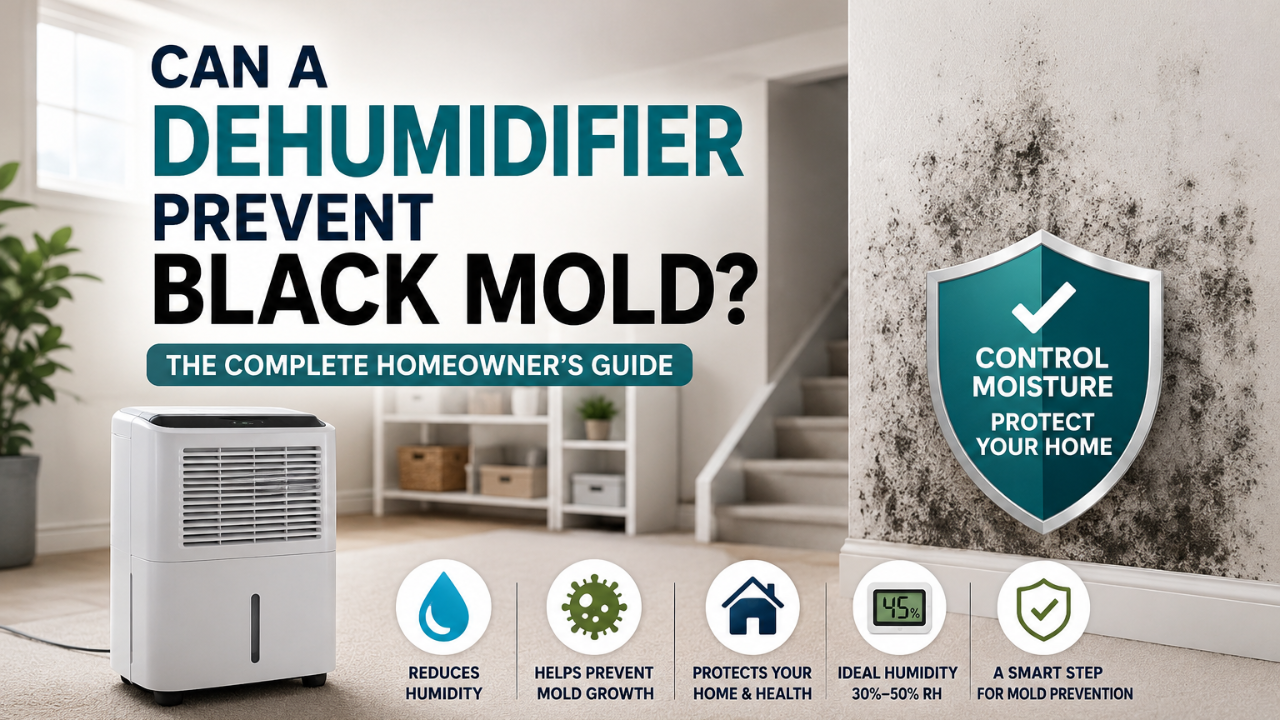
Can a Dehumidifier Prevent Black Mold? What You Need to Know
Jun 13, 2026Black mold in your home is not just an eyesore — it is a serious health and structural concern. Many homeowners reach for a dehumidifier as their first line of defense, but the real question is: can a dehumidifier prevent black mold? The short answer is yes — but with important limits. This guide breaks down exactly what a dehumidifier can and cannot do, the ideal humidity levels to keep mold away, and the steps every homeowner should take for complete mold protection.
What Is Black Mold and Why Is It Dangerous?
Black mold (Stachybotrys chartarum) is a toxic fungus that thrives in damp, poorly ventilated spaces. It commonly appears on walls, ceilings, insulation, drywall, and around window frames. Beyond its unsightly dark patches, black mold releases spores into the air that can trigger allergic reactions, respiratory problems, headaches, and chronic fatigue. Mold doesn't need much — just moisture, a surface to feed on (like wood or drywall), and oxygen.
The key takeaway? Moisture is the one variable you can control — and that's exactly where a dehumidifier comes in.
How Does a Dehumidifier Work?
A dehumidifier pulls warm, moist air over cooled coils, causing the water vapor to condense into liquid. That water collects in a reservoir while drier air is pushed back into the room. The result is a measurable drop in relative humidity (RH) — the percentage of moisture in the air.
This simple process makes a dehumidifier one of the most effective tools available for controlling indoor moisture levels.
Can a Dehumidifier Prevent Black Mold?
Yes — a dehumidifier can absolutely prevent black mold from forming. Mold cannot establish new growth in air with relative humidity below 60%. When humidity drops below 50%, even existing mold colonies begin to dry out and go dormant. By continuously pulling moisture from the air, a dehumidifier removes the one condition mold needs most to survive.
However, there is a critical limitation every homeowner must understand: a dehumidifier cannot kill or remove mold that already exists. If black mold is already growing on your walls or behind drywall, reducing humidity will slow its spread — but will not eliminate it. Physical removal or professional remediation is required for existing infestations.
Think of a dehumidifier as a shield, not a cure.
What Humidity Level Prevents Black Mold?
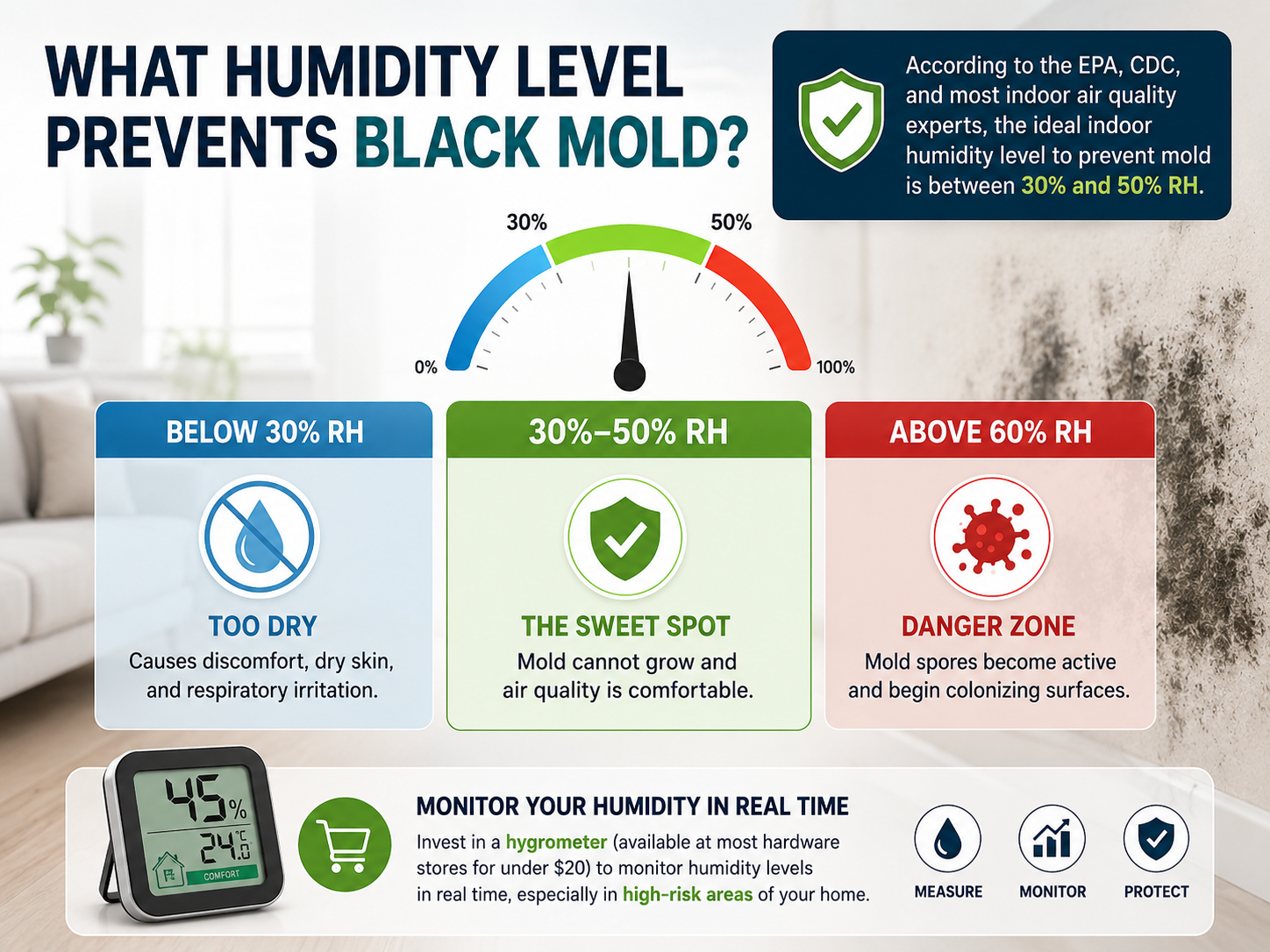
According to the EPA, CDC, and most indoor air quality experts, the ideal indoor humidity level to prevent mold is between 30% and 50% relative humidity. Here's a quick breakdown:
- Below 30% RH – Too dry; causes discomfort, dry skin, and respiratory irritation
- 30–50% RH – The sweet spot; mold cannot grow and air quality is comfortable
- Above 60% RH – Danger zone; mold spores become active and begin colonizing surfaces
Invest in a hygrometer (available at most hardware stores for under $20) to monitor humidity levels in real time, especially in high-risk areas of your home.
Where Should You Use a Dehumidifier for Mold Prevention?
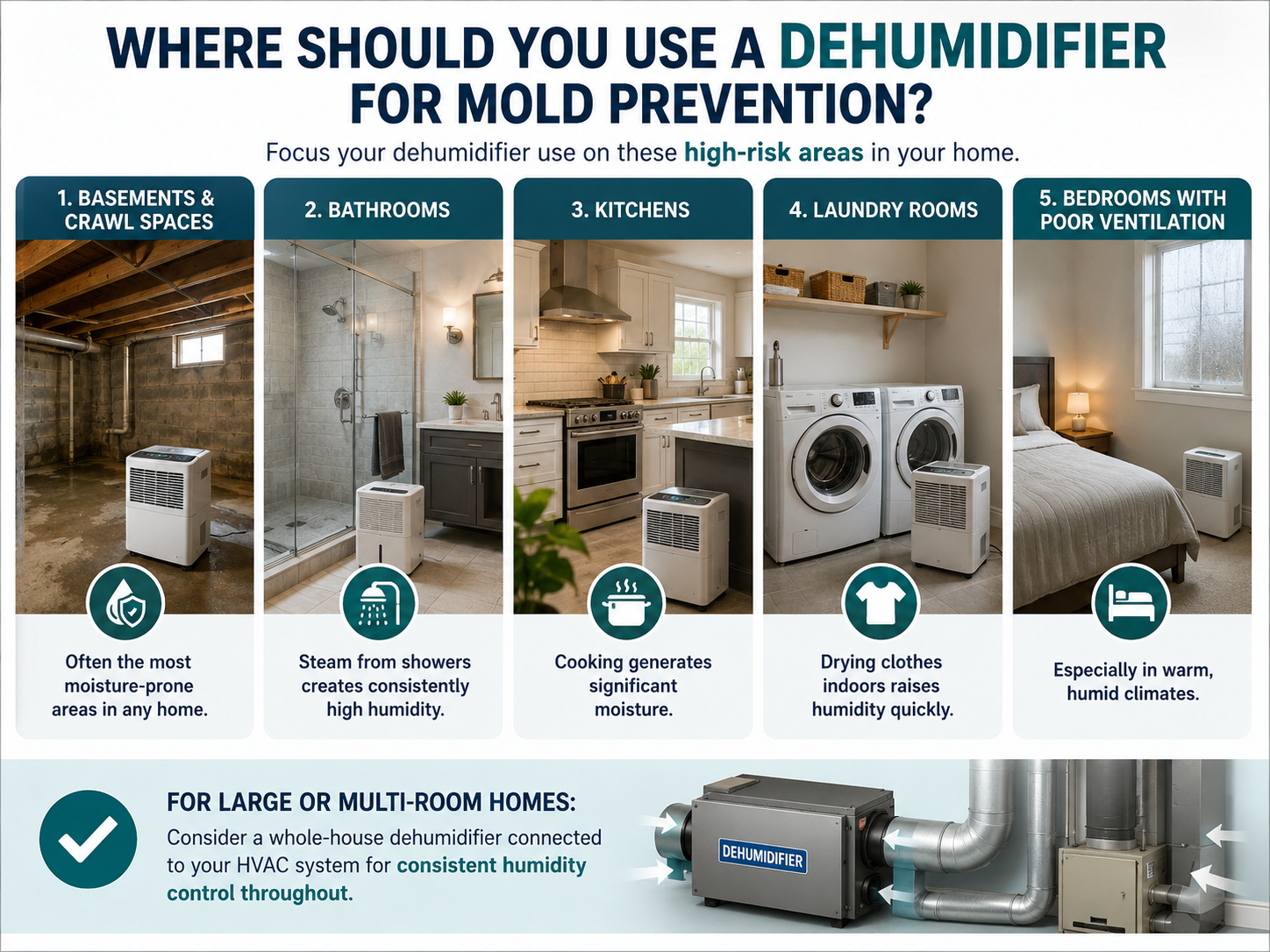
Not every room carries equal mold risk. Focus your dehumidifier use on these areas:
- Basements and crawl spaces – Often the most moisture-prone areas in any home
- Bathrooms – Steam from showers creates consistently high humidity
- Kitchens – Cooking generates significant moisture
- Laundry rooms – Drying clothes indoors raises humidity quickly
- Bedrooms with poor ventilation – Especially in warm, humid climates
For large or multi-room homes, consider a whole-house dehumidifier connected to your HVAC system for consistent humidity control throughout.
What a Dehumidifier Cannot Do
Let's bust the most common myths:
- It won't kill existing mold. Dehumidifiers reduce moisture — they do not disinfect surfaces.
- It won't remove mold spores from surfaces. Spores on walls, furniture, or carpet need physical cleaning with appropriate solutions.
- It won't fix the root cause. If you have a plumbing leak, roof damage, or foundation seepage, a dehumidifier simply cannot keep up. Fix the moisture source first.
5 Additional Tips to Prevent Black Mold at Home
A dehumidifier alone isn't enough. Combine it with these proven strategies:
- Fix leaks immediately — Check under sinks, around windows, and behind appliances regularly. Even small drips create mold-friendly conditions within 24–48 hours.
- Use exhaust fans — Run bathroom and kitchen exhaust fans during and after cooking or showering.
- Dry wet areas within 48 hours — Whether from a spill, flood, or condensation, mold can begin growing in as little as 24–48 hours on wet surfaces.
- Improve air circulation — Use ceiling fans, open windows when weather allows, and keep interior doors open to reduce stagnant moisture pockets.
- Inspect HVAC filters regularly — Dirty filters reduce airflow and can harbor mold spores, redistributing them throughout your home.
When to Call a Mold Remediation Professional
If any of the following apply to your situation, stop DIY approaches and contact a certified mold remediation specialist:
- Visible mold covers an area larger than 10 square feet
- You suspect black mold (Stachybotrys)
- Mold keeps returning despite your prevention efforts
- You or family members experience persistent respiratory symptoms or allergic reactions
- Mold is found inside walls, ceilings, or under flooring
Professional remediators use specialized equipment and techniques to safely remove mold, identify hidden moisture sources, and protect your home from future infestations.
Conclusion
So — can a dehumidifier prevent black mold? Absolutely yes, when used correctly and consistently. By keeping indoor humidity between 30–50%, a dehumidifier creates an environment where mold simply cannot take root. But remember: it prevents mold, it doesn't cure it. If black mold has already appeared, physical removal and professional inspection are non-negotiable.
Your action plan: buy a hygrometer, run a dehumidifier in high-risk areas, fix moisture sources at the root, and pair your dehumidifier with a HEPA air purifier for complete mold protection. Already dealing with mold? Visit IAQAnswers for expert mold cleaning and removal guides to help you take back control of your home.
Schedule Your Indoor Air Quality Check Today
Worried about the air inside your home? Our professional indoor air quality inspections help identify hidden pollutants, allergens, and airflow issues so you can breathe cleaner, healthier air with confidence.