
How Fast Does Black Mold Grow? (The Answer Might Surprise You)
May 31, 2026You spotted something dark and fuzzy in your bathroom. Now the question keeping you up at night: how fast does black mold grow — and how much time do I have?
The short answer: black mold can begin growing within 24 to 48 hours of moisture exposure. But the full picture is a little more complicated — and a lot more important to understand if you want to protect your home and your health.
Let's break it all down.
What Is Black Mold, Exactly?
When most people say "black mold," they're referring to Stachybotrys chartarum — a dark greenish-black fungus notorious for thriving in water-damaged homes. It's not the only mold that appears black (many molds can look dark), but it's the one that tends to cause the most concern due to the mycotoxins it can produce.
Like all molds, black mold is a living organism that reproduces through airborne spores. Those spores are essentially everywhere — floating in the air inside and outside your home right now. The problem starts when spores land on a wet surface and conditions are right for them to grow.
How Fast Does Black Mold Actually Grow?
Here's the timeline you need to know:
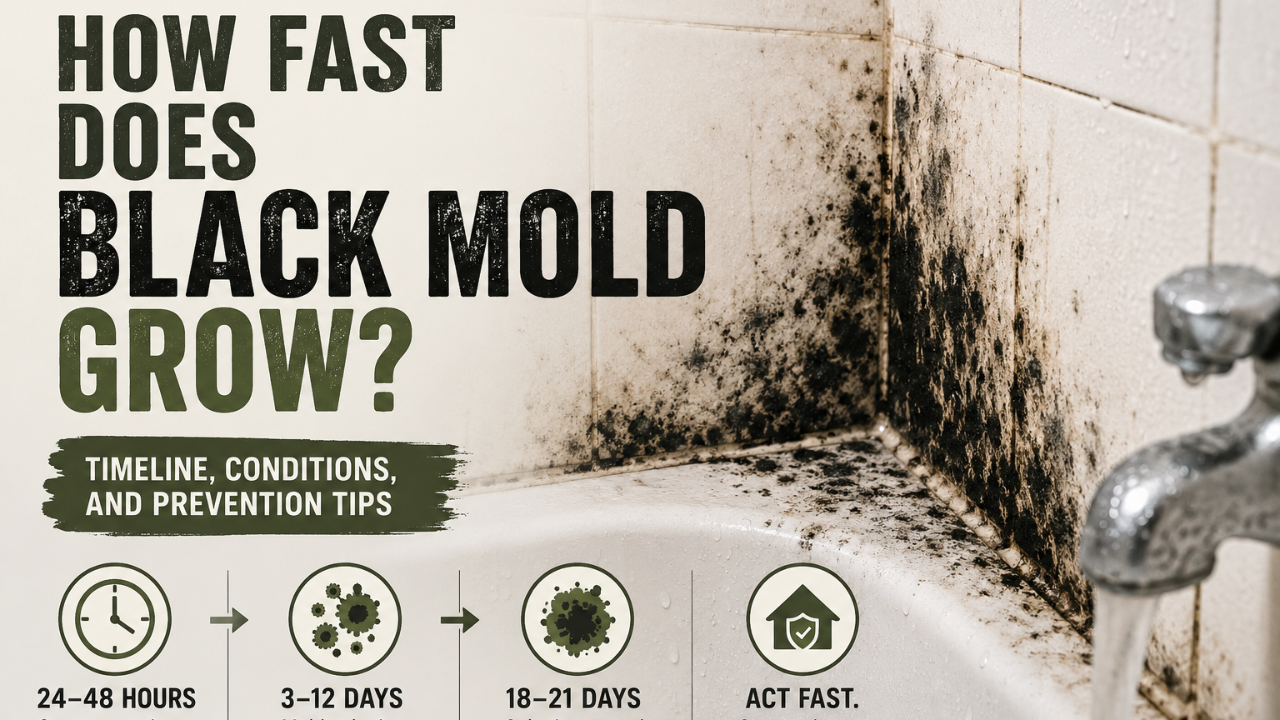
24–48 hours: Mold spores that land on a damp surface begin to germinate. You won't see anything yet, but the process has already started.
3–12 days: Mold colonies become visible to the naked eye. You might notice small spots or discoloration on walls, ceilings, or grout.
18–21 days: A full colony can develop and spread significantly, depending on the conditions. By this point, spore counts in the air around the affected area are rising.
Keep in mind — Stachybotrys is actually one of the slower-growing mold species compared to common household molds like Cladosporium or Penicillium. But slower doesn't mean harmless. Once it gets established, it can be extremely difficult to remove and may require professional remediation.
What Conditions Make Black Mold Grow Faster?
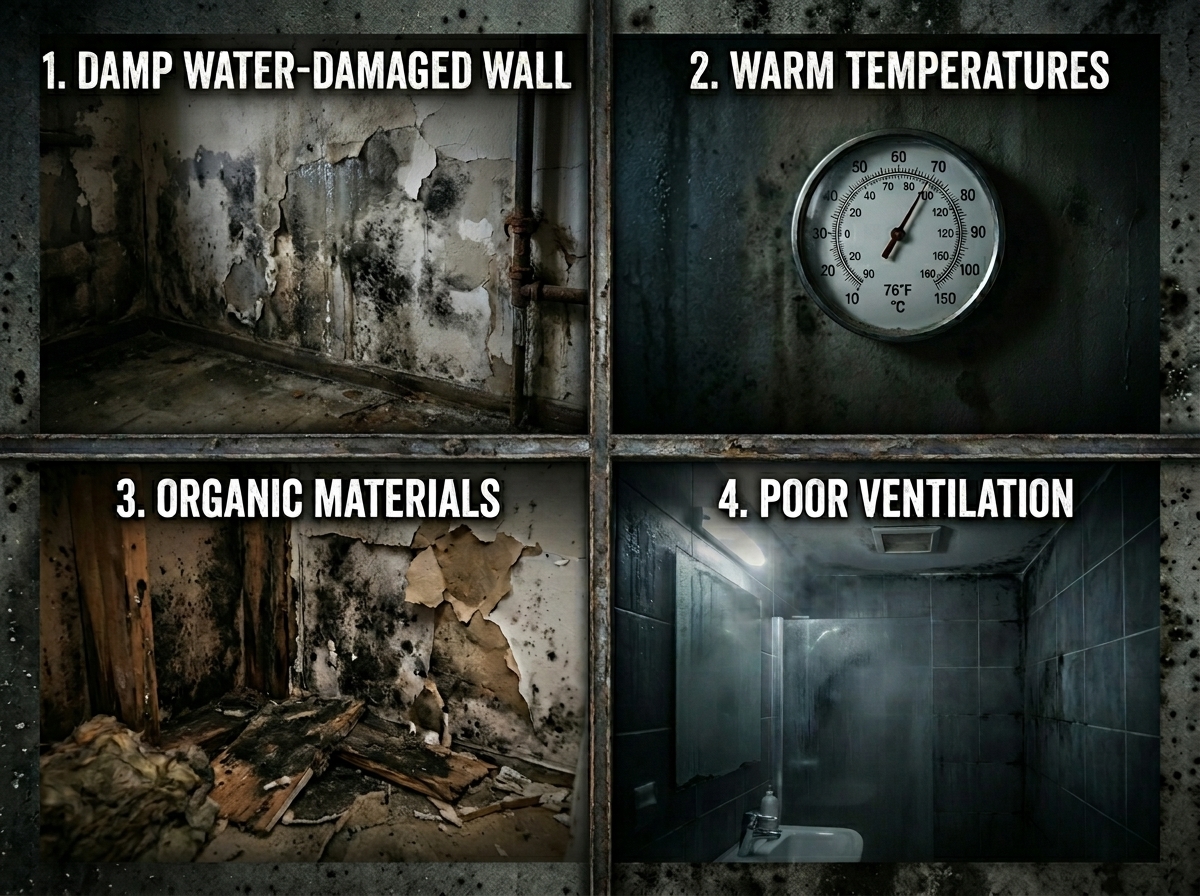
Mold growth speed isn't just about time — it's about environment. Black mold grows fastest when these four conditions are met:
Moisture: This is the #1 driver. Black mold needs surfaces with sustained dampness — think water-damaged drywall, consistently wet grout, or flooring after a leak. It doesn't grow well in just humid air; it needs direct contact with wet materials.
Temperature: Black mold thrives between 55°F and 85°F (13°C–29°C). Unfortunately, that's basically room temperature in most homes.
Food source: Mold feeds on organic materials — drywall, wood, paper, carpet, and fabric are all fair game. Concrete and metal are less hospitable but not immune.
Poor ventilation: Stagnant air allows moisture to stay put. Bathrooms, basements, and crawl spaces with little airflow are prime targets.
Remove any one of these factors, and mold growth slows dramatically. Remove moisture — the most critical ingredient — and mold cannot survive.
Where Does Black Mold Grow Most Often?
The most common places we see black mold in homes include:
- Behind bathroom tiles and around tub/shower caulking
- Under sinks with slow leaks
- In basements after flooding or persistent humidity
- Around windows with condensation issues
- Inside walls following a plumbing leak
- In attics with poor ventilation or roof leaks
- On drywall that was wet and never properly dried
One of the most dangerous aspects of black mold is that it often grows inside walls or under flooring — completely hidden from view. By the time you smell it or see exterior signs, a significant colony may already be established.
How to Stop Black Mold Before It Starts

The best strategy is prevention. Here's what actually works:
Fix leaks immediately. Any water intrusion — a dripping pipe, a roof leak, a cracked foundation — needs to be addressed within 24 to 48 hours. That's the window before germination begins.
Keep indoor humidity below 60%. Ideally, aim for 30–50%. A simple digital hygrometer (they cost under $15) can monitor this for you.
Ventilate moisture-prone rooms. Run bathroom exhaust fans during and for 15–20 minutes after showers. Make sure your dryer is vented outside.
Dry wet materials quickly. Wet carpet, drywall, or insulation should be dried within 48 hours — or removed entirely.
Inspect regularly. Check under sinks, around appliances, and in crawl spaces at least a few times per year.
When to Call a Professional
DIY cleanup with soap and water or diluted bleach may work on small, non-porous surfaces (think bathroom tile). But if you're seeing any of the following, it's time to bring in a certified mold inspector or remediation specialist:
- Mold covering more than 10 square feet
- Mold on drywall, insulation, or wood framing
- Mold that keeps coming back after cleaning
- A musty odor with no visible mold (hidden mold)
- Anyone in the home with respiratory issues, allergies, or a compromised immune system
At iaqanswers.com, we always recommend getting a professional air quality assessment if you suspect a significant mold problem. Surface sampling and air testing can reveal what the naked eye can't.
The Bottom Line
Black mold can start growing in as little as 24 hours — and within a few weeks, a small moisture problem can become a serious infestation. The key takeaways:
- Germination starts within 24–48 hours of moisture exposure
- Visible growth appears within 3–12 days
- Growth is driven by moisture, warmth, organic materials, and poor ventilation
- Speed of action is your most powerful tool against it
Don't wait to address water damage or suspicious spots in your home. The faster you act, the smaller the problem stays.
Have questions about indoor air quality or mold testing? Browse our resources at iaqanswers.com or reach out to our team of IAQ experts.
Schedule Your Indoor Air Quality Check Today
Worried about the air inside your home? Our professional indoor air quality inspections help identify hidden pollutants, allergens, and airflow issues so you can breathe cleaner, healthier air with confidence.