Is Mold a Fungus? How It Affects Your Indoor Air Quality
Apr 26, 2026You notice a dark patch creeping along your bathroom wall. Or maybe there's that unmistakable musty smell every time you walk into your basement. Sound familiar?
Before you grab the bleach, here's something important to understand: that fuzzy growth is not just dirt or grime it's a living organism. Specifically, it's a fungus.
Yes mold is a type of fungus. And when it grows inside your home, it doesn't just look unpleasant. It actively pollutes the air you breathe every single day.
In this article, we'll break down exactly what mold is, how it spreads, and most importantly what it does to your indoor air quality and your health.
What Exactly Is Mold? (And Why Is It a Fungus?)
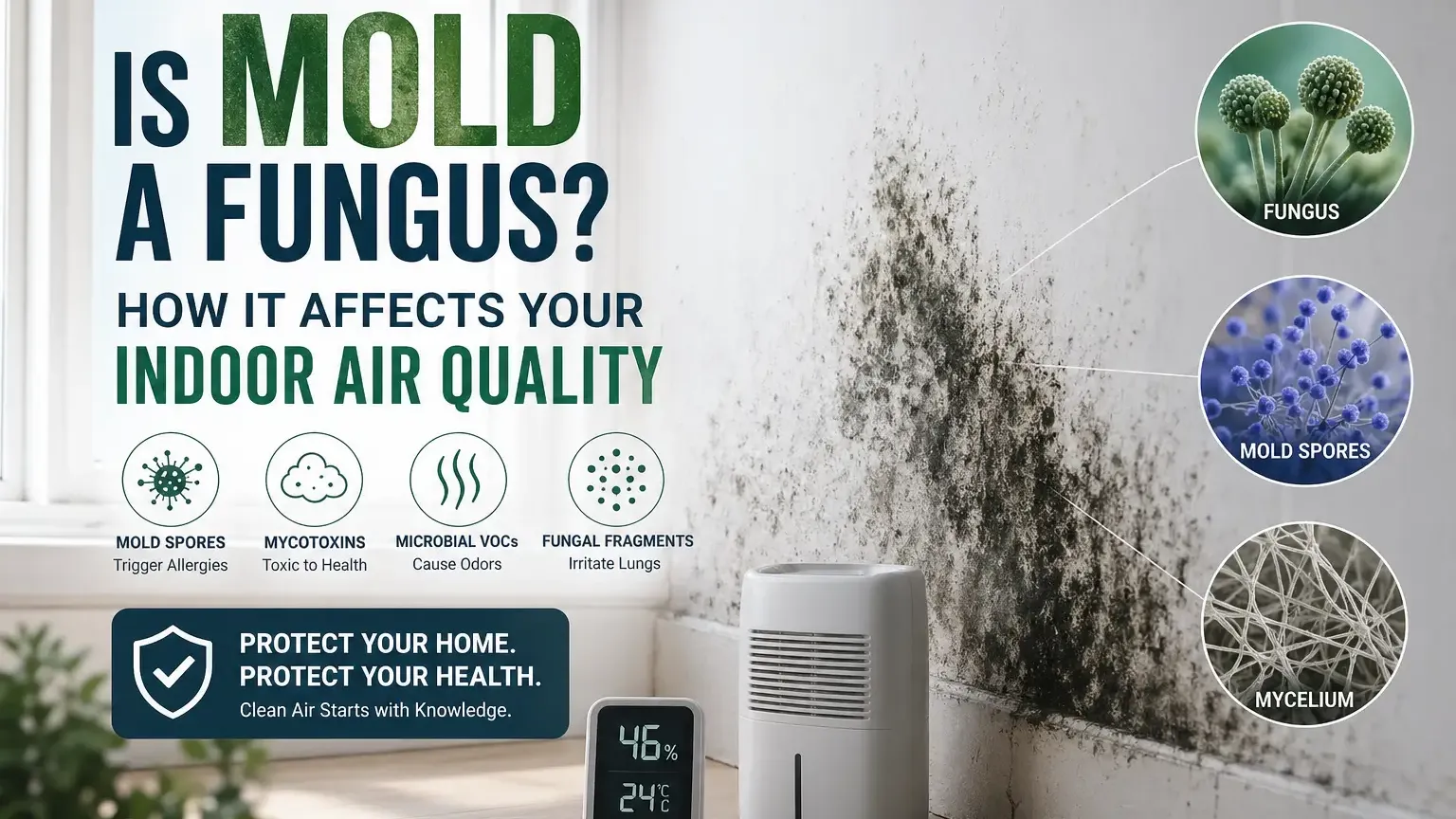
Mold belongs to the kingdom Fungi the same biological family as mushrooms and yeast. But unlike your grocery store mushrooms, mold is multicellular and grows through microscopic thread like structures called hyphae, which cluster together to form a network known as mycelium.
Mold is neither a plant nor an animal. It can't make its own food through photosynthesis. Instead, it survives by breaking down and absorbing organic material like wood, drywall, fabric, and even dust from its surrounding environment.
Scientists have identified over 100,000 species of mold worldwide. Indoors, you'll most commonly encounter Aspergillus, Penicillium, Cladosporium, and the infamous Stachybotrys chartarum also known as black mold.
All mold is fungus, but not all fungi are mold. Yeast and mushrooms are also fungi but they don't grow in your walls.
💡 Quick Answer: Is mold a fungus? Yes. Mold is a multicellular fungal organism that reproduces by releasing microscopic spores into the air. It belongs to the kingdom Fungi, alongside mushrooms and yeast.
How Does Mold Grow Inside Your Home?
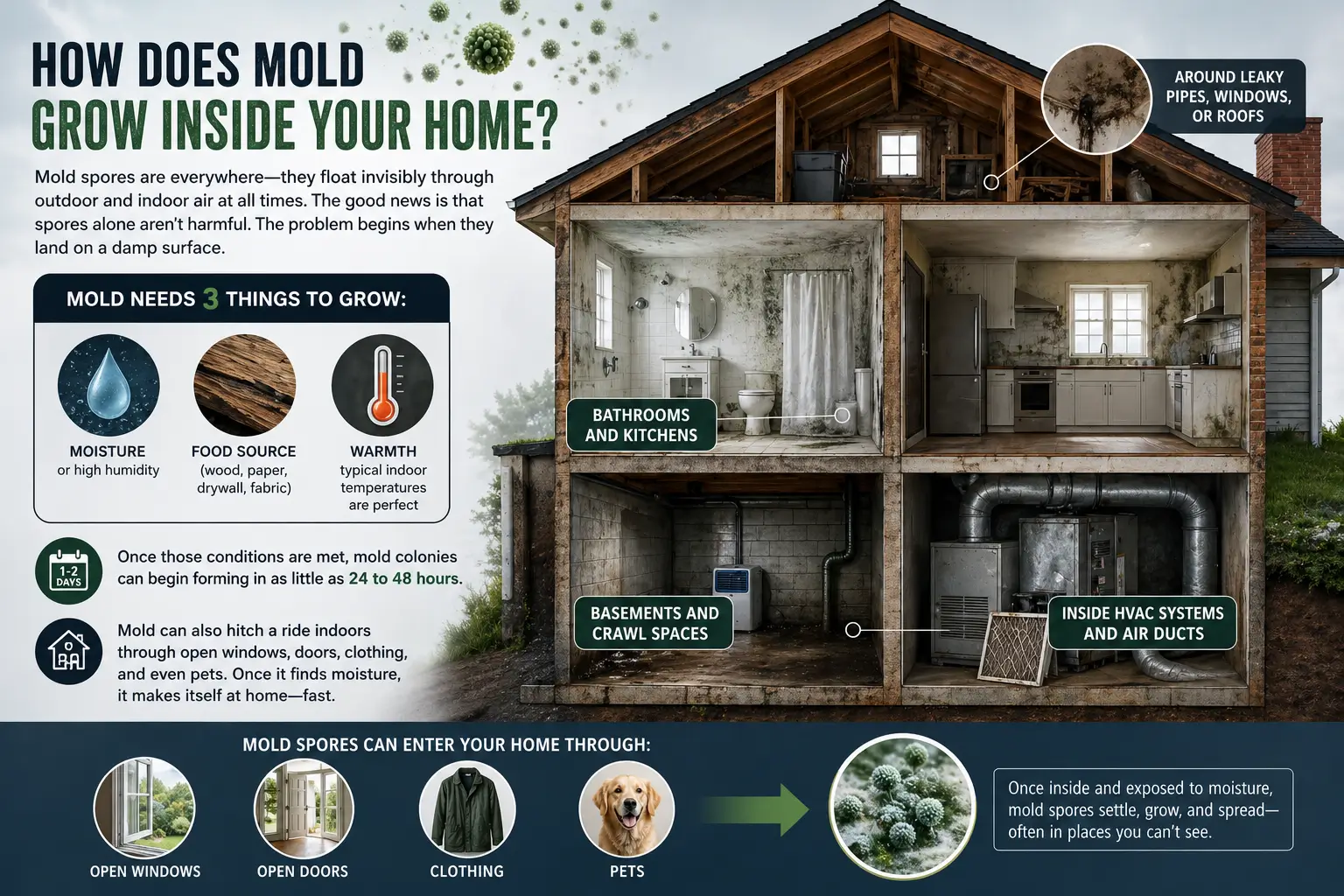
Mold spores are everywhere they float invisibly through outdoor and indoor air at all times. The good news is that spores alone aren't harmful. The problem begins when they land on a damp surface.
Mold needs just three things to grow:
- Moisture or high humidity
- A food source (wood, paper, drywall, fabric)
- Warmth typical indoor temperatures are perfect
Once those conditions are met, mold colonies can begin forming in as little as 24 to 48 hours. Common hotspots in homes include:
- Bathrooms and kitchens
- Basements and crawl spaces
- Around leaky pipes, windows, or roofs
- Inside HVAC systems and air ducts
Mold can also hitch a ride indoors through open windows, doors, clothing, and even pets. Once it finds moisture, it makes itself at home fast.
How Mold Damages Your Indoor Air Quality
Here's where things get serious for your health. When mold grows, it doesn't just sit quietly on a surface. It releases harmful substances into the air that circulate through your entire home:
|
Substance |
What It Does |
|
Mold Spores |
Tiny reproductive particles that float through air and trigger allergic reactions |
|
Mycotoxins |
Toxic chemical compounds produced by certain molds; linked to serious respiratory and neurological issues |
|
Microbial VOCs (MVOCs) |
Volatile organic compounds responsible for that musty, earthy odor a telltale sign of active mold growth |
|
Fungal Fragments |
Microscopic cell wall pieces that can be far more concentrated in the air than visible spores |
Research has found that indoor air can be 2 to 5 times more polluted than outdoor air and mold contamination is one of the biggest contributors to that statistic.
Health Effects of Mold Exposure
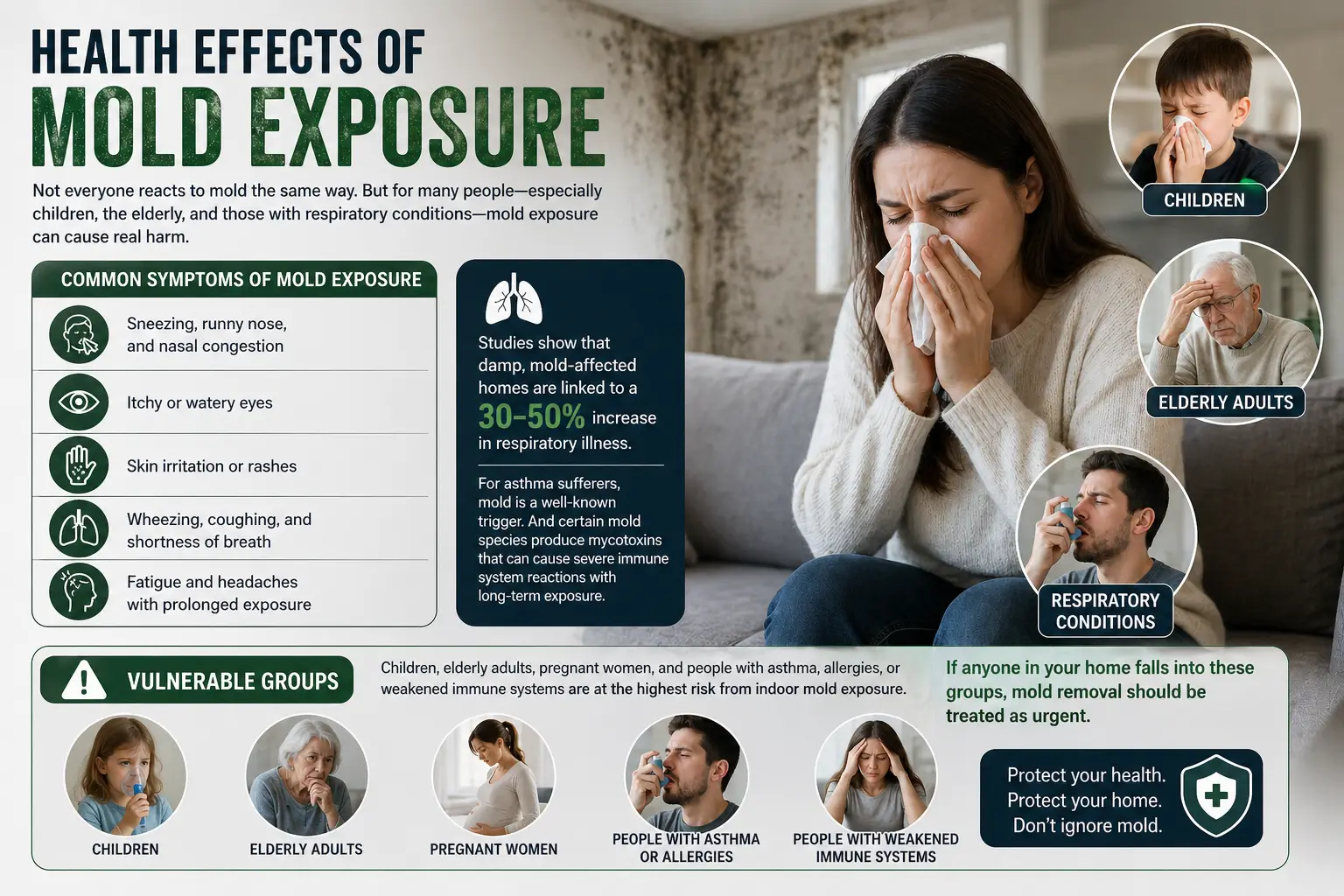
Not everyone reacts to mold the same way. But for many people especially children, the elderly, and those with respiratory conditions mold exposure can cause real harm.
Common symptoms of mold exposure include:
- Sneezing, runny nose, and nasal congestion
- Itchy or watery eyes
- Skin irritation or rashes
- Wheezing, coughing, and shortness of breath
- Fatigue and headaches with prolonged exposure
More seriously, studies show that damp, mold affected homes are linked to a 30–50% increase in respiratory illness. For asthma sufferers, mold is a well known trigger. And certain mold species produce mycotoxins that can cause severe immune system reactions with long term exposure.
⚠️ Vulnerable Groups: Children, elderly adults, pregnant women, and people with asthma, allergies, or weakened immune systems are at the highest risk from indoor mold exposure. If anyone in your home falls into these groups, mold removal should be treated as urgent.
How to Prevent Mold and Protect Your Indoor Air Quality
The good news? Mold is preventable. Since moisture is the key ingredient mold needs to survive, controlling humidity is your most powerful defense.
Here are practical steps you can take right now:
- Keep indoor humidity below 50% using a dehumidifier
- Fix leaks in roofs, pipes, and windows promptly
- Ventilate bathrooms, kitchens, and laundry rooms properly
- Run your HVAC system regularly and change filters on schedule
- Use a HEPA air purifier to capture airborne mold spores
- Dry wet surfaces within 24–48 hours of any water exposure
If you already smell mustiness or see visible mold growth, don't wait. Schedule a professional indoor air quality inspection to assess the extent of contamination surface mold is often just the tip of the iceberg.
Final Thoughts
So is mold a fungus? Absolutely. And it's one of the most underestimated threats to the air quality inside your home.
Mold spreads silently, releases harmful spores and toxins into the air you breathe, and can cause serious health problems for your family often before you even notice visible growth.
The key takeaway: don't ignore the signs. That musty smell, those dark patches, or unexplained allergy symptoms could all be pointing to a mold problem hiding in your walls, attic, or HVAC system.
At Indoor Air Quality Services, we're here to help you understand and protect your indoor environment. If you suspect mold in your home, the best first step is a professional mold inspection and air quality assessment so you know exactly what you're dealing with.
🏠 Concerned About Mold in Your Home? Get a professional indoor air quality assessment today. Early detection saves money, protects health, and gives you peace of mind.
Schedule Your Indoor Air Quality Check Today
Worried about the air inside your home? Our professional indoor air quality inspections help identify hidden pollutants, allergens, and airflow issues so you can breathe cleaner, healthier air with confidence.