Is Blue Cheese Mold Safe to Eat? A Guide for Health-Conscious Eaters
Apr 23, 2026Most of us are conditioned to throw food away the moment we spot mold on it. And usually, that's the right call. But blue cheese throws that rule out the window — and for good reason. If you've ever looked at a slice of Roquefort or Gorgonzola and wondered, "Wait... am I actually supposed to eat this?" — you're not alone.
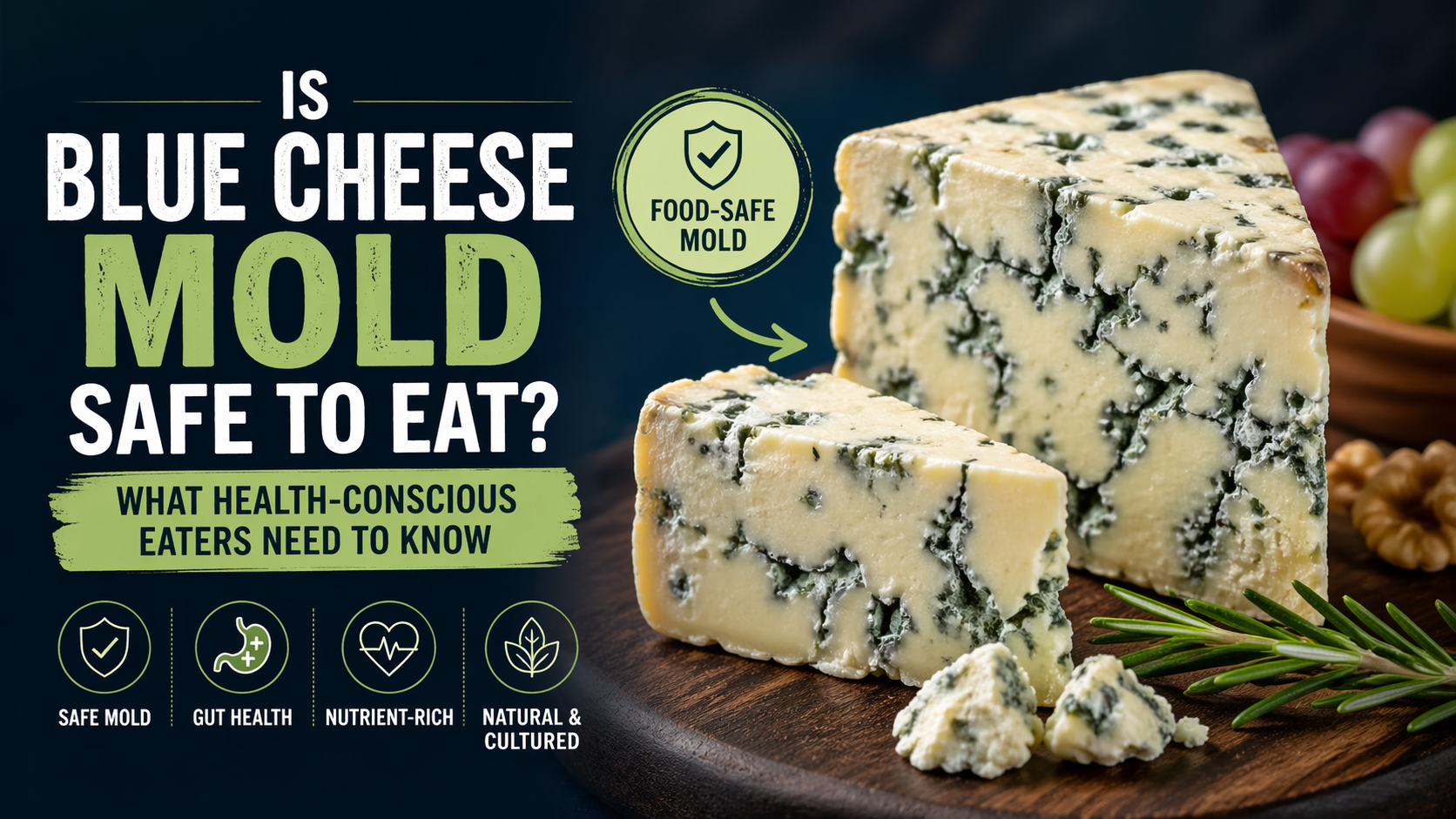
The short answer? Yes, the mold in blue cheese is completely intentional and safe for most people. But there's more to the story. Let's break it down in plain, science-backed terms.
What Exactly Is Blue Cheese Mold?
Not all mold is created equal. The mold in blue cheese is a specific, carefully cultivated species called Penicillium roqueforti or Penicillium glaucum — depending on the type of blue cheese being made. These food-grade mold cultures are deliberately introduced during the cheesemaking process.
After the mold is added, cheesemakers insert thin needles into the cheese to create small air pockets. This allows oxygen to flow through the inside of the cheese, which is what gives blue cheese its signature blue-green veins. So those marbled streaks you see? That's the mold doing exactly what it's supposed to do.
Think of it less like spoilage and more like fermentation — a controlled, ancient process that transforms raw ingredients into something complex and flavorful.
Is Blue Cheese Mold Dangerous?
Here's the question everyone Googles at some point: is it safe to eat mold in blue cheese? According to food safety experts and the FDA, yes — when the mold is the intentional kind used in production, it is safe to consume.
Here's why: harmful molds produce toxic byproducts called mycotoxins, which can cause illness. However, Penicillium roqueforti — the strain used in blue cheese — does not produce harmful levels of mycotoxins under normal aging conditions. The controlled temperature, humidity, and pH of the aging environment all keep the process safe and predictable.
Reputable cheesemakers also use pasteurized milk and operate under strict food safety standards, which further reduces any risk. So when you eat a properly made, store-bought blue cheese, you're eating something that has gone through rigorous quality checks — not something left forgotten at the back of your fridge.
Blue Cheese Mold vs. Bad Mold: How to Tell the Difference
This is where things get a little more nuanced. Even though blue cheese is safe, it can still go bad. Knowing the difference between good mold and bad mold on your cheese could save you from a nasty stomach bug.
|
✅ Safe Mold (Normal) |
❌ Bad Mold (Throw It Out) |
|
Blue or green marbled veins inside the cheese |
Pink, red, or black fuzzy growth on the surface |
|
Evenly distributed throughout the interior |
Slimy or wet patches on the rind or outside |
|
Firm texture, consistent smell |
Unusually bitter, ammonia-like, or sour smell |
|
Matches the original product appearance |
Appeared after expiry or improper storage |
Bottom line: if it smells off, feels slimy, or has fuzzy growth on the outer rind, it's time to toss it.
Who Should Be Careful With Blue Cheese?
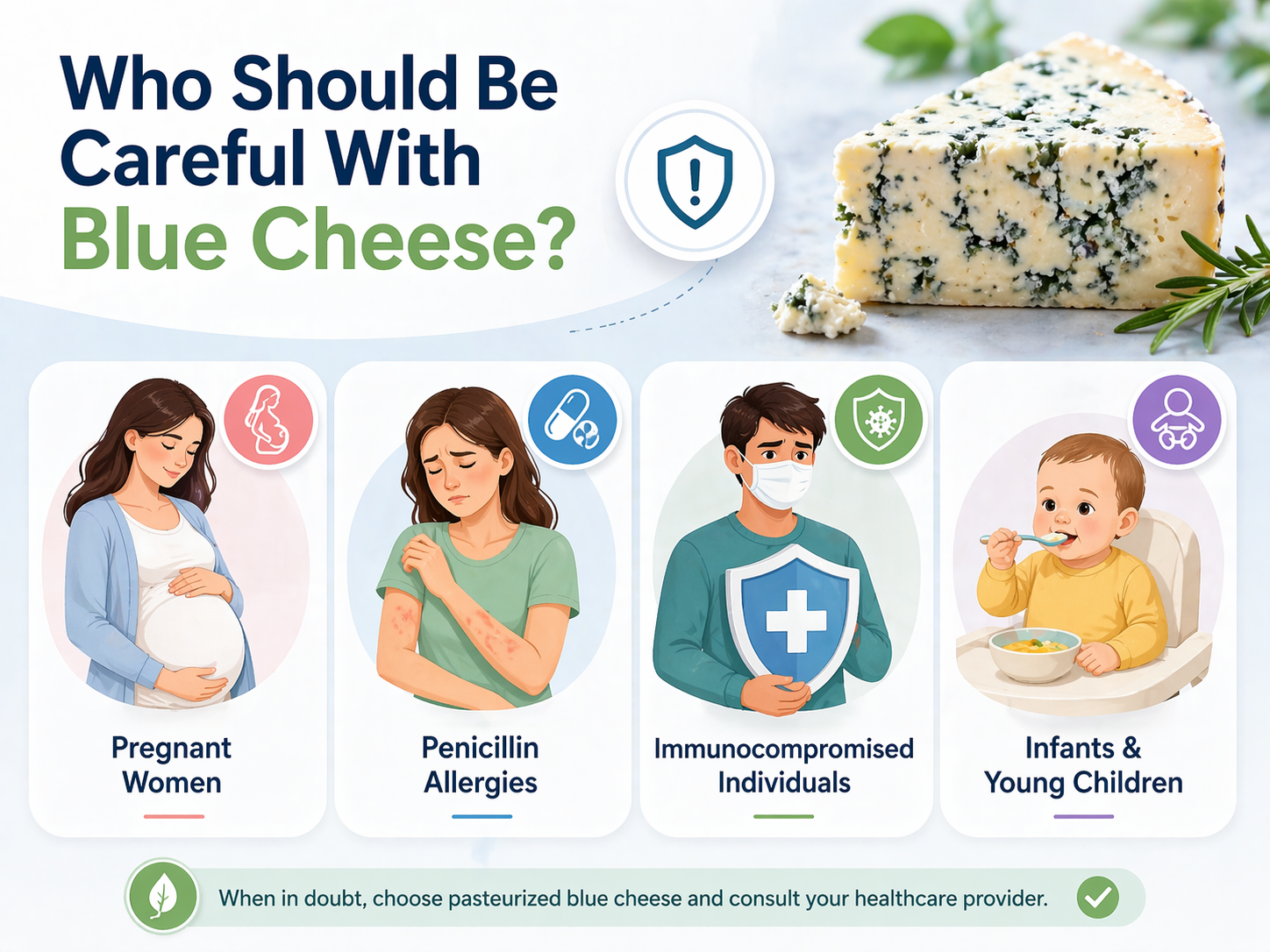
While blue cheese is safe for most healthy adults, some groups should exercise caution:
Pregnant women should avoid blue cheese made with unpasteurized milk, as it can harbor Listeria — a bacteria dangerous during pregnancy. Always check the label and opt for pasteurized versions.
People with penicillin allergies may want to be cautious. Although the connection between a penicillin drug allergy and Penicillium mold in cheese is not fully established, it's worth checking with your doctor if you have a known sensitivity.
Immunocompromised individuals — including those undergoing chemotherapy, living with HIV, or taking immunosuppressants — should talk to their healthcare provider before consuming aged mold-ripened cheeses.
Infants and young children should also avoid blue cheese, especially unpasteurized varieties, as their immune systems are still developing.
Surprising Health Benefits of Blue Cheese Mold
Here's something most people don't expect: blue cheese mold may actually be good for you. Research suggests that the Penicillium cultures used in blue cheese offer some notable health benefits:
Gut health: Blue cheese contains probiotic properties that support a healthy digestive microbiome.
Anti-inflammatory effects: Some studies indicate that compounds in blue cheese mold may help reduce inflammation in the body, potentially benefiting cardiovascular health.
Rich in nutrients: Blue cheese is a good source of calcium, protein, phosphorus, and vitamins A and B12 — making it a nutrient-dense option when consumed in moderation.
How to Store Blue Cheese Properly
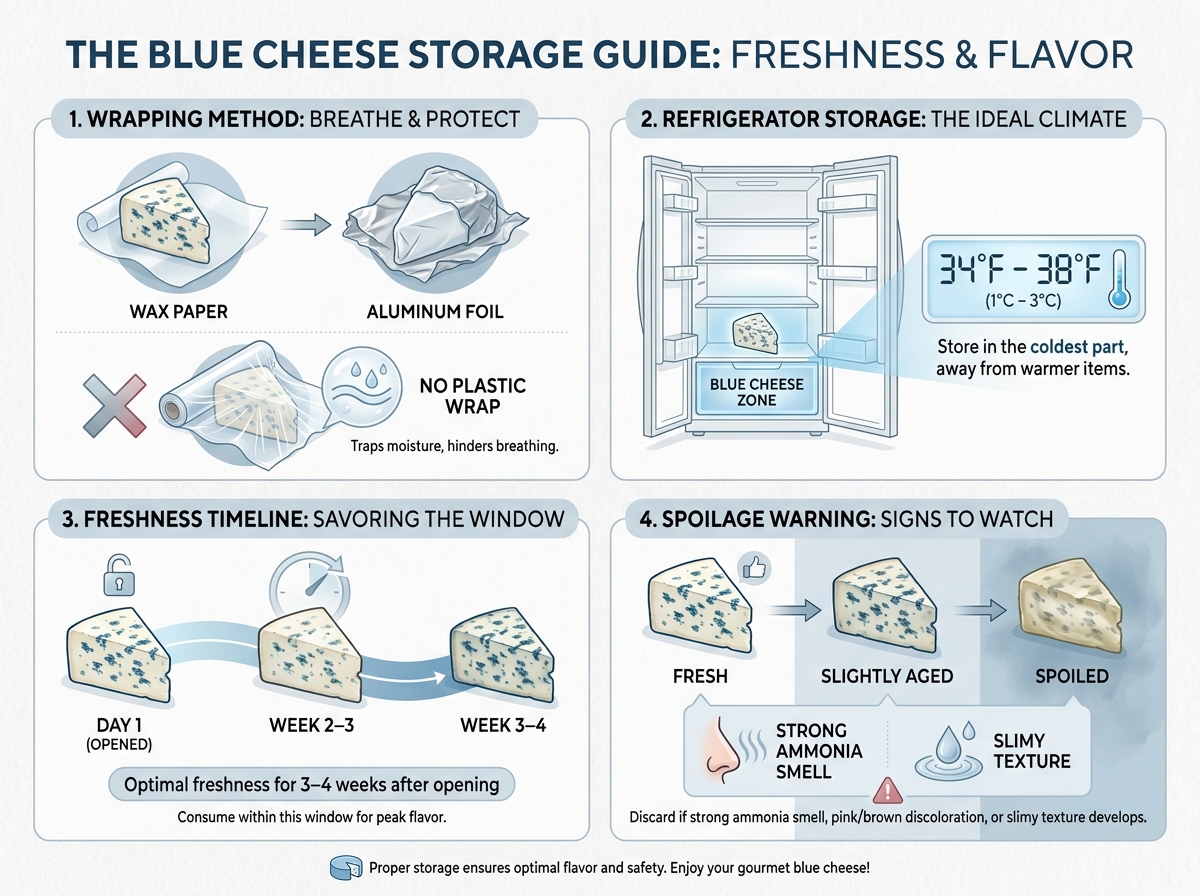
To keep your blue cheese safe and fresh, proper storage matters more than you might think. Wrap it in wax paper or aluminum foil — never plastic wrap, which traps moisture and can encourage unwanted mold growth. Store it in the coldest part of your fridge, ideally between 34°F and 38°F (1°C–3°C).
An opened wedge of blue cheese typically stays fresh for 3 to 4 weeks when stored correctly. Once it starts to develop an unusually strong ammonia-like smell or slimy texture, it's past its prime.
The Final Verdict
Blue cheese mold is not something to fear — it's something to understand. The mold you see in blue cheese is a deliberately cultivated, food-safe culture that has been used for centuries. For the vast majority of healthy adults, eating blue cheese mold is completely safe and may even come with some health perks.
The key is knowing the difference between the intentional, safe mold inside the cheese and the bad mold that can develop on its surface due to improper storage or spoilage. When in doubt, trust your nose and eyes — and always buy from reputable sources.
So go ahead, enjoy that Roquefort on your salad or crumble some Gorgonzola over your pasta — with confidence.
Schedule Your Indoor Air Quality Check Today
Worried about the air inside your home? Our professional indoor air quality inspections help identify hidden pollutants, allergens, and airflow issues so you can breathe cleaner, healthier air with confidence.