
Black Mold Exposure Symptoms: What to Watch For and When to Act
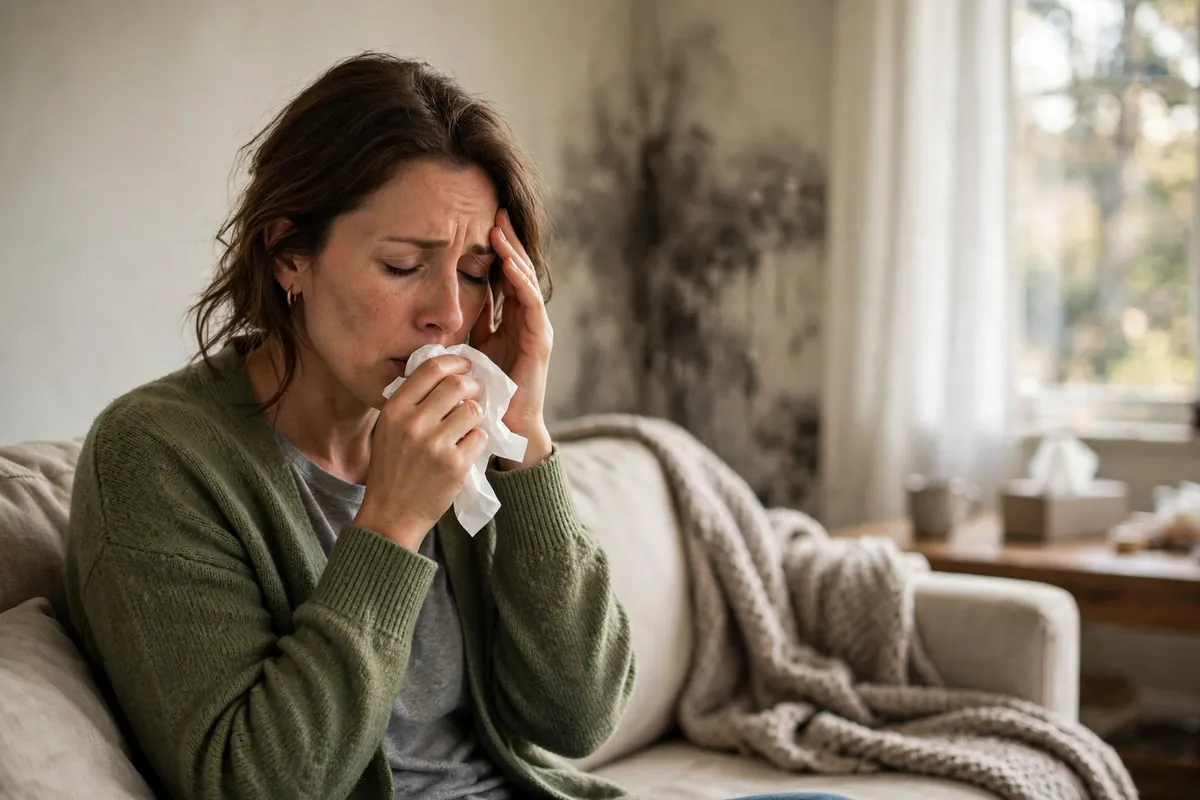
Oct 21, 2026A cough that only shows up at home. Sinuses that clear on vacation and clog again the day you return. A musty smell nobody can explain. For many families, these are the first black mold exposure symptoms they notice, weeks before anyone finds the growth behind a wall or under a floor.
This guide covers what black mold is, the symptoms exposure can cause, how quickly they appear, who is most at risk, and what to do next. It is general information, not medical advice: if you feel unwell, a doctor is the right first call.
What Is Black Mold and How Does Exposure Happen?
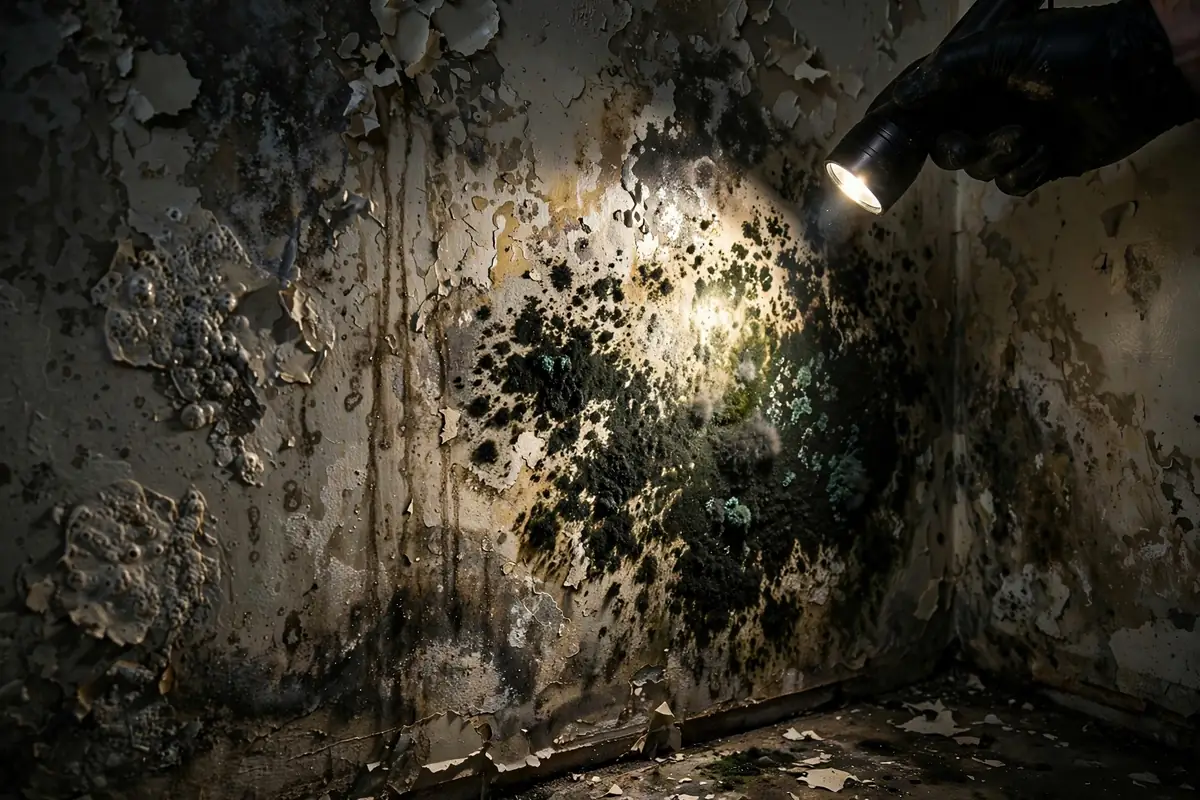
“Black mold” usually means Stachybotrys chartarum, a dark, slimy mold that grows on water-damaged materials rich in cellulose: drywall, ceiling tiles, insulation, and wood. It needs constant moisture, so it appears where leaks, flooding, or condensation go unnoticed. It can also produce mycotoxins, compounds certain molds release as they grow.
Exposure happens mainly by breathing: disturbed mold releases microscopic spores that you inhale at home, work, or school. Skin contact is another route. One fact first: color does not tell you how dangerous a mold is, and many dark molds are not Stachybotrys at all. Only lab testing can identify the species, so symptoms can point to exposure but never prove which mold you have.
The Most Common Black Mold Exposure Symptoms
For most people, black mold exposure symptoms look like a bad allergy or a cold that will not finish. They cluster into four groups.
Respiratory Symptoms
- Coughing, sometimes chronic and worse at night
- Wheezing and chest tightness
- Shortness of breath, especially during activity
- Asthma attacks that become more frequent or harder to control
Nose, Eye and Throat Symptoms
- Sneezing fits and a runny or stuffy nose
- Sinus congestion and sinus headaches, sometimes developing into sinusitis
- Red, itchy, watery eyes
- Sore or irritated throat and postnasal drip
Skin Symptoms
- Itchy rashes or hives after contact with moldy materials
- Dry, irritated patches similar to eczema
Whole-Body Symptoms
With longer or heavier exposure, people also commonly report persistent headaches, fatigue that sleep does not fix, difficulty concentrating (often called brain fog), dizziness, and a general flu-like feeling.
Severity depends on how much mold is present, how long exposure continues, and your own sensitivity. Healthy adults often get only the allergy-type symptoms.
How Quickly Do Symptoms Appear and How Long Do They Last?
People with a mold allergy can react within minutes to hours of entering a moldy space, as the immune system releases histamine against the spores. People without an allergy may notice nothing for days, weeks, or months of repeated low-level exposure, which is why mold problems are so often overlooked.
For most healthy people, symptoms ease within one to three days once exposure stops, and clear fully within days to a few weeks. The warning sign is the pattern: symptoms that fade when you leave a building and return when you come back point to something in that environment.
Who Is Most at Risk From Black Mold Exposure?
Anyone can react to heavy mold exposure, but these groups should take symptoms especially seriously:
- People with asthma or mold allergies, whose airways react more strongly and whose asthma mold can trigger or worsen
- People with weakened immune systems, who face a higher risk of fungal infection
- Children and infants, whose lungs and immune systems are still developing; damp, moldy homes are linked to asthma development in children
- Older adults and people with chronic lung disease, such as COPD

In rare cases, prolonged heavy exposure can lead to hypersensitivity pneumonitis, a lung inflammation with fever, chills, cough, and breathlessness that mimics a flu that never fully goes away. Uncommon in homes, but one reason persistent symptoms should never be ignored.
Serious Symptoms: When to See a Doctor
See a doctor promptly if you notice any of the following, and seek urgent care for breathing difficulty:
- Wheezing, breathlessness, or chest tightness that is new or getting worse
- An asthma attack that does not respond to your usual inhaler
- Fever, chills, or flu-like illness that keeps returning
- A cough lasting more than a few weeks, or coughing up blood
- Symptoms in a baby, an older adult, or anyone with a weakened immune system
A doctor can test for mold allergy with skin-prick or blood tests and rule out other causes. No single blood test proves “black mold poisoning,” despite what some clinics advertise; diagnosis is built from your symptoms, history, and exposure.

Black Mold Myths vs. Facts
| Myth | Fact |
|---|---|
| Black mold is always deadly | For healthy people it most often causes allergy and respiratory symptoms. Serious outcomes are rare, and CDC and EPA do not classify Stachybotrys as uniquely deadly. |
| If the mold is black, it is toxic black mold | Many common molds are dark. Only a lab test can confirm Stachybotrys chartarum. |
| Symptoms prove it is black mold | The same symptoms come from many molds, dust mites, pollen, and viruses. Symptoms suggest exposure; testing confirms it. |
| Killing the mold with bleach solves it | Dead mold can still irritate airways, and mold returns if the moisture source is not fixed. Removal plus moisture repair is the real solution. |
How Do You Know It Is Mold and Not a Cold or Allergies?
Look for the pattern rather than any single symptom:
- Symptoms are worse in one building or room, and better outdoors or away
- A musty, earthy odor in the same space
- Water stains, bubbling paint, warped flooring, or a history of leaks or flooding
- Symptoms began or worsened after water damage, a move, or a renovation
- Several people in the same home feel unwell
A two-week symptom diary, noting where you were when symptoms flared, is one of the most useful things you can bring to your doctor and a mold inspector.
What to Do If You Suspect Black Mold Exposure
- Reduce exposure first. Spend less time in the affected room, and keep children, older relatives, and anyone with asthma out of it until it is assessed.
- Do not tear into it. Disturbing a large patch spreads spores through the home. Areas larger than about 10 square feet are a job for professionals.
- See your doctor if symptoms persist, and mention the possible exposure and any water damage at home.
- Confirm what you actually have. Professional mold inspection and testing identifies the species, measures airborne spore levels against outdoor air, and finds the moisture source, including hidden growth inside walls or HVAC systems.
- Fix the moisture, then remove the mold. Inspection first, remediation second, and the leak or humidity problem must be repaired or the mold will return.
Frequently Asked Questions
Can black mold make you sick even if you cannot see it?
Yes. Mold inside walls, under flooring, or in HVAC ducts releases spores into indoor air without ever being visible. A musty odor plus symptoms at home is a common sign of hidden growth.
Does black mold cause headaches?
Yes, headaches are among the most commonly reported symptoms, usually alongside sinus congestion. They typically ease once exposure ends.
How long do symptoms last after remediation?
Most healthy people improve within days to a few weeks after the mold and its moisture source are removed. If symptoms linger, see your doctor.
Can you be tested for mold exposure?
Doctors test for mold allergy with skin or blood tests. For the home, air and surface sampling analyzed by an accredited lab confirms which molds are present and at what levels.
Find Out What Is in Your Air
Symptoms can tell you something is wrong, but not what is growing in your walls or floating in your air. A professional test can. At Indoor Air Quality Services (IAQ Answers), we inspect Atlanta homes, test the air and surfaces, and explain lab results in plain language. Call us at (770) 363-2670 to arrange testing for your home.
Schedule Your Indoor Air Quality Check Today
Worried about the air inside your home? Our professional indoor air quality inspections help identify hidden pollutants, allergens, and airflow issues so you can breathe cleaner, healthier air with confidence.