Why Does Air Quality Get Worse at Night? (Causes and Fixes)
Sep 29, 2026Have you ever woken up with a dry throat, a stuffy nose, or a heavy head? Your air may be to blame. Many people notice that the air feels worse after dark, both outside and inside their homes. So, why does air quality get worse at night? Cooler air, less wind, and closed windows all trap pollution close to you. Here is what is going on and what you can do about it.
Is Air Quality Worse at Night?
In many places, yes. Fine particles (PM2.5) and nitrogen dioxide often peak overnight and in the early morning, when the air is not mixing much. Ozone is the exception. It forms in sunlight, so it drops after sunset. But that does not mean the air is clean, because other pollutants take over. Indoors, the problem is often even bigger.
Why Does Air Quality Get Worse at Night Outdoors?
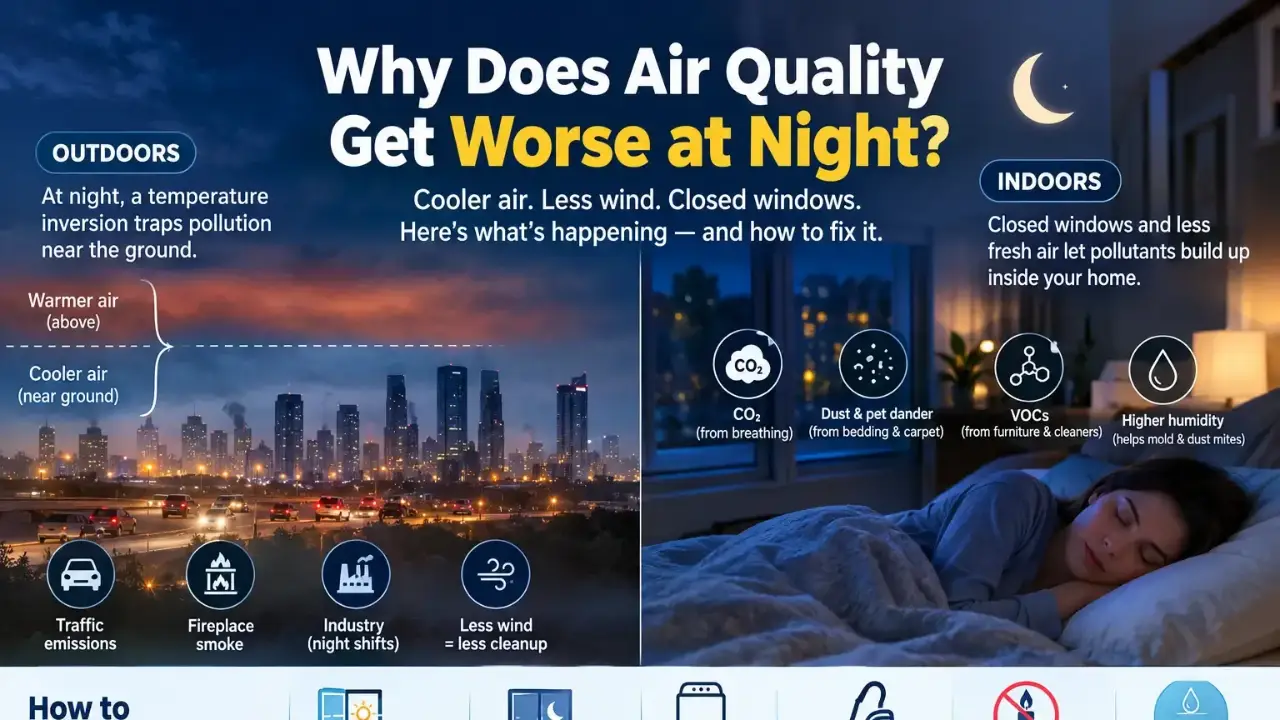
The main reason is a temperature inversion. During the day, the sun warms the ground, and warm air rises. This lifts pollution up and mixes it into the atmosphere. At night, the ground cools down. Cool air sits near the surface with warmer air above it, like a lid. Pollution cannot rise, so it stays where you breathe.
Wind also slows down at night, so there is less to blow pollution away. Meanwhile, the sources keep going. Traffic, fireplace smoke, and night shift industry all add pollution to that thin layer of air. Rising humidity can add to the problem too.
Why Indoor Air Gets Worse at Night Too
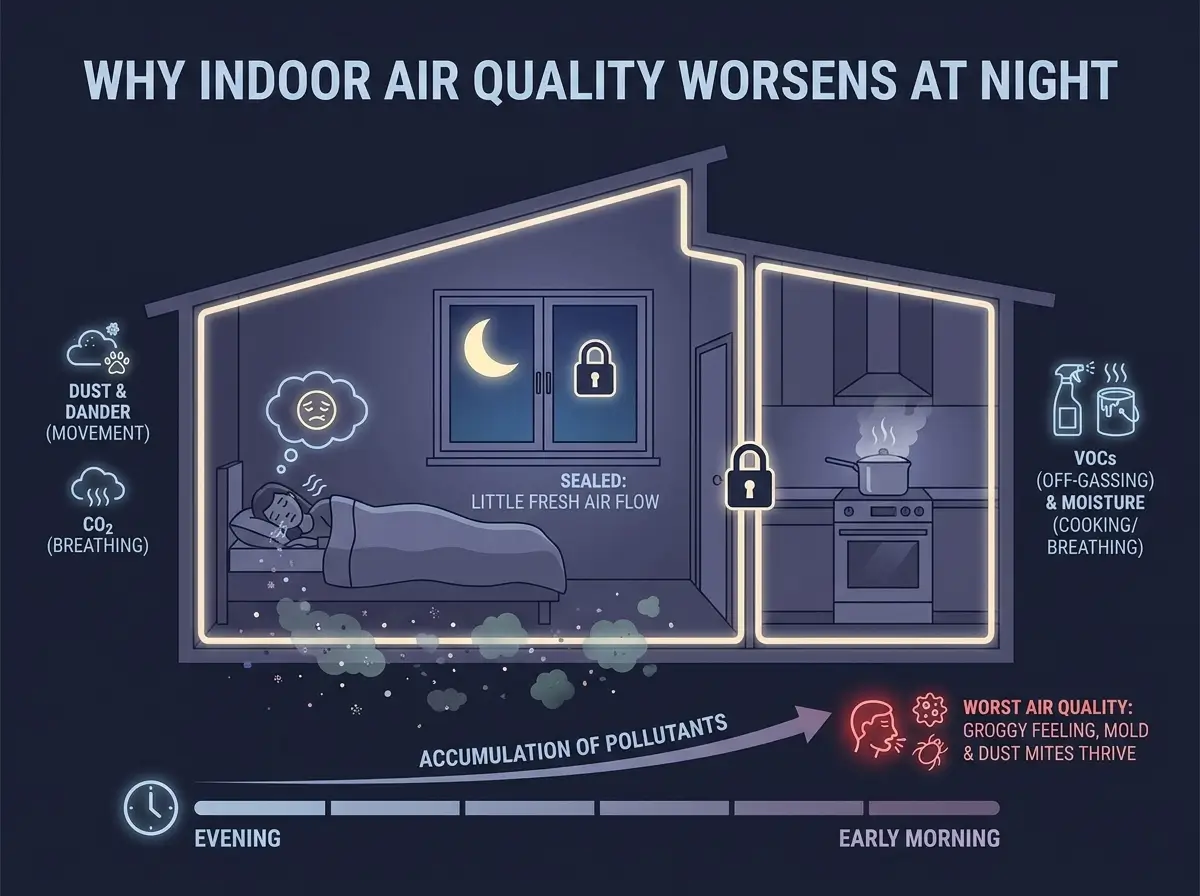
You might think staying in is safer, but indoor air can suffer as well. So why does air quality get worse at night inside your home? Fresh air stops coming in. Most people sleep with doors and windows shut, and many modern homes are sealed tightly to save energy. Meanwhile, pollutants keep building up.
- Carbon dioxide from your own breathing can rise in a closed bedroom and leave you feeling groggy.
- Dust and pet dander get stirred up from bedding and carpet as you move.
- VOCs from paint, furniture, and cleaning products keep off-gassing.
- Moisture from breathing and evening cooking can raise humidity, which helps mold and dust mites thrive.
Bedroom air is often at its worst in the early morning, after hours with little airflow. For more on what may be hiding in your home, read our guide on hidden causes of poor indoor air quality.
How Bad Air at Night Affects Sleep and Health
Poor air at night can change how well you sleep. Studies link pollutants like PM2.5 and nitrogen dioxide to worse sleep quality. Poor indoor air has also been tied to broken sleep and stronger breathing symptoms in people with sensitivities. If you have asthma, allergies, or a heart condition, you may notice it most. Common signs include morning congestion, a sore or dry throat, coughing, and feeling tired after a full night in bed.
Is Air Quality Better in the Morning or at Night?
It depends on the pollutant. For particles, early morning can be worse because pollution has built up overnight. It often improves once the sun warms the ground and mixes the air. Ozone works the opposite way and peaks in the afternoon. The best move is to check the hourly AQI trend in your local air quality app and plan outdoor exercise for cleaner hours.
How to Improve Air Quality at Night
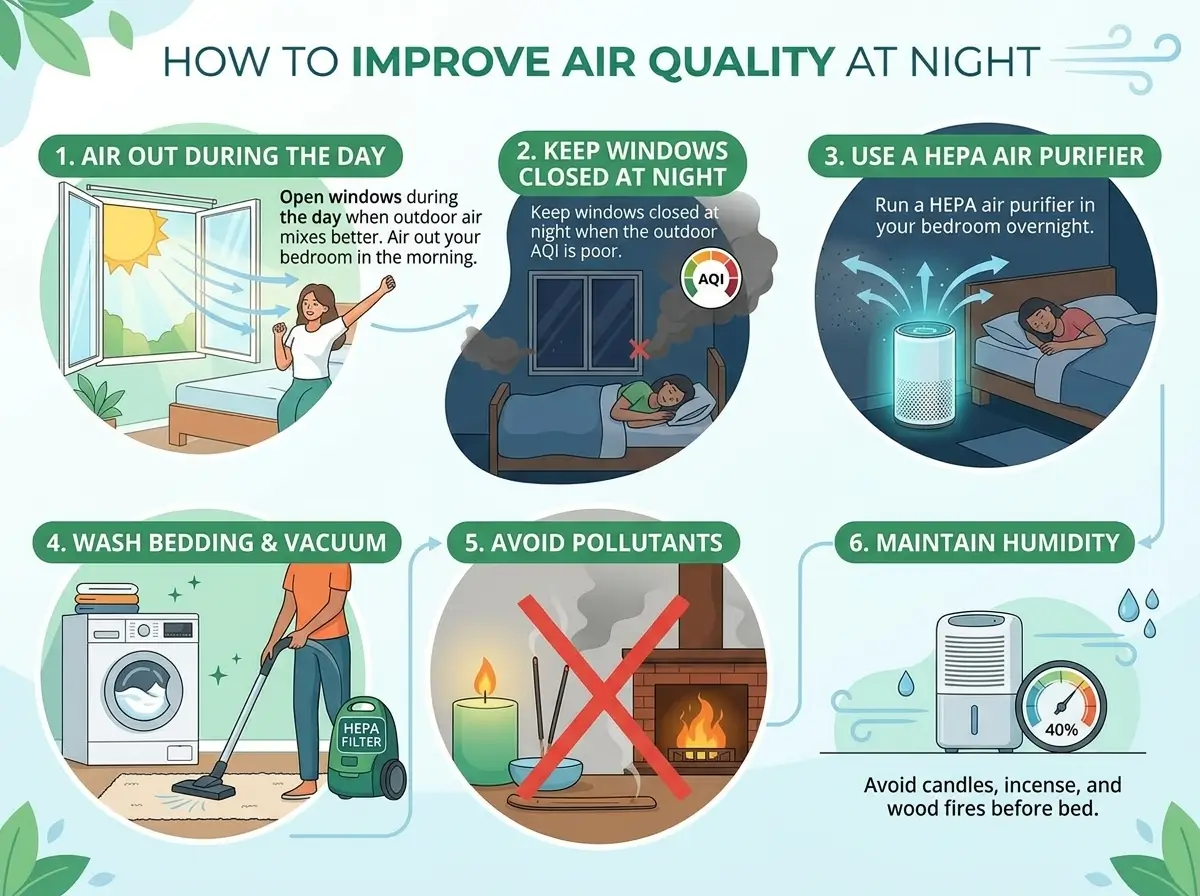
- Open windows during the day, when outdoor air mixes better, and air out your bedroom in the morning.
- Keep windows closed at night when the outdoor AQI is poor.
- Run a HEPA air purifier in your bedroom overnight.
- Wash bedding weekly and vacuum with a HEPA filter.
- Avoid candles, incense, and wood fires before bed.
- Keep indoor humidity between 30 and 50 percent.
- Not sure what is in your air? Read our guide on how to test air quality in your home.
Final Thoughts
So, why does air quality get worse at night? Outside, cool air and calm wind trap pollution near the ground. Inside, closed windows let dust, moisture, and gases build up while you sleep. The good news is that you can control a lot of it. Ventilate during the day, use a purifier, and test your air if you are unsure.
Schedule Your Indoor Air Quality Check Today
Worried about the air inside your home? Our professional indoor air quality inspections help identify hidden pollutants, allergens, and airflow issues so you can breathe cleaner, healthier air with confidence.