Does Rain Improve Air Quality? What You Should Know
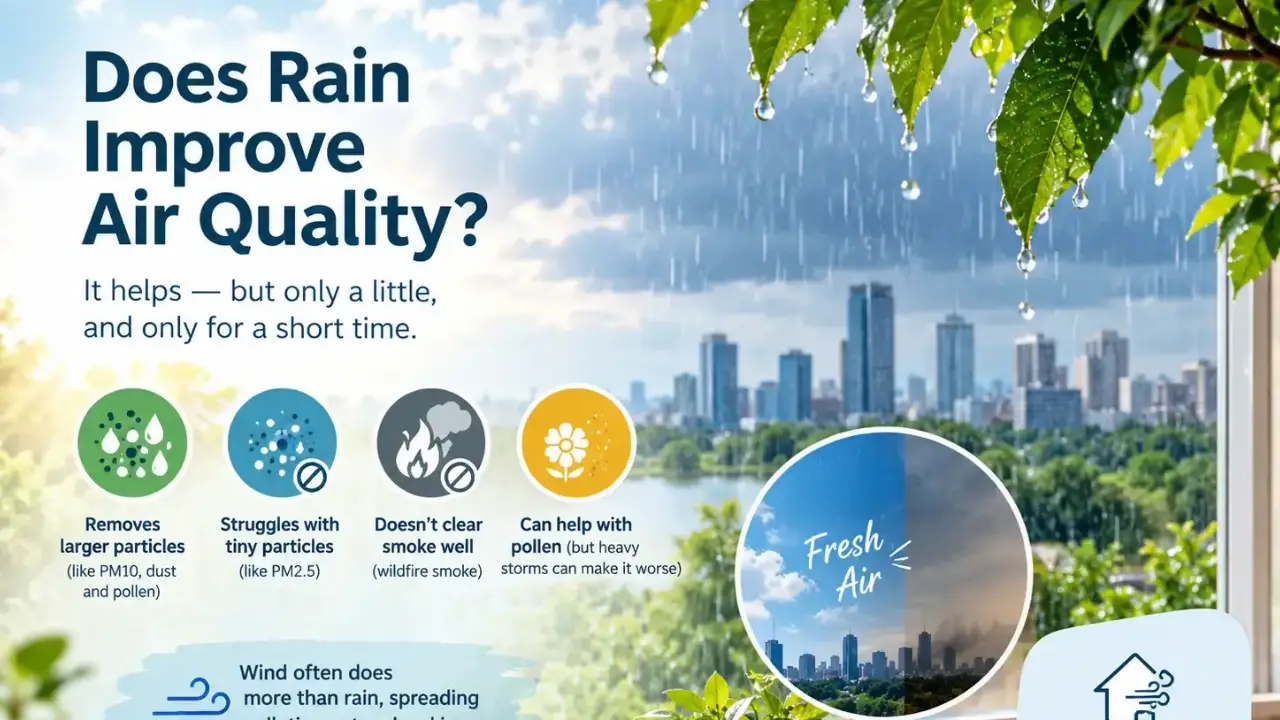
Sep 28, 2026After a rainstorm, the air feels fresh and clean. The sky looks clearer and the smell is pleasant. So, does rain improve air quality? The short answer is yes, but only a little, and only for a short time. Rain works best on bigger particles. It does much less for tiny particles, smoke, and some gases. Let's look at how it works and what it means for your health.
How Rain Cleans the Air
Raindrops act like tiny sponges. As they fall, they collect dust and other particles in the air and carry them to the ground. Scientists call this washout. Rain can also pull particles out of clouds before it falls, which is called rainout.
This works best on larger particles like PM10, which includes dust and some pollen. Smaller particles like PM2.5 are much harder to catch. They are very light and slip past falling raindrops.
How Much Does Rain Improve Air Quality?
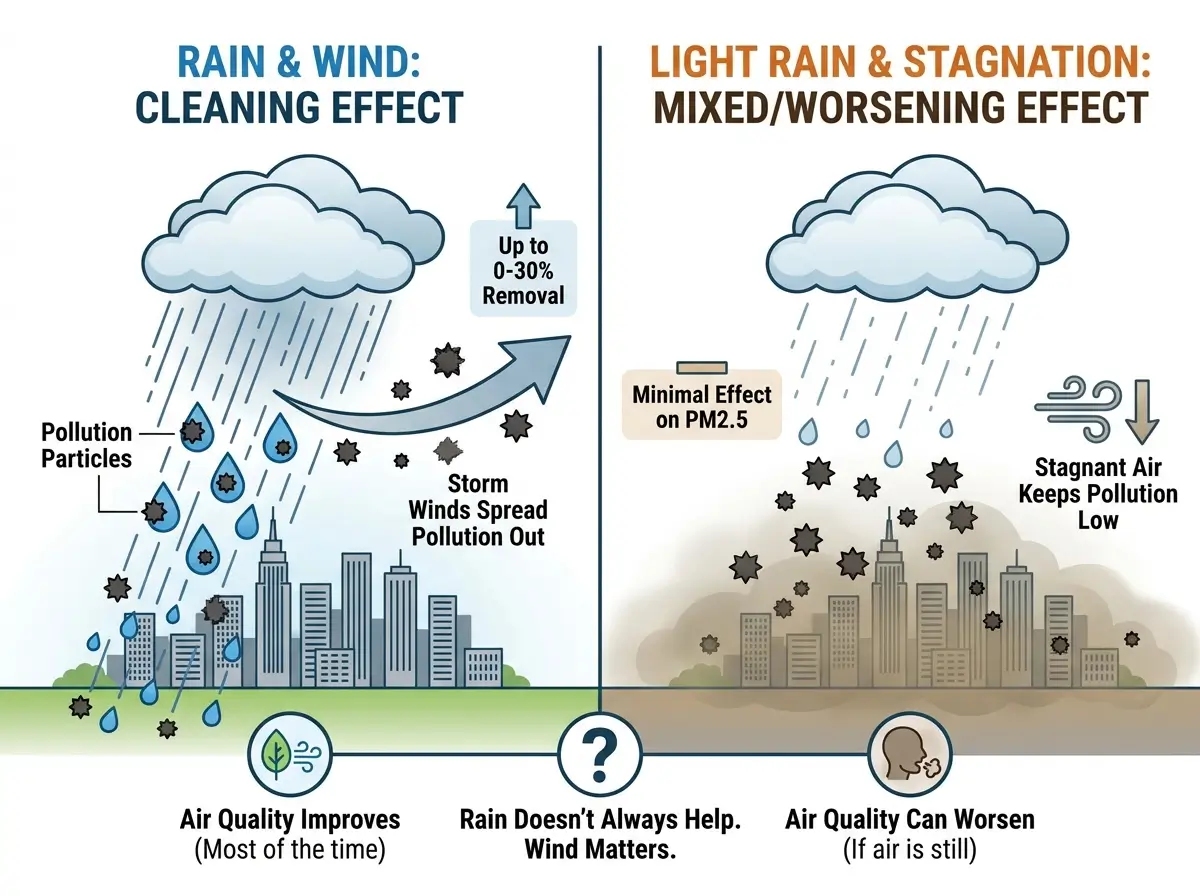
Studies show rain removes about 0 to 30 percent of air pollution particles. Heavy rain does more than light drizzle. Light rain may have almost no effect on PM2.5.
One study looked at 18 rain and snow events. Air quality got better in 15 of them, but it got worse in 3. So rain does not always help. It can make things worse when the air stays still and pollution stays close to the ground.
Wind also plays a big role. Storm winds spread pollution out and often do more than the rain itself. That is why the air can feel fresh after a storm even when the rain did very little.
Does Rain Clear Smoke?
Not very well. Wildfire smoke is made of extremely tiny particles, and these are the hardest kind for rain to remove. Research also suggests that rain removes less particle pollution during smoke events than it does on normal days.
Sometimes smoke even comes back after the rain. In one Minnesota event, smoke arrived behind the cold front that brought the rain, so the air got smoky again. A heavy shower may help a little in one area, but a change in wind direction usually matters more.
If there is smoke in your area, check your local AQI and limit time outside, even if it is raining.
Does Rain Clean the Air of Pollen?
Light, steady rain can wash pollen out of the air and bring relief from allergies. Heavy storms are different. Strong rain and wind can break pollen grains into much smaller pieces. These pieces are easier to breathe deep into the lungs. In rare cases, this causes thunderstorm asthma, where symptoms suddenly get worse.
Damp weather can also increase mold and dust mites. If you have asthma or allergies, keep your medicine close during storms and pollen season. For a local example, see our guide on when pollen season starts in Georgia.
Why Does the Air Smell Fresh After Rain?
The fresh smell is called petrichor. It comes from oils released by plants, a compound called geosmin from soil bacteria, and sometimes ozone from lightning. The smell is pleasant, but it does not mean the air is clean.
What About Indoor Air After Rain?
Rain can affect the air inside your home too. Higher humidity can lead to mold growth, and leaks can bring in moisture. Try to keep indoor humidity between 30 and 50 percent, fix leaks quickly, and use a dehumidifier if needed.
Many people also ask, does rain improve air quality inside the house? It does not. Opening windows during a storm can even let in moisture and allergens. For more tips, read our guide on how to improve indoor air quality.
What to Do After Rain
- Check your local AQI before going outside.
- If you have allergies, watch the pollen count after storms.
- Keep indoor humidity low and dry any wet spots fast.
- Open windows only when outdoor air quality is good.
Final Thoughts
So, does rain improve air quality? Yes, but the effect is small and short lived. Rain helps with larger particles, but it struggles with smoke and tiny particles, and heavy storms can even make pollen worse. Think of rain as a small bonus, not a fix. Keep checking your local AQI and take care of your indoor air, because that is the part you can control.
Schedule Your Indoor Air Quality Check Today
Worried about the air inside your home? Our professional indoor air quality inspections help identify hidden pollutants, allergens, and airflow issues so you can breathe cleaner, healthier air with confidence.