7 Dangerous Air Quality Signs That Harm Your Dog
Sep 28, 2026Many pet owners start searching for what air quality is bad for dogs after noticing their dog coughing, wheezing, or acting tired outside. The truth is, dogs breathe the same air we do, and dirty air can hurt them just as much as it hurts us. Knowing which air quality levels are unsafe can help you protect your dog before small problems turn into big ones.
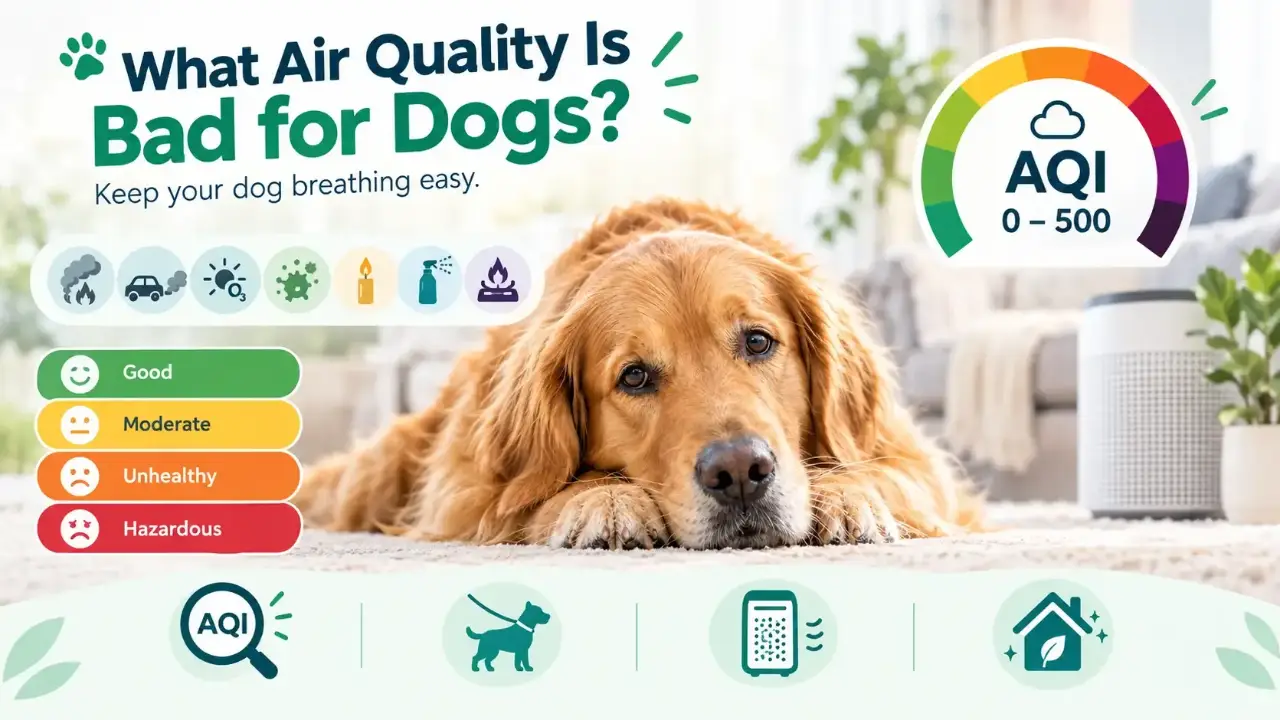
What Air Quality Is Bad for Dogs? Understanding the AQI Scale
The Air Quality Index, or AQI, measures how clean or polluted the air is. It runs from 0 to 500.
- 0 to 50 (Good): Safe for all dogs.
- 51 to 100 (Moderate): Still safe, but keep an eye on dogs with health issues.
- 101 to 150 (Unhealthy for Sensitive Groups): Puppies, senior dogs, and dogs with heart or breathing problems should spend more time indoors.
- 151 and above (Unhealthy to Hazardous): This is bad air quality for dogs of every age and breed. Keep walks short and stay inside when you can.
Common Pollutants That Make Air Quality Bad for Dogs
Outdoor pollution is not the only problem. Air quality that is bad for dogs can also come from inside your own home.
Outdoor sources include wildfire smoke, car exhaust, and ground-level ozone. These tiny particles irritate a dog's nose, throat, and lungs.
Indoor sources are just as common, and often overlooked. Mold spores, scented candles, air fresheners, and gas stoves can all lower the air quality inside your home and affect your dog's breathing. Dogs spend more time close to the floor, where dust and heavy particles settle, so they often breathe in more of these pollutants than we do. If your dog seems to cough more indoors than outdoors, it may be worth scheduling an indoor air quality inspection to find the real source.
Signs Your Dog Is Reacting to Poor Air Quality
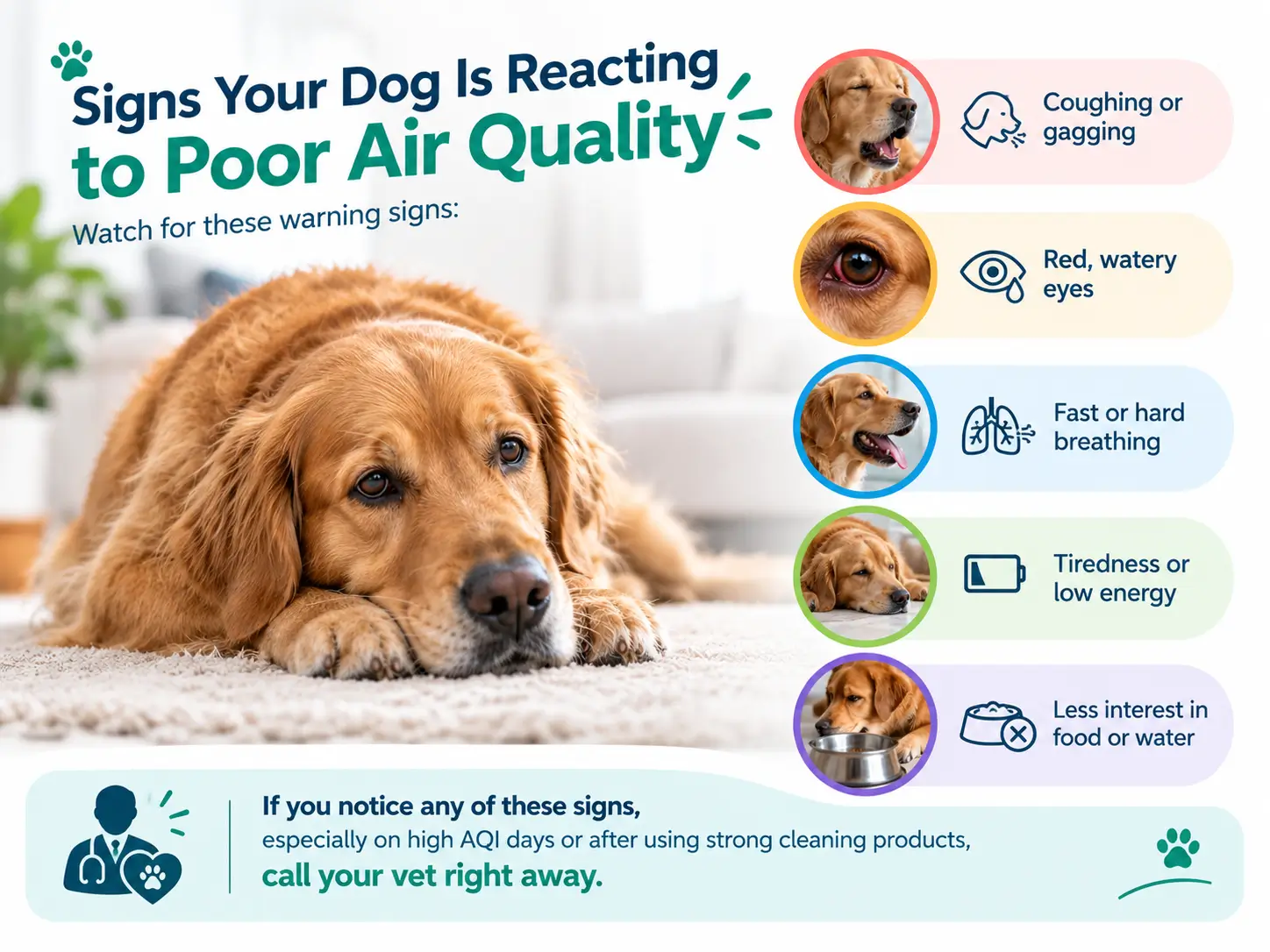
Watch for these warning signs:
- Coughing or gagging
- Red, watery eyes
- Fast or hard breathing
- Tiredness or low energy
- Less interest in food or water
If you notice any of these signs, especially on high AQI days or after using strong cleaning products, call your vet right away.
Dogs at Higher Risk
Some dogs are more sensitive to poor air quality than others. This includes puppies, senior dogs, and flat faced breeds like Bulldogs, Pugs, and Boston Terriers. Dogs with asthma, heart disease, or other breathing issues also need extra care. These risks often overlap with the same air quality health symptoms that affect people living in homes with poor ventilation.
How to Protect Your Dog From Bad Air Quality
- Check the AQI before walks. Use a site like AirNow to see your local air quality.
- Keep walks short on bad air days. Skip hard exercise when the AQI is high.
- Use an air purifier at home. A HEPA filter can remove dust, smoke, and other particles.
- Watch for indoor triggers. Candles, sprays, and mold can quietly lower your indoor air.
- Test your home's air. If your dog keeps coughing indoors, the cause might be hiding in your walls or vents.
Final Thoughts
Understanding what air quality is bad for dogs helps you act early, before small symptoms turn into bigger health problems. Whether the source is outdoor smoke or indoor mold, a few simple steps can keep your dog breathing easy.
Schedule Your Indoor Air Quality Check Today
Worried about the air inside your home? Our professional indoor air quality inspections help identify hidden pollutants, allergens, and airflow issues so you can breathe cleaner, healthier air with confidence.