
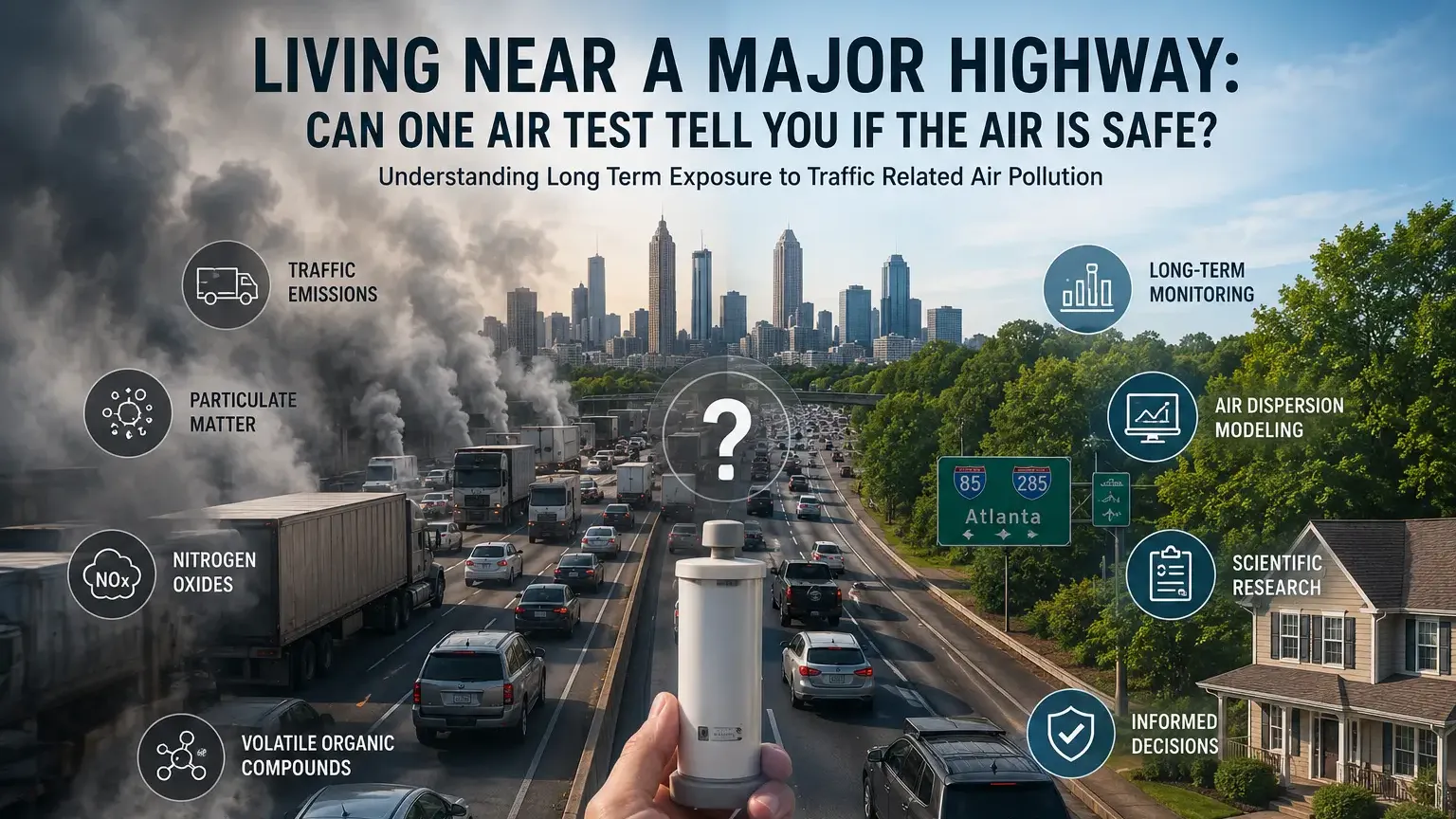
Living Near a Major Highway: Can One Air Test Tell You If the Air Is Safe?
Jul 15, 2026Why a Single Outdoor Air Sample Is Not the Right Tool for Evaluating Long Term Exposure to Traffic Related Air Pollution
One of the most common questions we receive from prospective homebuyers is whether living near a major interstate such as Interstate 85 (I 85) or Interstate 285 (I 285) in the Atlanta metropolitan area poses a long term air quality concern.
The concern is understandable. Major highways carry thousands of vehicles every day, including heavy duty diesel trucks, and are known sources of traffic related air pollution. Naturally, many buyers ask whether a one time outdoor air quality test can determine if a property's location is safe from roadway emissions.
The short answer is no.
While outdoor air sampling is an important environmental assessment tool in certain situations, a single test cannot accurately characterize long term exposure to traffic related pollutants. Understanding why requires an appreciation for how dynamic outdoor air quality really is.
Outdoor Air Quality Is Constantly Changing
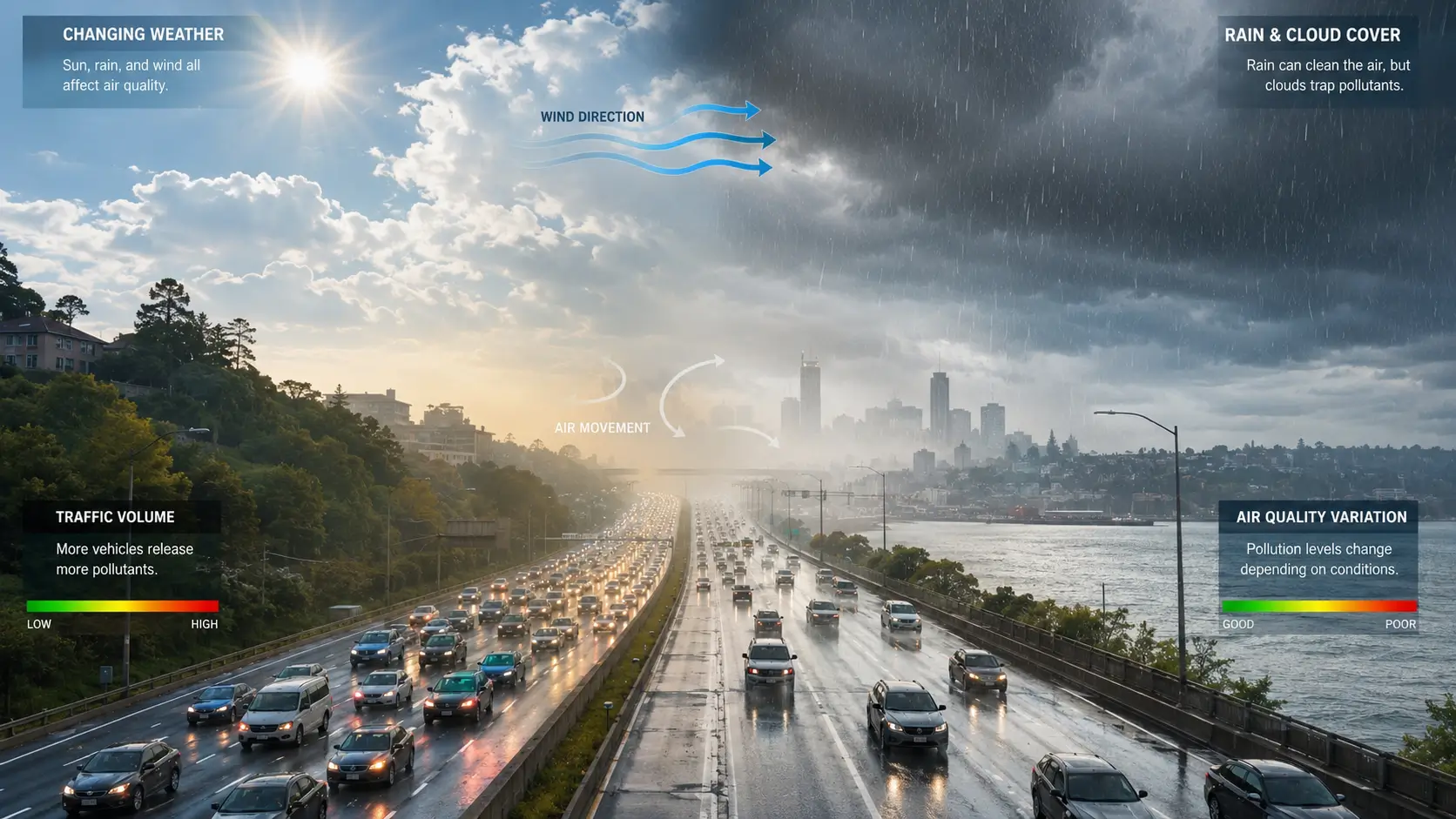
Unlike indoor environments, where conditions are relatively controlled, outdoor air is influenced by countless environmental variables that can change from minute to minute.
These include:
- Wind speed and direction
- Rainfall and humidity
- Temperature
- Atmospheric pressure
- Seasonal weather patterns
- Time of day
- Traffic volume
- Vehicle type (gasoline vs. diesel)
- Temperature inversions
- Local topography and vegetation
Because these variables are continuously changing, pollutant concentrations near a roadway can vary dramatically throughout the day.
An outdoor air sample collected at 10:00 a.m. on a calm, rainy day may produce results that are entirely different from a sample collected later that afternoon during rush hour with stagnant air conditions.
This is why environmental professionals often describe outdoor air sampling as a snapshot in time. It reflects only the conditions present during the sampling period, not the average conditions someone experiences over months or years.
Why Long Term Studies Provide Better Answers?
Federal and state agencies do not rely on single outdoor air samples when evaluating the health impacts of living near busy highways.
Instead, organizations such as the U.S. Environmental Protection Agency (EPA), the Federal Highway Administration (FHWA), and academic researchers use:
- Long term ambient air monitoring
- Air dispersion modeling
- Continuous monitoring stations
- Multi year epidemiological studies
- Transportation emissions modeling
These methods evaluate pollutant concentrations over extended periods while accounting for changing weather patterns, traffic volumes, and seasonal variability. This approach provides a much more accurate representation of long term exposure than any single site visit could.
What Pollutants Are Associated with Major Highways?
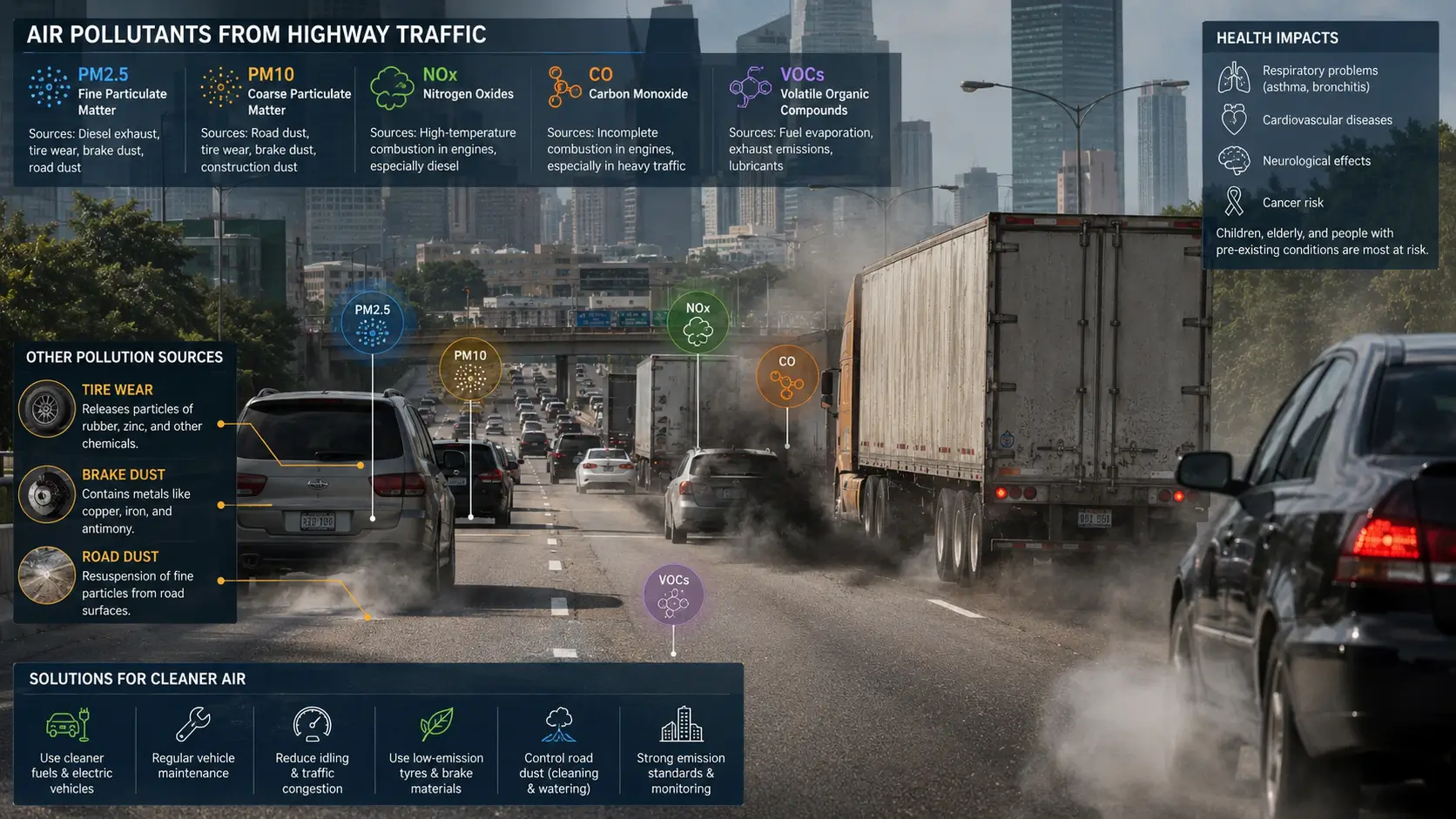
Research has consistently identified several pollutants commonly associated with vehicle traffic, including:
- Fine particulate matter (PM2.5)
- Coarse particulate matter (PM10)
- Nitrogen oxides (NOx), including nitrogen dioxide (NO₂)
- Diesel particulate matter and black carbon
- Carbon monoxide (CO)
- Volatile organic compounds (VOCs)
- Mobile Source Air Toxics (MSATs), including benzene, formaldehyde, and 1,3 butadiene
Many of these pollutants are emitted directly from vehicle exhaust, while others originate from tire wear, brake wear, road dust, and fuel combustion.
Does Distance From the Highway Matter?
Yes.
One of the strongest findings in transportation air quality research is that pollutant concentrations generally decrease as the distance from a major roadway increases.
The highest concentrations are typically observed closest to heavily traveled highways, with concentrations declining substantially over the first several hundred feet. However, the exact distance at which pollutant levels approach background concentrations depends on numerous factors, including prevailing winds, traffic density, terrain, and weather conditions.
Because these factors vary from one location to another, no single outdoor air sample can predict the average long term exposure for a property.
What About I 85 and I 285 in Atlanta?
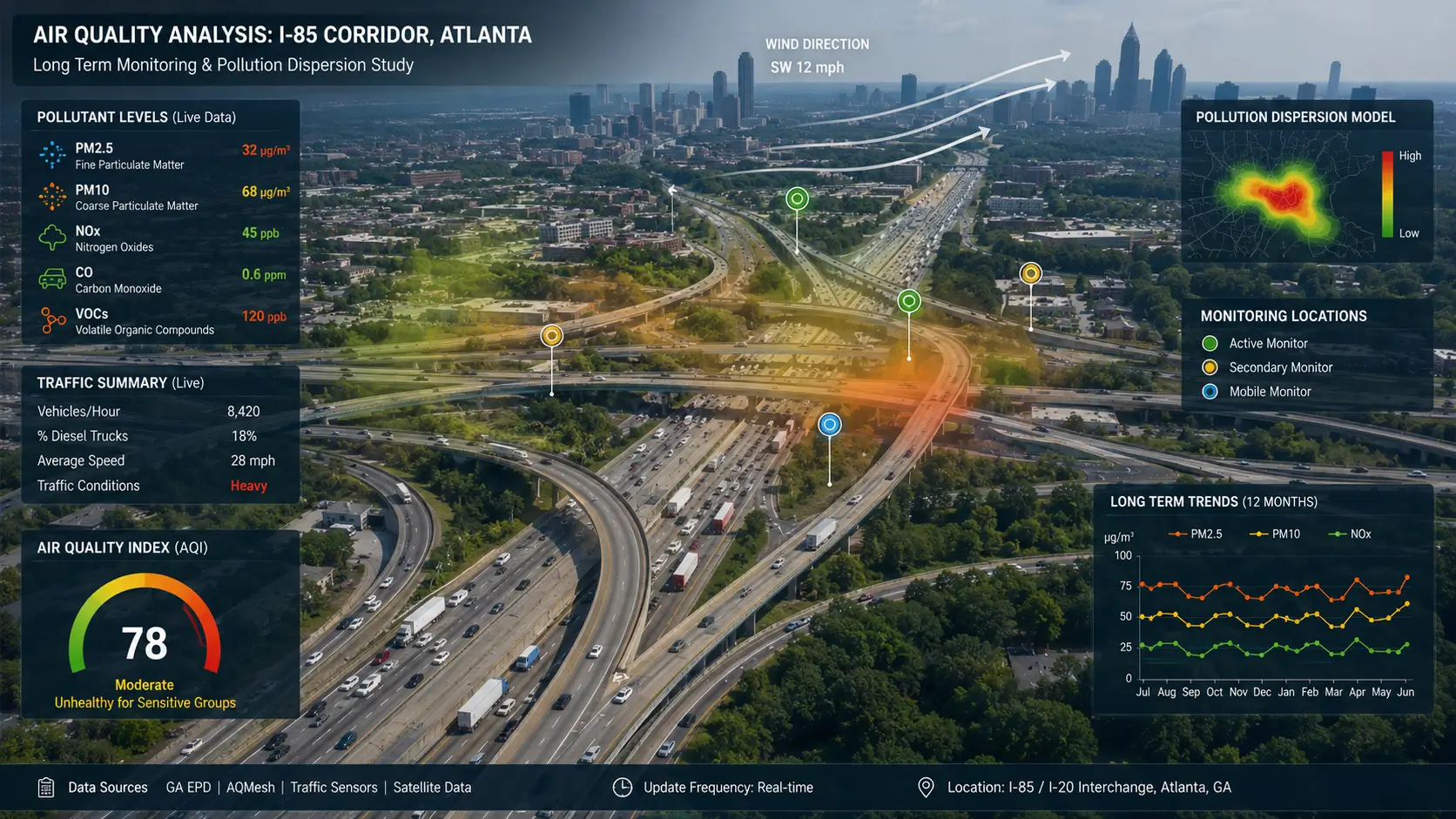
Transportation and environmental agencies have conducted numerous studies involving Atlanta's interstate corridors, including I 85 and I 285. These investigations evaluate traffic emissions using long term monitoring and computer based air dispersion models rather than isolated air samples.
The research confirms that traffic related pollutants can be elevated near major transportation corridors. However, the amount of exposure varies considerably depending on:
- Daily traffic volume
- Percentage of diesel trucks
- Wind direction
- Local terrain
- Vegetation
- Building placement
- Weather conditions
This is precisely why transportation planners and environmental scientists rely on long term datasets rather than one time measurements.
Why We Do Not Recommend One Time Outdoor Testing for This Purpose?
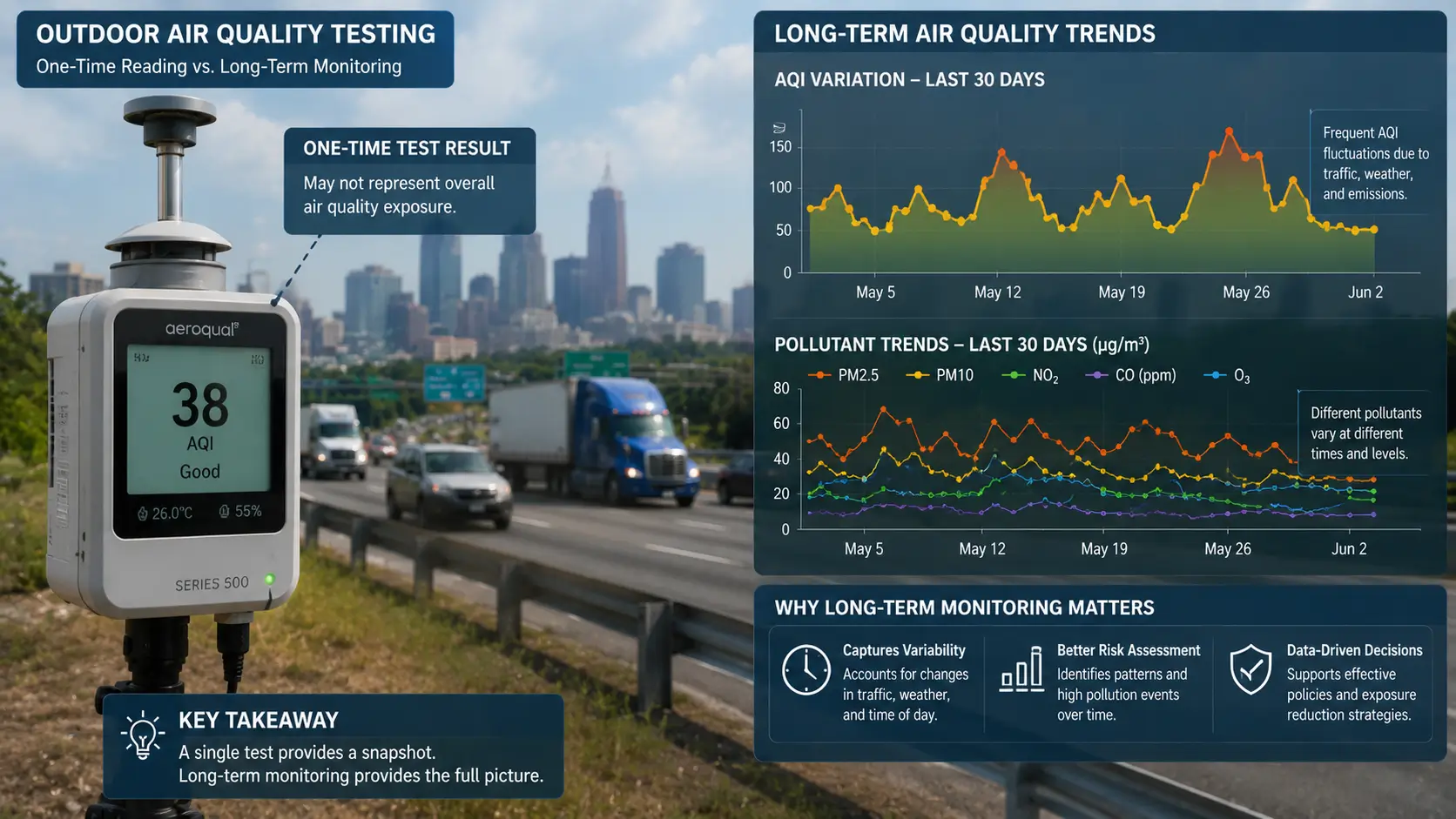
At Indoor Air Quality Services, our goal is to provide information that is scientifically sound and meaningful.
While we perform many types of environmental testing, we do not recommend a one time outdoor air sample as a method of determining whether living near a highway presents a long term air quality concern.
Doing so could unintentionally provide results that are misleading because the conditions during sampling may not represent typical conditions over time.
Instead, questions regarding long term exposure are best answered using the extensive body of research produced by government agencies and peer reviewed scientific studies.
The Bottom Line
Living near a major interstate does not automatically mean the air quality is unsafe. However, it is well established that traffic related pollutants can be higher near heavily traveled roadways.
Determining what that means for a specific property requires far more than a single air sample. Long term monitoring, atmospheric modeling, and decades of scientific research provide a much more reliable basis for understanding potential exposure than any snapshot collected during one visit.
If you are considering purchasing a home near a major highway and have questions about indoor or outdoor environmental quality, it's important to understand the strengths and limitations of environmental testing. An informed decision should be based on sound science, not a single measurement taken under conditions that may never occur again.
References
U.S. Environmental Protection Agency (EPA). Research on Near Roadway and Other Near Source Air Pollution.
U.S. Environmental Protection Agency (EPA). Near Roadway Air Pollution and Health.
Federal Highway Administration (FHWA). Mobile Source Air Toxics Research and Analysis.
Federal Highway Administration (FHWA). Atlanta Northwest Corridor Mobile Source Air Toxics Case Study.
Health Effects Institute. Traffic Related Air Pollution: A Critical Review of the Literature.
Schedule Your Indoor Air Quality Check Today
Worried about the air inside your home? Our professional indoor air quality inspections help identify hidden pollutants, allergens, and airflow issues so you can breathe cleaner, healthier air with confidence.