
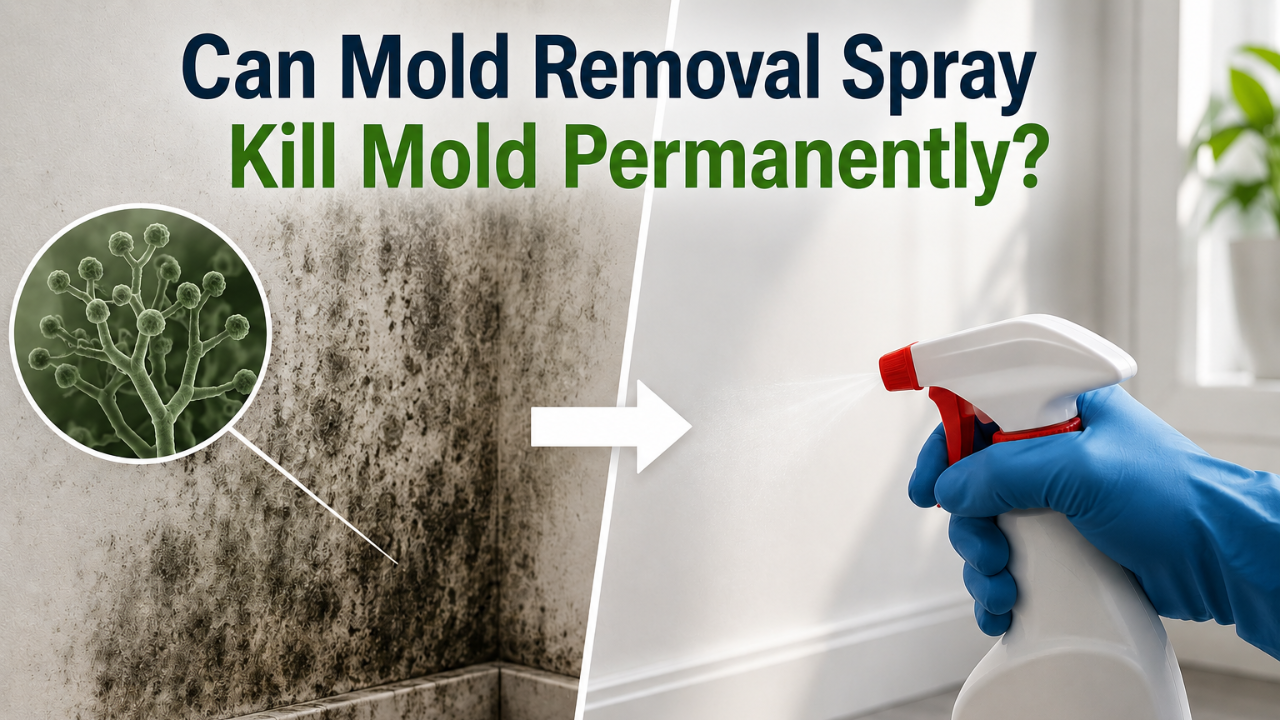
Can Mold Removal Spray Kill Mold Permanently? What Homeowners Need to Know
Jun 22, 2026You spot a patch of mold, grab the nearest spray bottle, and blast it until the stain disappears. A few weeks later, it's back — sometimes worse than before.
If that's happened to you, you're not imagining it. Mold removal sprays are one of the most popular weapons homeowners reach for, but most people misunderstand what these products can actually do. Some sprays genuinely kill mold. Others just bleach the color out and leave the problem very much alive underneath.
Here's what every homeowner should know before grabbing that bottle again.
How Mold Removal Sprays Actually Work
Most commercial mold sprays fall into a few categories: chlorine bleach-based cleaners, EPA-registered fungicides, enzyme or "natural" sprays, and foaming mold removers. The active ingredient is meant to break down mold cell structures so the organism dies.
The catch is where that ingredient actually reaches. Sprays are built to treat what's visible and accessible on a surface — not to travel deep into porous materials like drywall, wood framing, or grout, which is exactly where mold likes to set up shop.
Can Mold Removal Spray Kill Mold Permanently?
The honest answer: it depends on what's growing, where it's growing, and what's feeding it.
On hard, non-porous surfaces — tile, glass, sealed countertops, plastic — a quality mold spray can kill mold completely, because the entire colony is sitting right there on the surface where the product can reach it.
On porous surfaces — drywall, wood, grout lines, carpet padding, ceiling tiles — it's a different story. Mold doesn't just sit on top of these materials. It sends root-like structures called hyphae down into the material itself. A spray can kill the surface growth and even lighten the staining, but it often can't reach far enough to kill what's embedded deeper in the material. That's why mold seems to "come back" — it never fully left.
There's also the moisture problem. Spray products address the mold that's currently there. They do nothing to fix the leaky pipe, the poor bathroom ventilation, or the humid crawl space that caused the mold in the first place. Spray without fixing moisture, and you're just buying time before the same spot reappears.
Types of Mold Removal Sprays — and What They're Good For
Bleach-based sprays remove surface staining and kill mold well on hard, non-porous surfaces. They struggle on porous materials, since chlorine breaks down before penetrating deep enough to reach mold roots — and the added water can even feed future growth. For a deeper look at whether bleach truly kills mold, including its limits on porous surfaces, our full guide breaks it down.
EPA-registered fungicidal sprays are formulated specifically to kill mold and inhibit regrowth, often on a wider range of surfaces. These tend to outperform general household cleaners.
Enzyme-based and "natural" sprays break down mold using enzymes or mild acids. Effective on light, surface-level growth, but they usually need longer dwell time and repeat applications for tougher mold.
Foaming mold removers cling to vertical and textured surfaces longer than liquid sprays, giving the active ingredient more contact time on grout lines, textured ceilings, and tile.
Why Mold Comes Back Even After Spraying
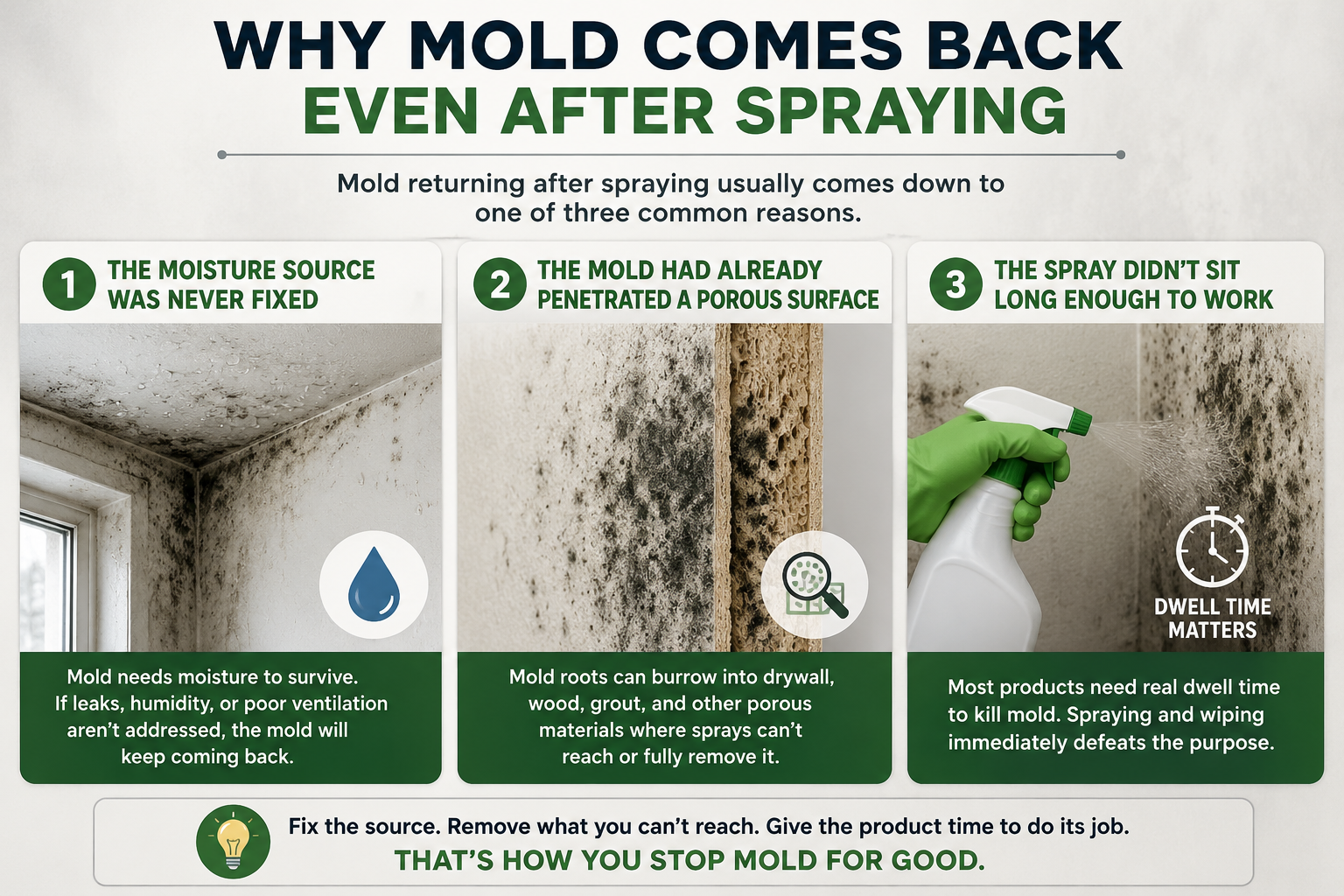
If you've sprayed, scrubbed, and watched mold return anyway, it's almost always one of three issues: the moisture source was never fixed, the mold had already penetrated a porous surface, or the spray didn't sit long enough to work. Most products need real dwell time — spraying and wiping immediately defeats the purpose.
Getting the Best Results From a Mold Spray
A few habits make a real difference when treating a small, surface-level patch yourself:
- Fix the moisture source first — this matters more than the product you choose.
- Match the spray to the surface. Hard surfaces can usually be fully treated; porous materials may need replacement instead.
- Let it sit for the full dwell time before wiping.
- Dry the area completely afterward with fans or a dehumidifier.
- Recheck in a week or two to confirm it hasn't returned.
When Spray Isn't Enough — Time to Call a Professional
Mold spray is a reasonable first step for small, surface-level patches on hard surfaces. It's not a substitute for professional remediation when:
- Mold covers a large area of wall, ceiling, or flooring
- The mold is growing on porous building materials like drywall or wood framing
- You suspect black mold (Stachybotrys) or can't identify the mold type
- Mold is inside HVAC systems or air ducts
- Mold keeps returning despite repeated cleaning
- Anyone in the home has ongoing allergy, respiratory, or unexplained health symptoms
In these situations, spraying can actually mask the problem — killing visible mold while spores remain in the air or hidden behind walls. A professional mold inspection and testing can confirm what's really going on before you spend more money and time on products that only treat what's on the surface.
Conclusion
Mold removal spray can kill mold permanently — but only under the right conditions: a non-porous surface, the correct product, proper dwell time, and a moisture problem that's already been fixed. Skip any one of those, and you're likely looking at a temporary fix rather than a permanent one.
If mold keeps returning no matter what you spray, that's usually a sign the issue runs deeper than a surface treatment can reach.
Schedule Your Indoor Air Quality Check Today
Worried about the air inside your home? Our professional indoor air quality inspections help identify hidden pollutants, allergens, and airflow issues so you can breathe cleaner, healthier air with confidence.