
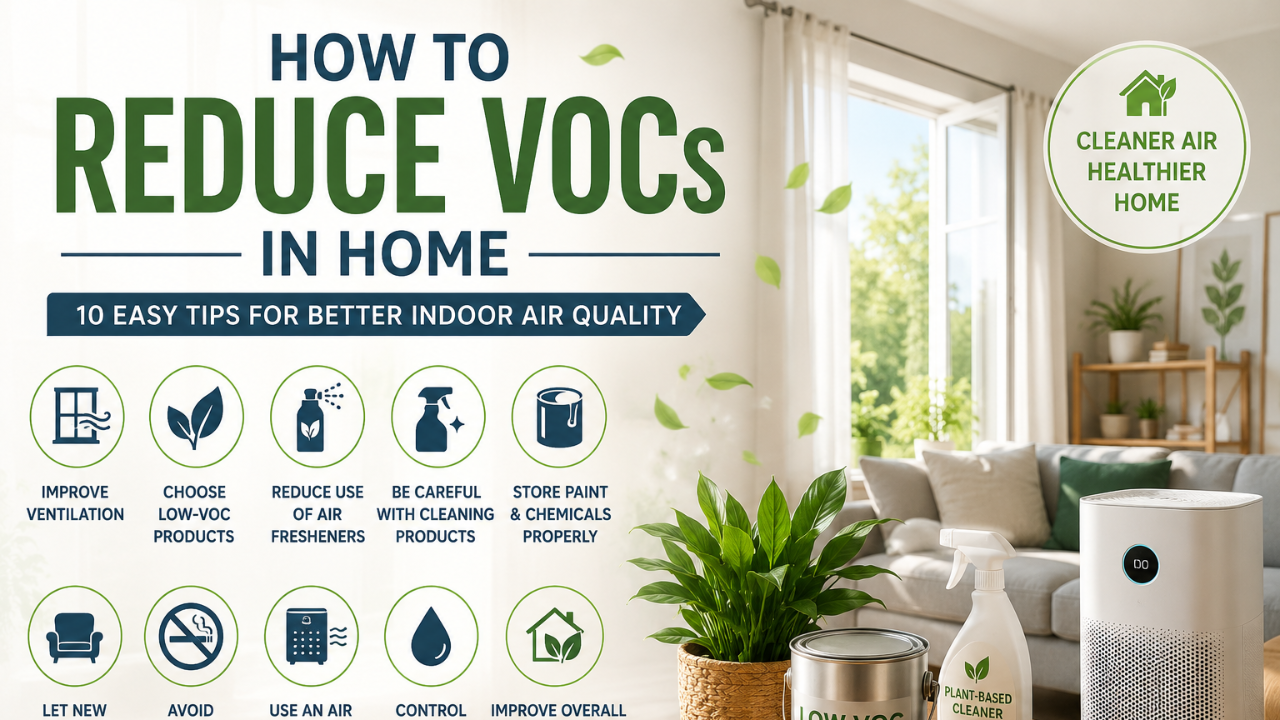
How to Reduce VOCs in Home: 10 Easy Tips
Aug 27, 2026If you want to know how to reduce VOCs in home, the good news is that you can take several simple steps to improve your indoor air quality. Volatile organic compounds (VOCs) are gases released by many household products, building materials, paints, cleaners, furniture, and other everyday items.
VOCs can build up indoors when there is not enough fresh-air circulation. The EPA notes that concentrations of many VOCs can be higher indoors than outdoors, making VOC reduction an important part of maintaining healthy indoor air.
What Are VOCs?
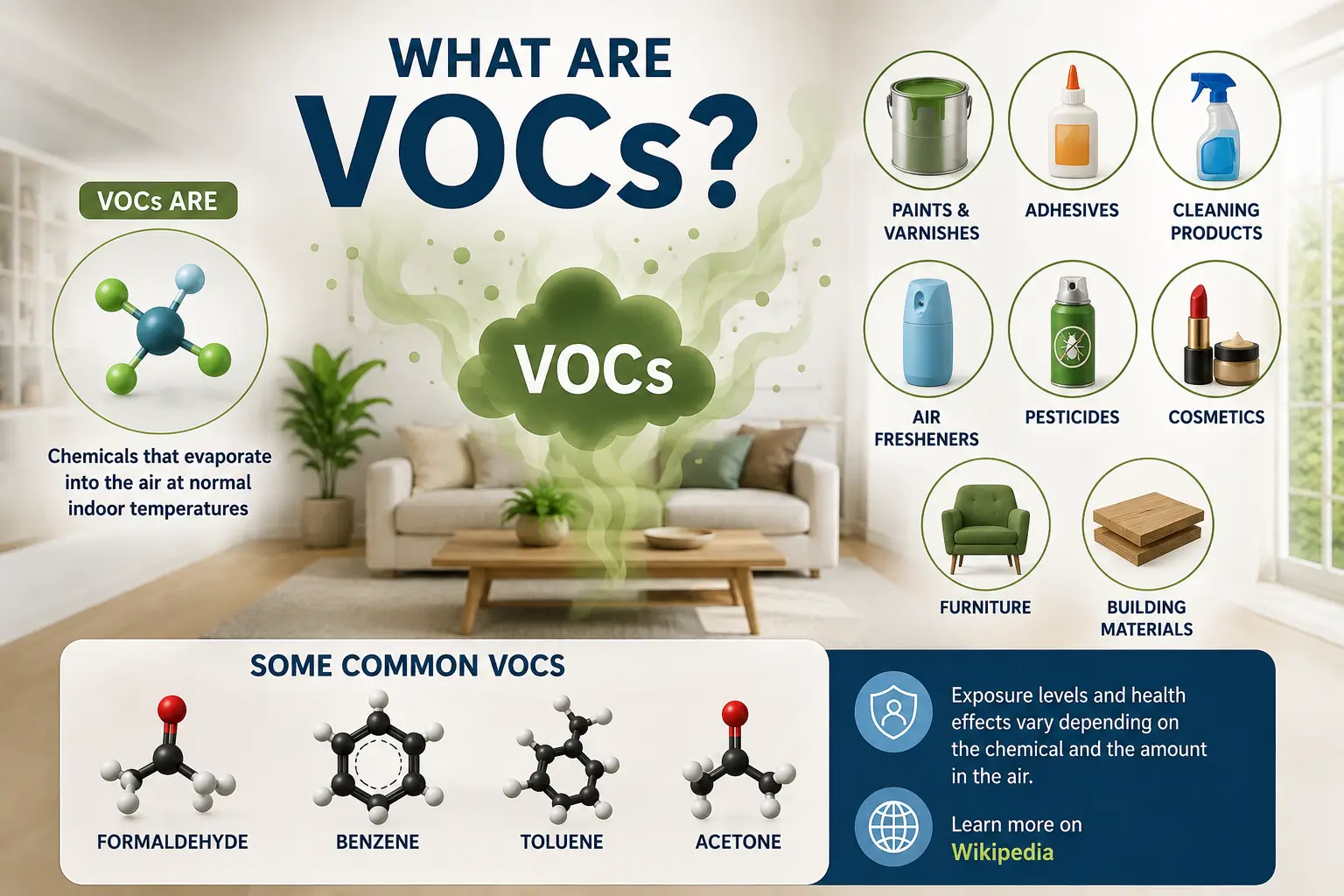
Volatile organic compounds are chemicals that can evaporate into the air at normal indoor temperatures. Common VOC sources include paints, varnishes, adhesives, cleaning products, air fresheners, pesticides, cosmetics, furniture, and some building materials.
Some common VOCs include formaldehyde, benzene, toluene, and acetone. Exposure levels and health effects vary depending on the specific chemical and the amount present in the air.
You can learn more about volatile organic compounds on Wikipedia.
1. Improve Ventilation
One of the simplest ways to reduce VOC levels is to bring more fresh outdoor air into your home. Open windows and doors when outdoor air quality and weather conditions allow it.
Use kitchen and bathroom exhaust fans that vent outdoors, especially when cooking, cleaning, painting, or using products with strong chemical odors. Better ventilation helps dilute indoor pollutants and move them outside.
2. Choose Low-VOC Products
When buying paint, flooring, furniture, adhesives, or other household products, look for products labeled low-VOC or zero-VOC where appropriate.
These products can help reduce the amount of chemical emissions released into your indoor environment. However, always read the product label because "low-VOC" does not necessarily mean a product contains no chemicals.
3. Reduce the Use of Air Fresheners
Air fresheners may make your home smell clean, but they can also release VOCs and other chemicals into the air. Instead of constantly using sprays, plug-ins, or scented products, focus on removing the source of unpleasant odors.
Regular cleaning, good ventilation, and controlling moisture can help keep your home smelling fresh without adding unnecessary chemicals.
4. Be Careful With Cleaning Products
Many household cleaners and disinfectants can release VOCs. Use only the amount recommended on the label and provide plenty of ventilation while cleaning.
Never mix cleaning products unless the manufacturer specifically says it is safe. Store chemical products tightly closed when they are not being used.
5. Store Paint and Chemicals Properly
Leftover paint, solvents, pesticides, fuels, and other chemical products can continue releasing vapors while stored. Keep these products tightly sealed and stored according to the manufacturer's instructions.
If you have old or unused chemical products, look for safe local disposal options instead of keeping them in your living areas. The EPA recommends safely disposing of unwanted products because gases can escape even from containers that appear closed.
6. Let New Furniture Air Out
New furniture, cabinets, carpets, and pressed-wood products can release VOCs through a process called off-gassing. If possible, allow new items to air out in a well-ventilated space before placing them in bedrooms or other frequently occupied areas.
This is especially useful after renovations or when purchasing several new furnishings at once.
7. Avoid Indoor Smoking
Tobacco smoke introduces numerous pollutants into indoor air, including VOCs. The simplest way to prevent this source is to avoid smoking inside your home.
Keeping smoking outdoors can significantly reduce the pollutants released into your indoor environment.
8. Use an Air Purifier Carefully
An air purifier can be helpful as part of an overall indoor air quality strategy, but it should not be your only solution. For VOCs, look for a purifier that includes activated carbon because carbon filtration is designed to adsorb certain gases and odors.
HEPA filters are excellent for airborne particles such as dust and mold spores, but HEPA alone is not designed to remove most gaseous VOCs. For example, a quality air purifier can help with indoor air quality and airborne mold particles, but source control is still important.
9. Control Indoor Humidity
Humidity does not directly cause every VOC problem, but maintaining appropriate indoor humidity can support better overall indoor air quality and help prevent mold growth.
The EPA recommends keeping indoor relative humidity around 30% to 50%. A simple humidity meter can help you monitor conditions in your home.
10. Improve Overall Indoor Air Quality
Reducing VOCs is only one part of creating healthier indoor air. Dust, mold, smoke, excess moisture, and poor ventilation can also affect your home's air quality.
For more practical tips, check out our guide on how to improve indoor air quality. It covers common indoor pollutants and simple ways to improve the air inside your home.
Final Thoughts
Learning how to reduce VOCs in home does not have to be complicated. Start by identifying common VOC sources, choosing lower-emission products, improving ventilation, storing chemicals properly, and reducing unnecessary air fresheners and chemical products.
Remember that source control is usually one of the most effective ways to improve indoor air quality. Ventilation and air cleaning can provide additional support, but removing or reducing the source should remain a priority.
Schedule Your Indoor Air Quality Check Today
Worried about the air inside your home? Our professional indoor air quality inspections help identify hidden pollutants, allergens, and airflow issues so you can breathe cleaner, healthier air with confidence.