
Ideal House Temperature: The Complete Guide
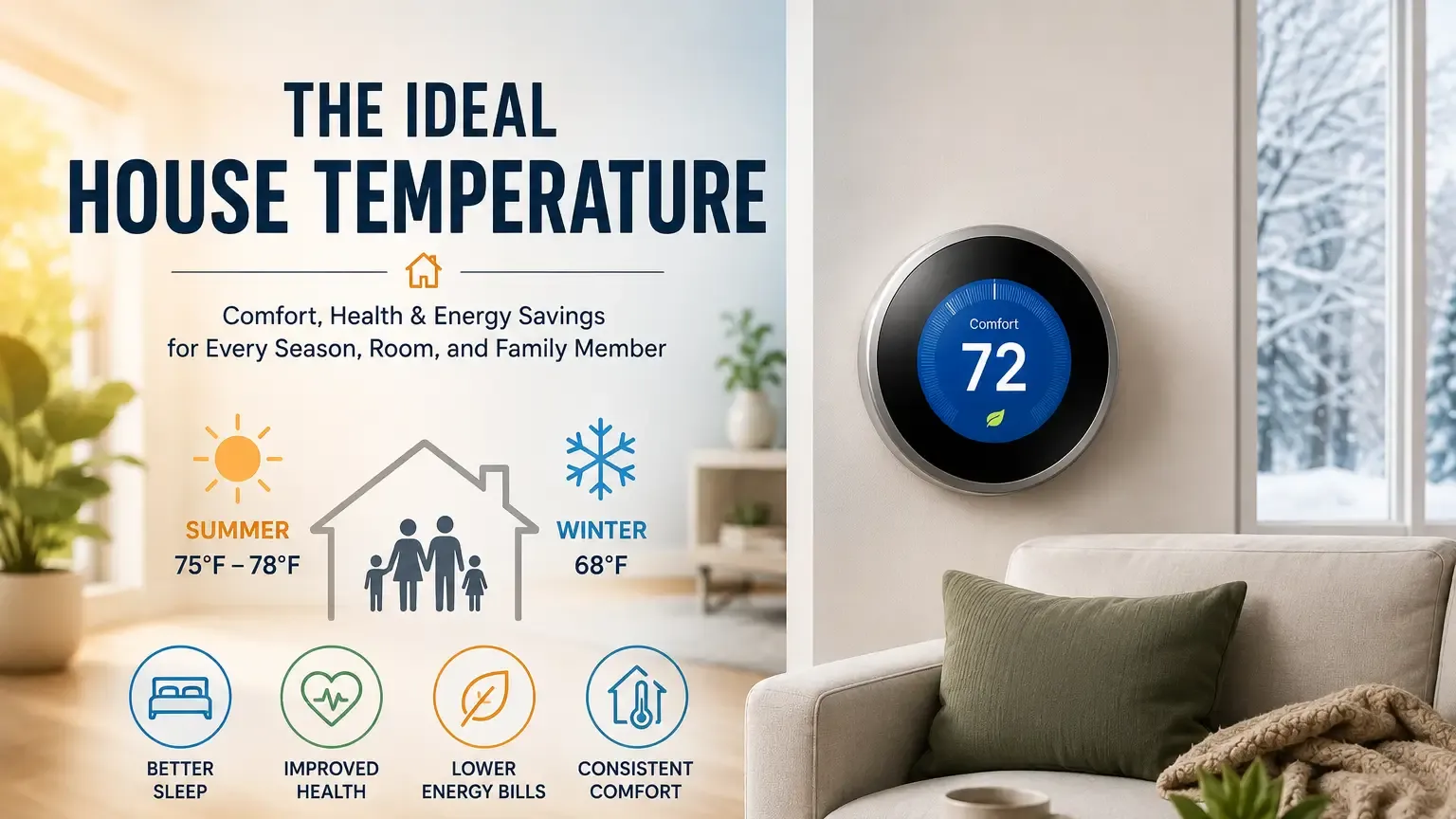
Jul 27, 2026What is the ideal house temperature? For most homes, it falls between 68°F and 78°F (20°C to 25.5°C), depending on the season and who lives in your home. There is no single perfect number, but understanding the science behind comfort can help you find the right setting for your family.
Why Comfort Isn't the Same for Everyone
Comfort is personal. Your metabolism, clothing, activity level, and even your home's insulation all affect how warm or cool a space feels. Humidity plays a big role too. High humidity makes a room feel hotter than the thermostat shows, while dry winter air can make the same setting feel colder. Homes with high ceilings, large windows, or poor insulation often need extra adjustment to stay comfortable. If you're not sure how airflow and ventilation affect your comfort, our guide on how to improve indoor air quality covers the basics.
Ideal House Temperature by Season
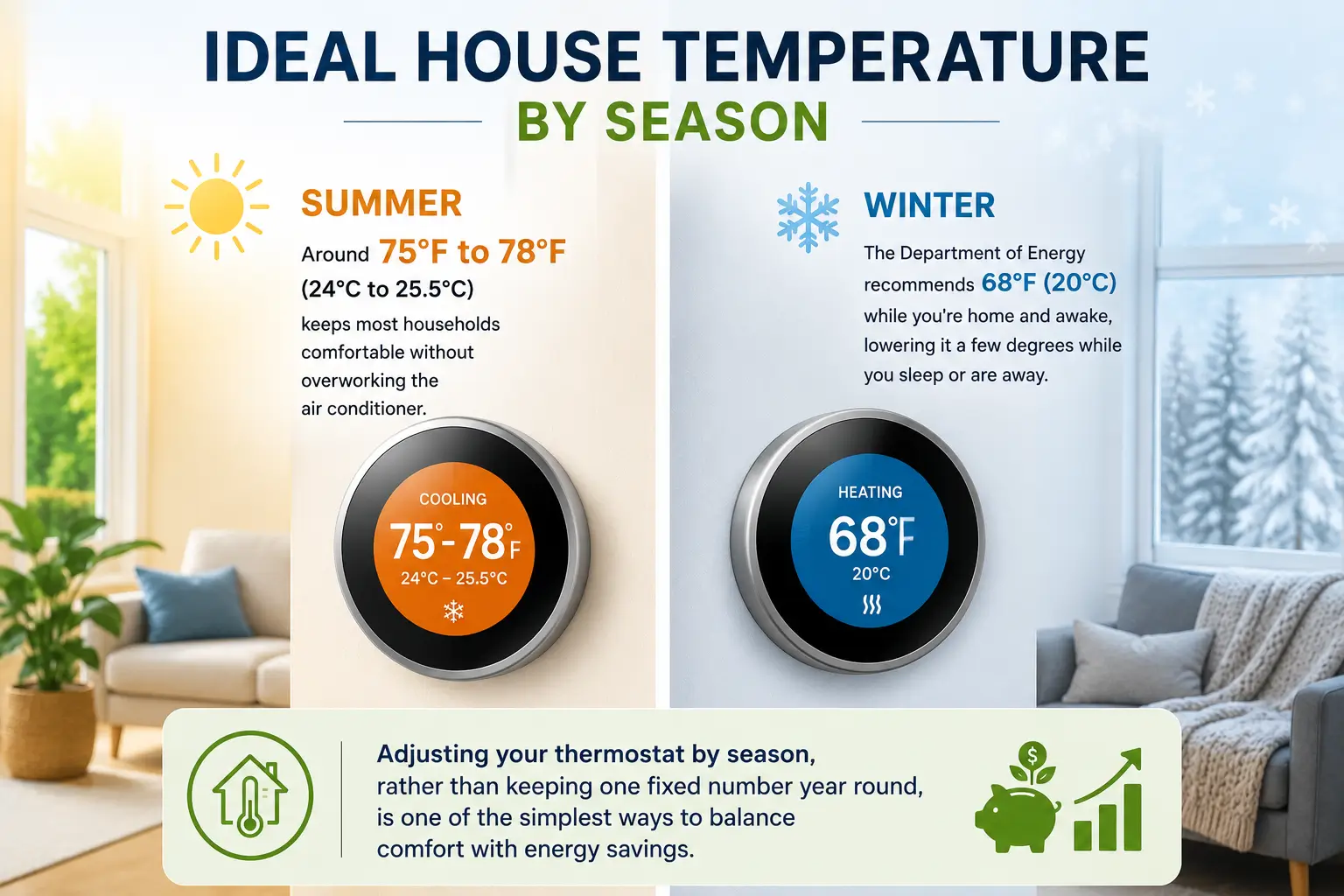
Summer: around 75°F to 78°F (24°C to 25.5°C) keeps most households comfortable without overworking the air conditioner.
Winter: the Department of Energy recommends 68°F (20°C) while you're home and awake, lowering it a few degrees while you sleep or are away.
Adjusting your thermostat by season, rather than keeping one fixed number year round, is one of the simplest ways to balance comfort with energy savings.
Ideal Temperature by Room
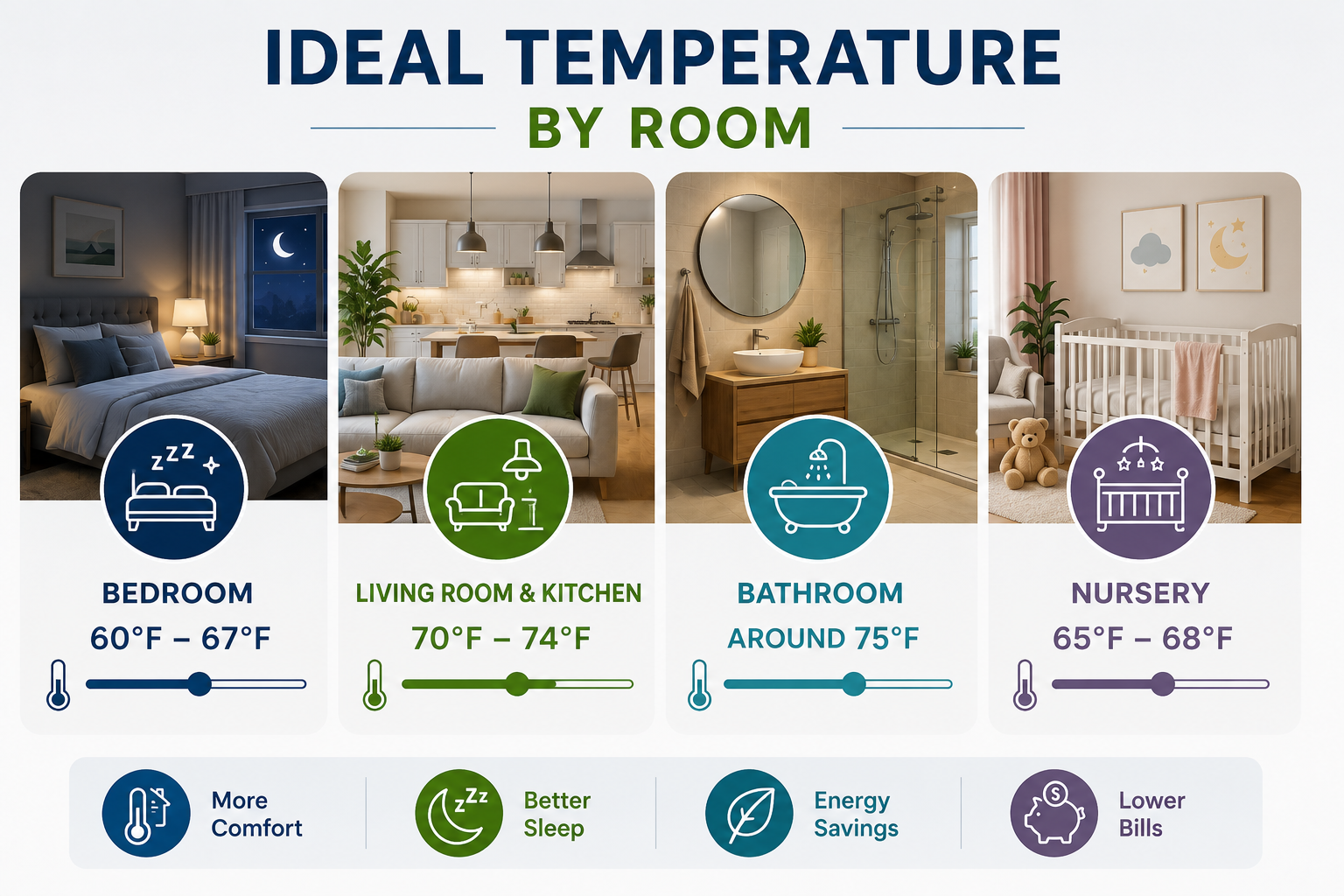
Not every room needs the same setting.
Bedroom: 60°F to 67°F (15.5°C to 19.5°C) supports deeper, more restful sleep.
Living room and kitchen: 70°F to 74°F (21°C to 23°C) works well for daytime activity.
Bathroom: a few degrees warmer, around 75°F, feels more comfortable after a shower.
Nursery: 65°F to 68°F (18°C to 20°C) is recommended for infants.
Ideal Temperature for People and Pets
Babies and elderly family members are more sensitive to temperature swings. Infants do best between 65°F and 68°F, while older adults, especially those over 65, are safer and more comfortable between 68°F and 74°F, since colder rooms raise the risk of hypothermia and illness. Pets generally do fine within the same range as humans, though short haired dogs may need a slightly warmer room.
Health Risks of Getting It Wrong
A home that's too hot can cause dehydration, poor sleep, and in extreme cases, heat exhaustion. A home that's too cold raises the risk of respiratory issues, stiffness, and for vulnerable people, hypothermia. Keeping your home within a healthy range protects both comfort and health. According to Wikipedia's entry on thermal comfort, temperature, humidity, and air movement all combine to determine how comfortable an indoor space feels, which is why a single number rarely tells the whole story.
How to Maintain the Ideal House Temperature Efficiently
A programmable or smart thermostat makes it easy to hold a steady, comfortable setting without constant manual adjustments. Set it a few degrees higher in summer and lower in winter while you're away, then let it return to your preferred setting before you get home. Small changes matter too: for every degree you lower your heat in winter, you can save around 3% on heating costs.
Good airflow and clean filters also help your HVAC system reach a comfortable setting more efficiently, and seasonal upkeep prevents small problems from turning into costly repairs. For a room by room checklist, take a look at our seasonal home maintenance tips.
FAQs
What is the healthiest indoor temperature? Most experts agree that 68°F to 72°F is a healthy, balanced range for daytime living.
Is 78°F too hot for a house? Not necessarily. It's within the recommended summer range, especially when paired with a fan or good airflow.
What temperature should I set my thermostat at night? Between 60°F and 67°F supports better sleep for most adults.
Finding the ideal house temperature for your household takes a bit of trial and adjustment, but once you find your range, both your comfort and your energy bill will thank you.
Schedule Your Indoor Air Quality Check Today
Worried about the air inside your home? Our professional indoor air quality inspections help identify hidden pollutants, allergens, and airflow issues so you can breathe cleaner, healthier air with confidence.