
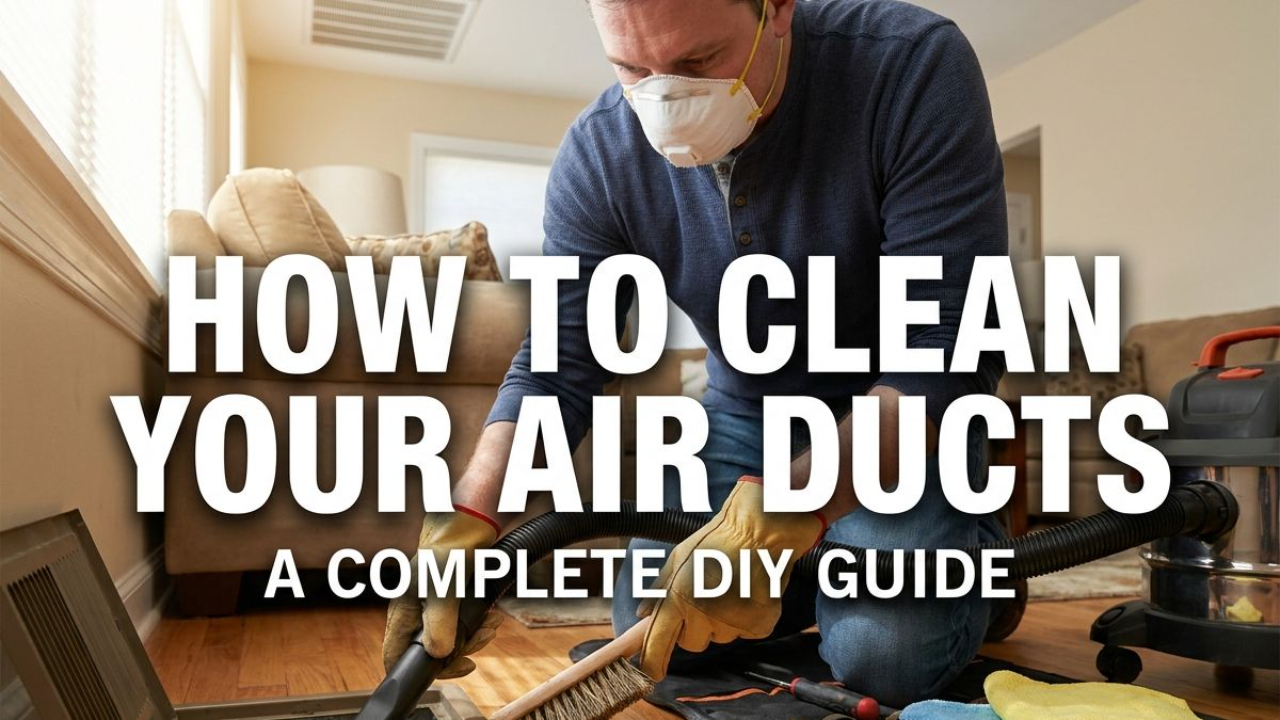
How to Clean Your Air Ducts: A Complete step by step Guide
Jul 25, 2026Dusty vents, weak airflow, or a musty smell every time your HVAC kicks on are all signs your air ducts could use some attention. The good news is you do not always need to call a professional. In many cases, you can clean your air ducts yourself with a few basic tools and a bit of time.
This guide walks you through exactly how to do it, what to use, and when it is smarter to bring in a pro.
Is Duct Cleaning a Waste of Money?
Not always, but it depends on your situation. The EPA does not recommend duct cleaning as a routine task for every home. Instead, it is most useful when you notice a real problem, such as visible mold, pests, or heavy dust buildup that blows out of your vents.
If your ducts look mostly clean and your home has no odd smells or allergy flare-ups, a full professional cleaning may not be necessary right now. But if you are seeing warning signs, cleaning your ducts can genuinely help your air quality and your HVAC system's efficiency. If you are not sure what to look for, this guide on signs of mold in your house can help you spot early warning signs before they turn into bigger problems.
Tools You Will Need
- A vacuum with a long hose (a shop vac works best)
- A stiff bristle brush or a dryer vent cleaning brush
- A screwdriver
- Microfiber cloths or clean rags
- A dust mask and gloves
How to Clean Air Ducts Yourself: 7 Simple Steps
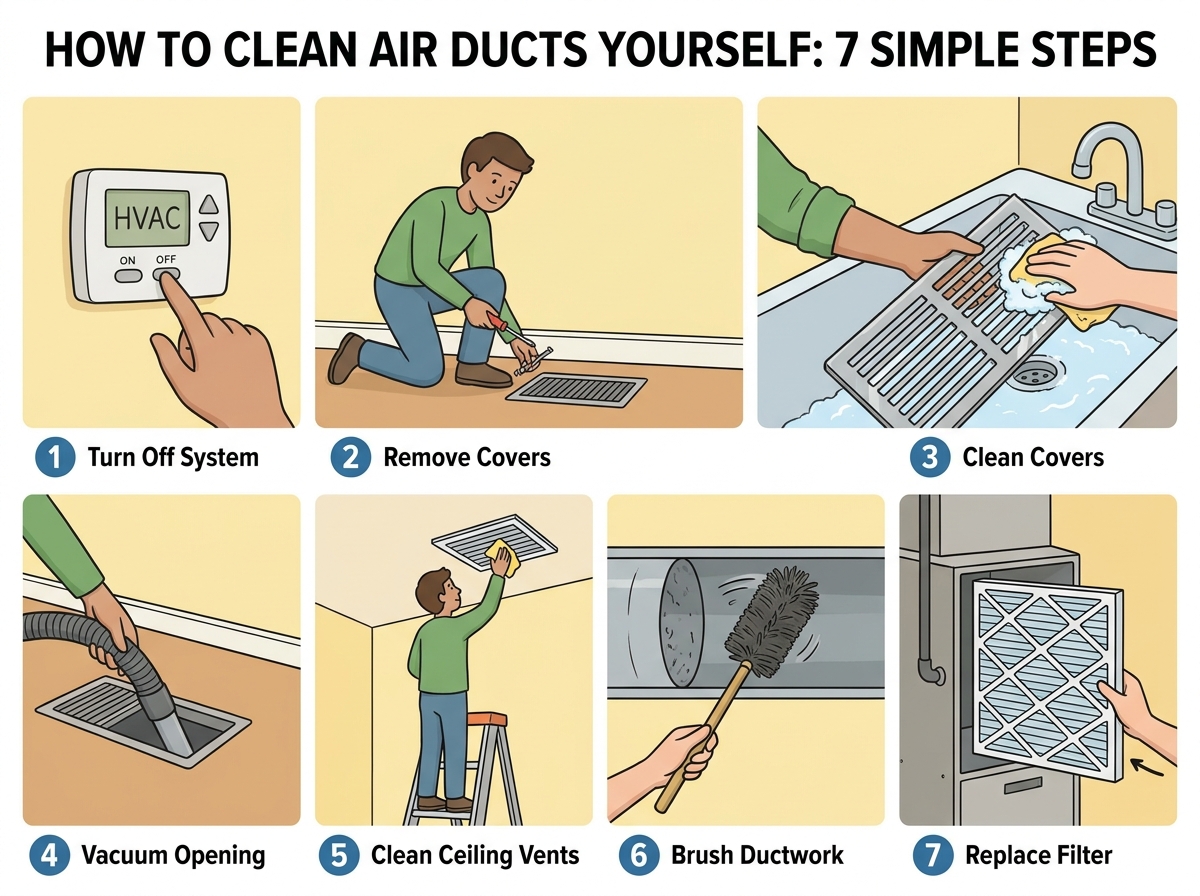
- Turn off your HVAC system. This keeps dust from blowing around while you work and protects the system's fan from any loose debris.
- Remove your vent covers. Use a screwdriver to take off the covers on your floor, wall, or ceiling vents. Set the screws aside so you do not lose them.
- Clean your vent covers with a wet rag. Wipe down each cover with a damp microfiber cloth or rag to remove dust and grime. For metal covers, you can also wash them in warm soapy water and dry them fully before putting them back.
- Vacuum inside the duct opening. Use your vacuum's hose attachment to reach as far into the duct as you can. This step alone removes a large amount of loose dust sitting near the opening.
- Clean air vents in the ceiling carefully. Ceiling vents collect just as much dust as floor vents, sometimes more. Use a step stool for safe access, and follow the same process of removing the cover, wiping it down, and vacuuming the opening.
- Brush the inside of the ductwork. Insert your brush into the duct and scrub gently along the walls to loosen dust that the vacuum could not reach. Follow up with the vacuum again to pick up what you loosened.
- Replace your air filter. Once you are done, put in a fresh filter. This is one of the easiest ways to keep your ducts cleaner for longer.
When to Call a Professional
DIY cleaning works well for light dust and everyday buildup. But there are times when it is best to bring in a professional, such as when you see mold, notice pest droppings, or your ductwork has never been cleaned. Professionals use stronger vacuums and specialized equipment that can reach deeper into your system than a household vacuum. If you want a deeper, professional-level clean, take a look at this air duct cleaning service to see what a full service cleaning includes.
How Often Should You Clean Your Air Ducts?
Most experts recommend a professional cleaning every 3 to 5 years. In between, a light DIY cleaning every few months, especially around your vent covers, helps keep dust from building up.
Final Thoughts
Cleaning your air ducts yourself is simple, affordable, and effective for everyday dust and light buildup. Just keep an eye out for bigger warning signs like mold or pests, since those situations call for a professional touch. With the right tools and a little regular upkeep, you can keep your air cleaner and your HVAC system running smoothly all year long.
Schedule Your Indoor Air Quality Check Today
Worried about the air inside your home? Our professional indoor air quality inspections help identify hidden pollutants, allergens, and airflow issues so you can breathe cleaner, healthier air with confidence.