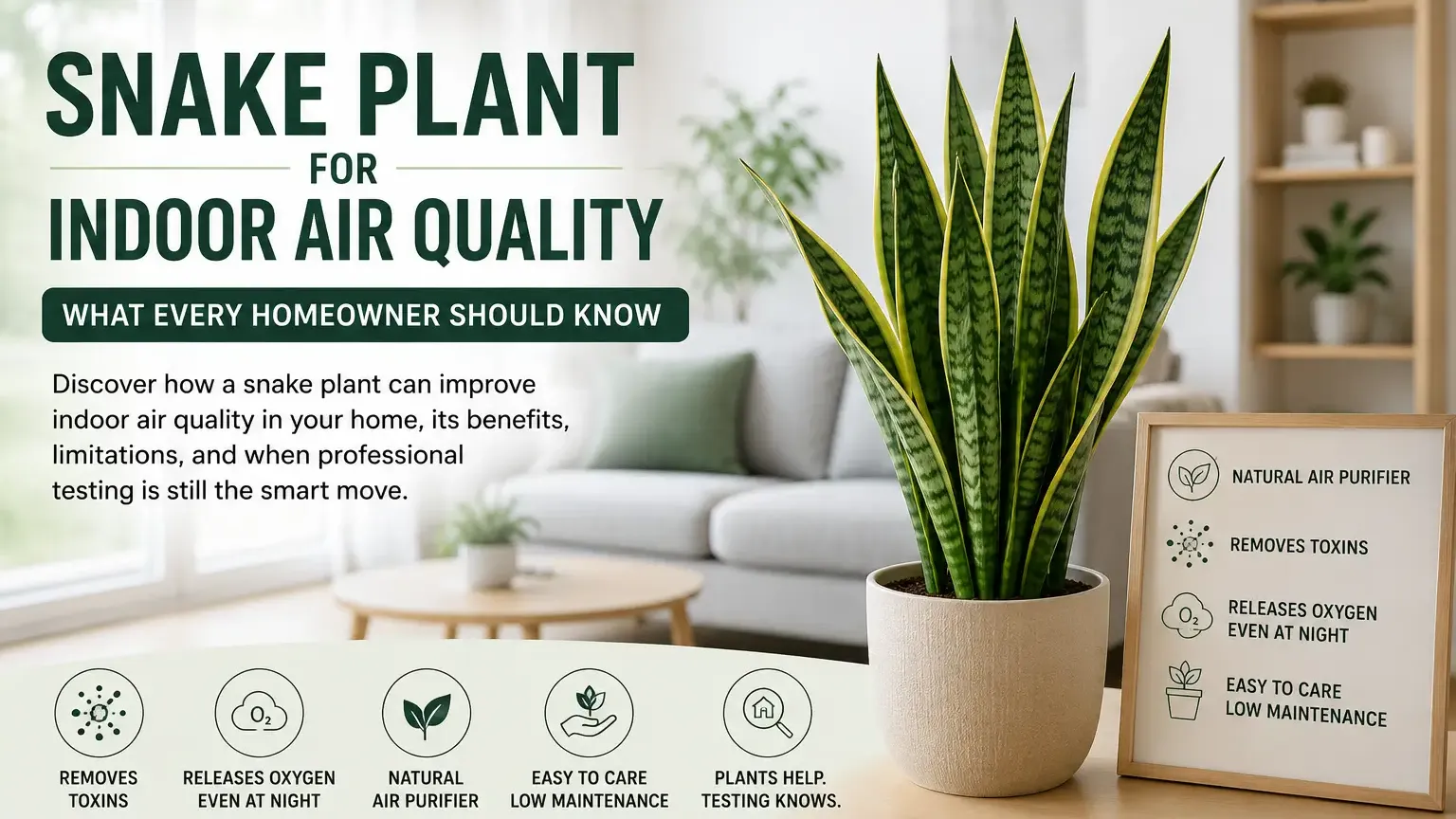
Snake Plant for Indoor Air Quality: What Every Homeowner Should Know
Jul 23, 2026If you've ever walked into a stuffy room and wished there was a simple, natural fix for the air you're breathing, you're not alone. Millions of homeowners are turning to houseplants especially the humble snake plant as a first line of defense against indoor air pollutants. But how much can a plant actually do for your air quality, and when do you need more than greenery?
Let's break it all down.
What Is a Snake Plant?
The snake plant (Dracaena trifasciata, formerly known as Sansevieria trifasciata) is one of the most popular houseplants in the world and for good reason. With its tall, stiff, sword-shaped leaves and striking green-and-yellow pattern, it's both beautiful and nearly impossible to kill. It thrives in low light, tolerates irregular watering, and survives in a wide range of temperatures.
But beyond its looks and easy care, the snake plant has earned a reputation as a natural air purifier. According to Wikipedia's overview of Dracaena trifasciata, NASA's famous Clean Air Study identified the snake plant as one of the top air-filtering plants capable of removing common household toxins.
How Snake Plants Improve Indoor Air Quality
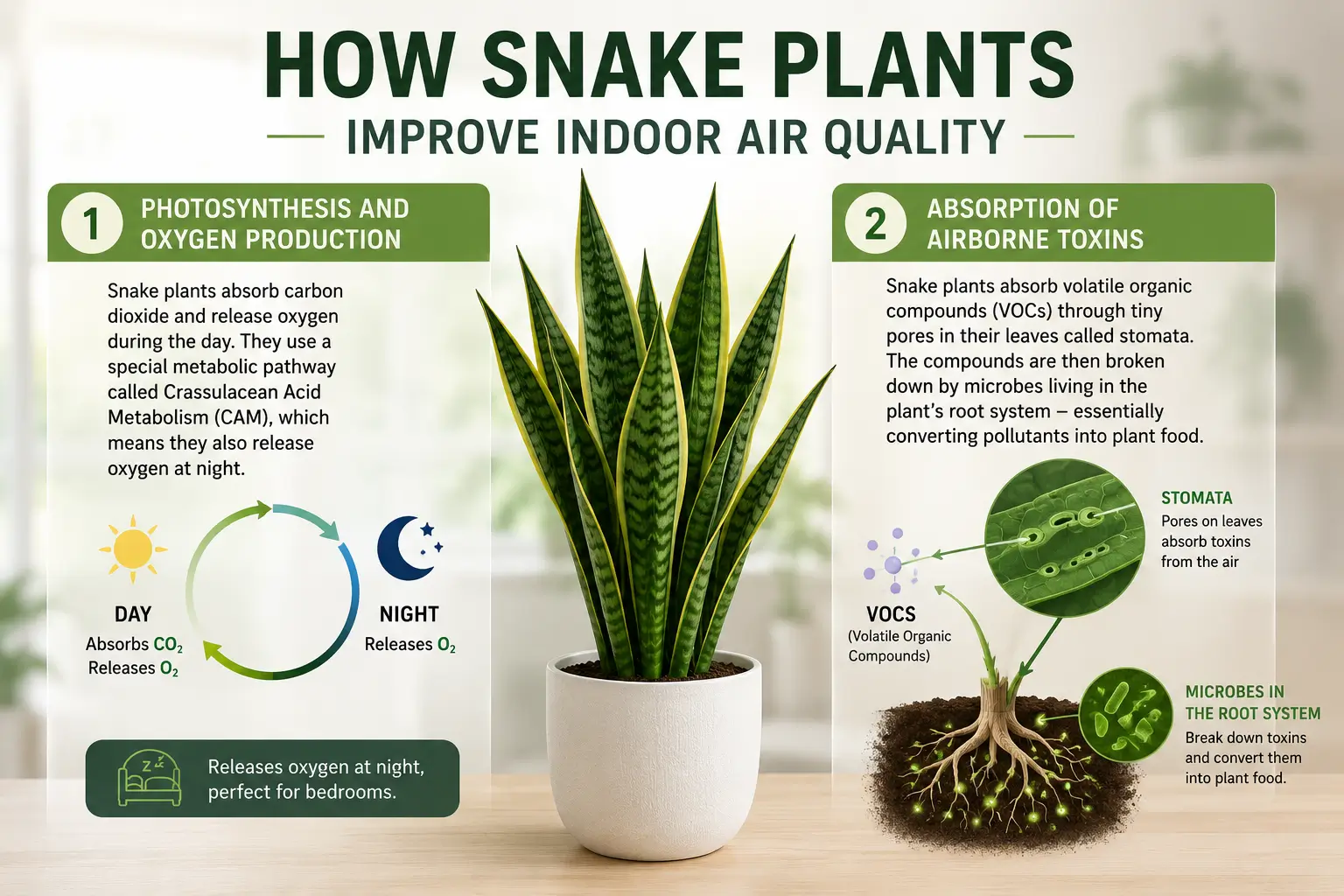
Snake plants improve your indoor air through two key biological processes:
- Photosynthesis and oxygen production Like all plants, snake plants absorb carbon dioxide and release oxygen during the day. What makes them unique is that they use a special metabolic pathway called Crassulacean Acid Metabolism (CAM), which means they also release oxygen at night. This makes them one of the few plants suitable for bedrooms, where nighttime oxygen levels can matter most.
- Absorption of airborne toxins Snake plants absorb volatile organic compounds (VOCs) through tiny pores in their leaves called stomata. The compounds are then broken down by microbes living in the plant's root system essentially converting pollutants into plant food.
What Toxins Can a Snake Plant Filter?
Research, including the well-cited NASA Clean Air Study, found that snake plants can absorb several common indoor air pollutants, including:
- Formaldehyde – found in furniture, flooring, and cleaning products
- Benzene – released by paints, glues, and vehicle exhaust
- Xylene – common in paints and lacquers
- Toluene – present in adhesives and nail polish
- Trichloroethylene – found in dry-cleaned clothes and some cleaning agents
These are the kinds of VOCs that quietly accumulate in poorly ventilated homes and can contribute to headaches, fatigue, eye irritation, and long-term health concerns.
Limitations: What a Snake Plant Can't Do
Here's the honest truth: a snake plant is helpful, but it's not a solution on its own.
The NASA study was conducted in small, sealed chamber environments not in a real-world home with open doors, HVAC systems, pets, and occupants. To meaningfully clean the air in an average-sized room using plants alone, you would theoretically need dozens of plants per room.
More critically, snake plants cannot address:
- Mold spores – one of the biggest threats to indoor air quality in Atlanta-area homes
- Dust mites and pet dander – common allergens requiring different solutions
- Carbon monoxide or radon – invisible, odorless gases that require dedicated detectors or testing
- High humidity – which fuels mold growth and must be measured and controlled
If your home has recently experienced water damage, musty odors, or anyone in your household is experiencing unexplained respiratory symptoms, a snake plant is not the answer. You need a professional assessment. Learn more about common hidden causes of poor indoor air quality that even the most plant-filled home can't fix on its own.
How Many Snake Plants Do You Need?
For a meaningful air-quality benefit, most experts suggest placing at least one medium-to-large snake plant per 100 square feet of living space. That means a 1,500 sq ft home would need roughly 15 or more plants to make a measurable dent in pollutant levels.
That's a lot of plants which is why snake plants are best viewed as a complement to good ventilation, regular cleaning, and professional air quality monitoring, not a replacement.
Best Placement for Maximum Benefit
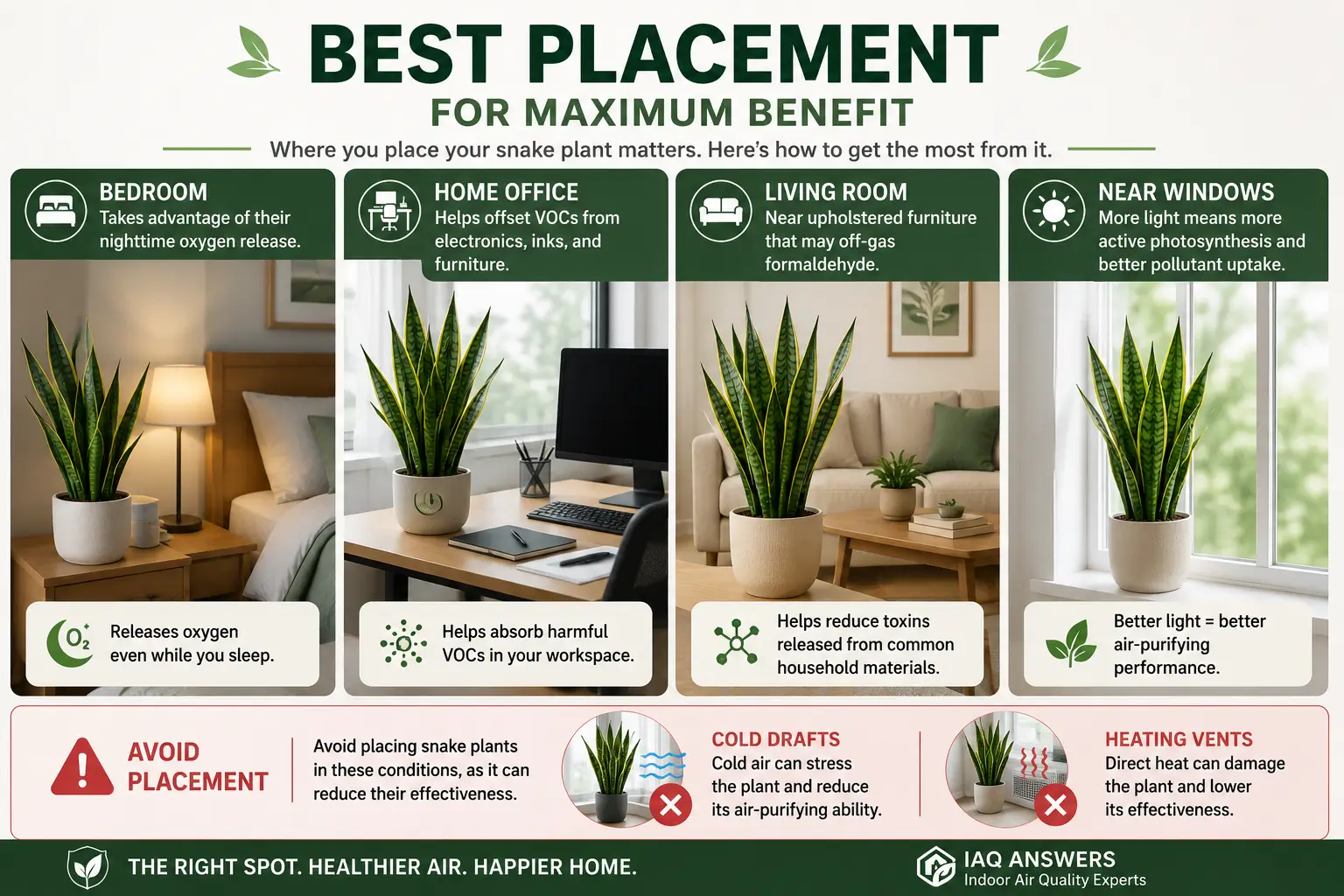
If you want your snake plant to work as hard as possible, placement matters:
- Bedroom – takes advantage of their nighttime oxygen release
- Home office – helps offset VOCs from electronics, inks, and furniture
- Living room – near upholstered furniture that may off-gas formaldehyde
- Near windows – more light means more active photosynthesis and better pollutant uptake
Avoid placing them in very cold drafts or directly against heating vents, as extreme temperatures reduce their effectiveness.
When a Snake Plant Isn't Enough Time to Get Your Air Tested
A snake plant is a great first step, but it can lull you into a false sense of security. If you're noticing any of the following in your home, it's time to go beyond greenery:
- Persistent musty or chemical odors
- Unexplained allergy or asthma flare-ups among family members
- Visible mold or water stains
- Recent flooding, leaks, or water damage
- Older home construction with possible asbestos or lead paint
These are signs of underlying air quality problems that no houseplant can resolve. Professional indoor air quality testing can identify exactly what's in your air from mold spores and VOCs to allergens and moisture levels so you can take targeted action. Check out our full guide on how to improve indoor air quality in your home for a complete checklist of steps you can take today.
Final Thoughts
The snake plant is one of the best natural tools available for supporting cleaner indoor air. It's low-maintenance, effective at absorbing common VOCs, and produces oxygen even while you sleep. For any homeowner looking for an easy, affordable way to support their home's air quality, it's a worthy addition to every room.
But it's just one piece of the puzzle. For families dealing with mold, allergies, musty smells, or unexplained health symptoms, professional indoor air quality testing provides the answers that houseplants simply can't.
At IAQ Answers, we've helped thousands of Atlanta-area homeowners understand exactly what's in their air and what to do about it.
Schedule Your Indoor Air Quality Check Today
Worried about the air inside your home? Our professional indoor air quality inspections help identify hidden pollutants, allergens, and airflow issues so you can breathe cleaner, healthier air with confidence.