
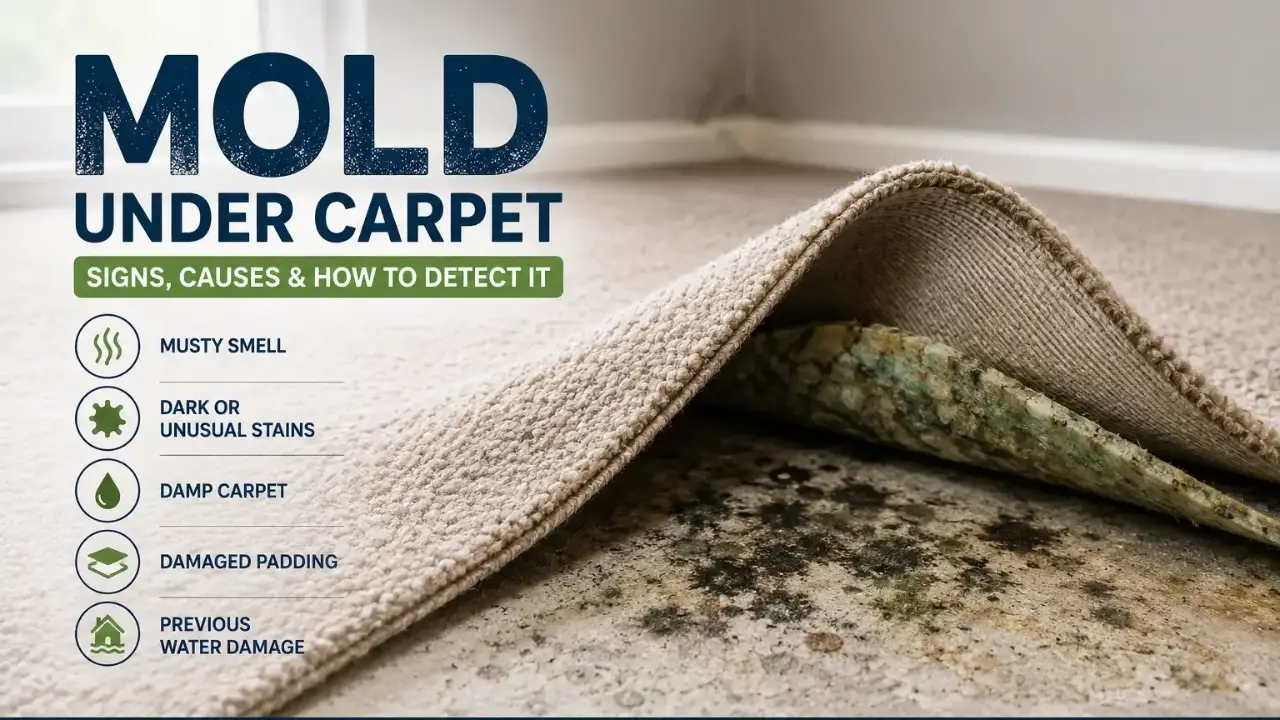
Mold Under Carpet: Signs, Causes & How to Detect It
Aug 23, 2026Mold under carpet can be difficult to notice because the growth may be hidden beneath the carpet or padding. A room may look clean while moisture is trapped underneath, creating the right conditions for mold to grow.
Water leaks, flooding, high humidity, and moisture from concrete floors can all contribute to the problem. Knowing the common mold under carpet signs can help you find the problem early and prevent further damage.
Can Mold Grow Under Carpet?
Yes, mold can grow under carpet when moisture becomes trapped for long enough. Carpet, padding, and the material underneath can hold moisture and provide a suitable environment for mold growth.
The EPA notes that the underside of carpets and carpet pads can be places where hidden mold develops. Moisture control is one of the most important ways to prevent mold growth.
For more information about hidden indoor mold, see our guide on mold behind walls.
What Causes Mold Under Carpet?
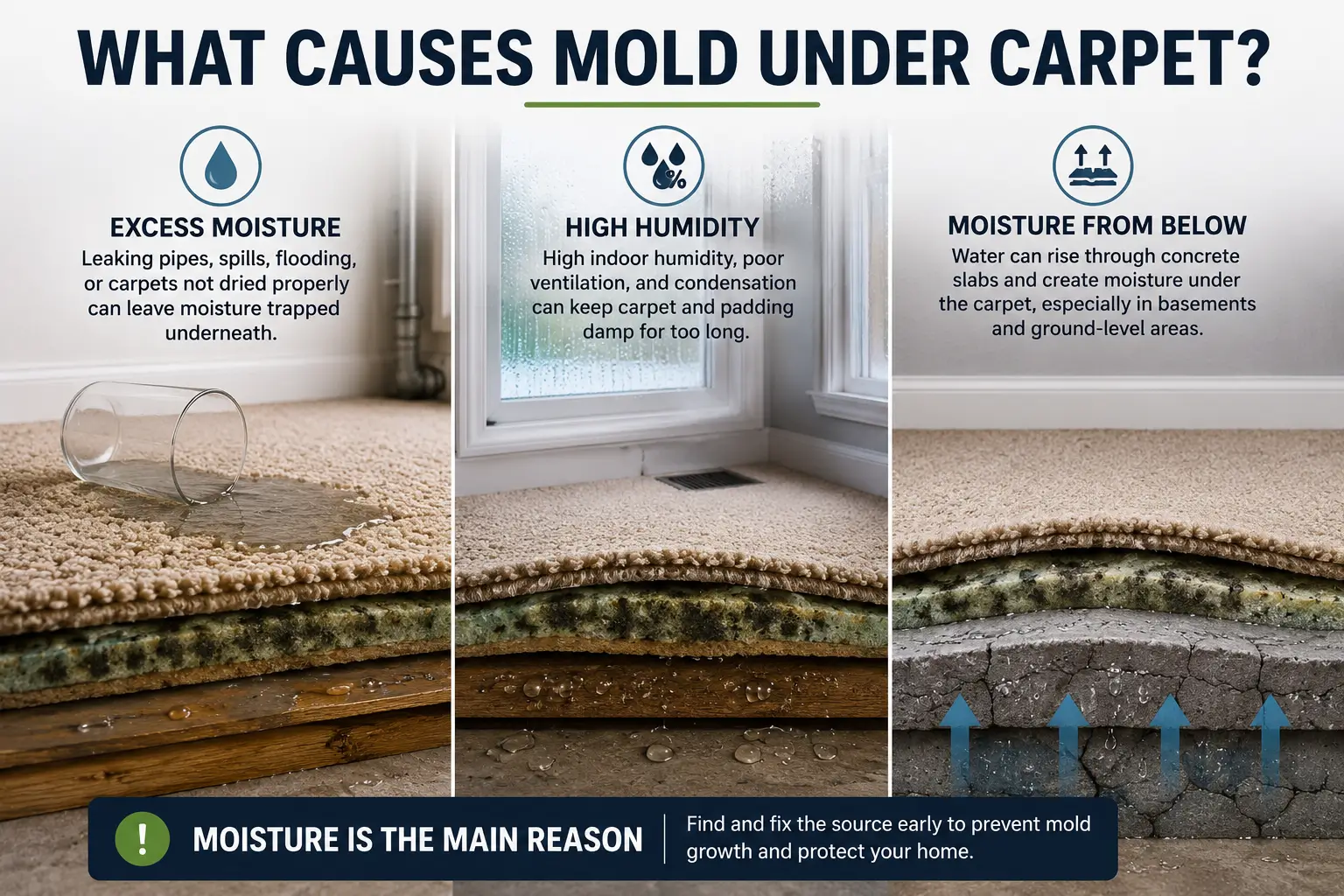
The most common cause is excess moisture. A leaking pipe, spilled water, flooding, or a wet carpet that was not dried properly can leave moisture underneath the carpet.
High indoor humidity can also increase the risk. Poor ventilation and condensation may make the carpet and padding stay damp for longer than expected.
Water can also come from below the floor. This is especially important when carpet is installed over a concrete slab.
Mold Under Carpet on Concrete
Mold under carpet on concrete is a common concern, particularly in basements and other areas where moisture can move through the floor.
Concrete can allow liquid water or water vapor to reach the carpet above it. The EPA warns that moisture coming through a concrete slab can create chronic dampness and contribute to mold growth under carpet.
If your carpet is over concrete and you notice dampness, a musty smell, or repeated moisture problems, the source should be investigated instead of simply replacing the carpet.
Mold Under Carpet Signs
There are several signs that may point to mold beneath your carpet:
Musty smell: A persistent earthy or musty odor can be a warning sign, especially when you cannot see where it is coming from.
Dark or unusual stains: Brown, green, gray, or black discoloration may indicate moisture or mold. However, color alone cannot tell you what type of mold is present.
Damp carpet: Carpet that feels damp or repeatedly becomes wet should be investigated.
Damaged padding: The padding may become discolored, soft, or damaged when it has been exposed to moisture.
Previous water damage: If the carpet has experienced flooding, plumbing leaks, or another water problem, check underneath it carefully.
If you notice a strong musty odor but cannot find the source, our guide on what mold smells like may help.
How to Detect Mold Under Carpet
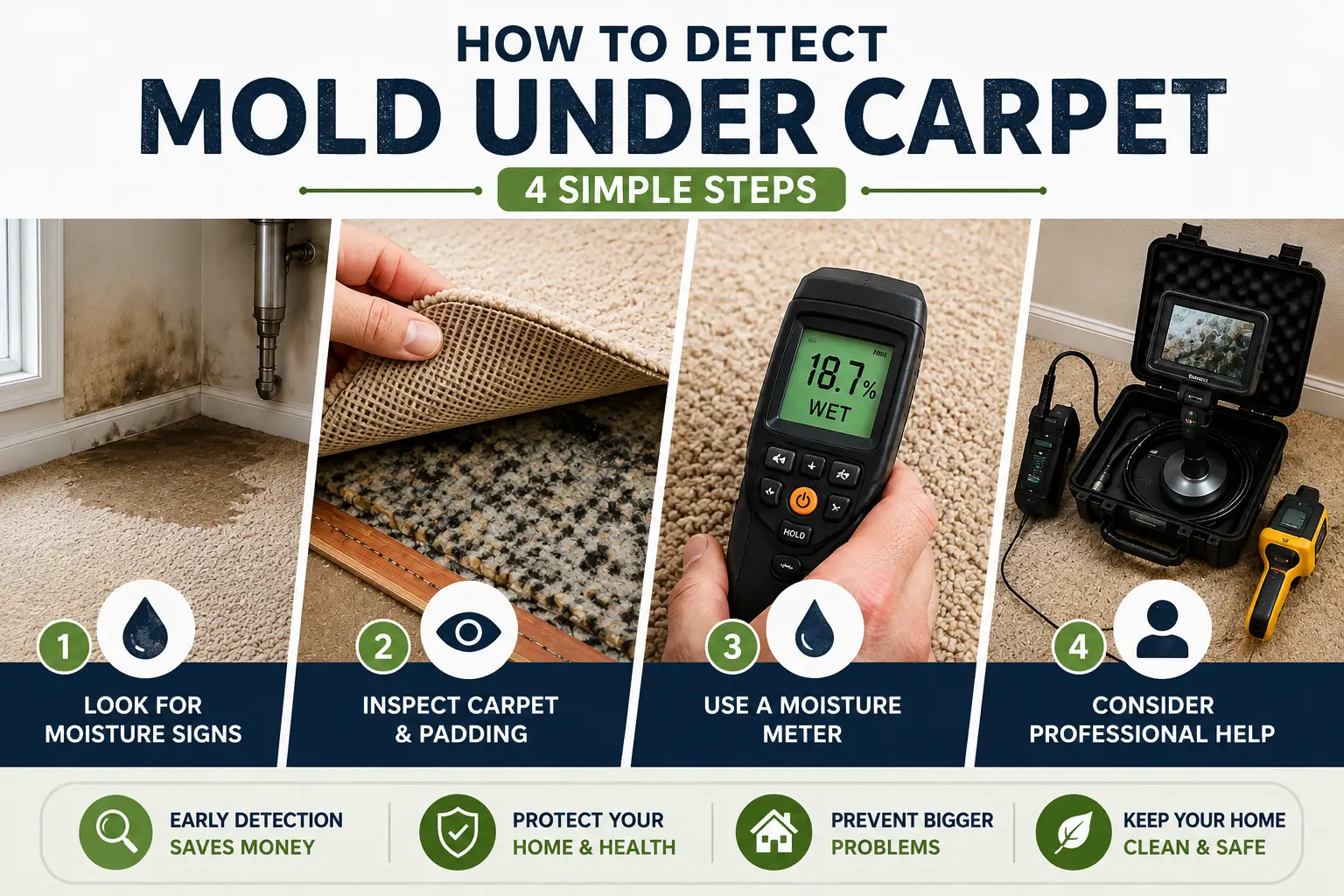
The first step is to look for obvious signs of moisture or water damage. Check areas around plumbing, exterior walls, windows, and places where spills or flooding have occurred.
If appropriate, carefully inspect the edge or underside of the carpet and check the padding below it. Look for discoloration, dampness, unusual odors, or visible growth.
A moisture meter can also help identify areas with higher moisture levels. For difficult cases, professionals may use specialized equipment to investigate hidden moisture and mold. The EPA warns that disturbing hidden mold can spread spores, so larger or concealed problems may require professional help.
What Should You Do If You Find Mold?
The first step is to find and fix the moisture source. Cleaning the visible mold without addressing the water problem can allow it to return.
Moldy carpet and padding may need to be removed because porous materials can be difficult to clean completely. The EPA recommends drying water-damaged materials quickly and notes that moldy porous materials such as carpet may need to be discarded.
If you have health concerns or a large area of mold, consider getting professional advice before starting cleanup.
How to Prevent Mold Under Carpet
Keep carpets dry and deal with leaks as soon as possible. After water damage, dry the carpet, padding, and floor underneath as quickly as you can.
Control indoor humidity, improve ventilation, and pay special attention to carpet installed over concrete. The EPA recommends keeping indoor humidity below 60%, with 30–50% being an ideal range.
You can also learn more about mold and its growth conditions through Wikipedia's guide to mold.
Final Thoughts
Mold under carpet can remain hidden until a musty smell, dampness, staining, or water damage gives you a clue. Carpet padding and the area underneath deserve special attention because trapped moisture can create ideal conditions for mold growth.
If you suspect mold, focus on finding the moisture source first. Fixing the underlying problem, drying the affected area, and dealing with damaged materials can help prevent the problem from coming back.
Schedule Your Indoor Air Quality Check Today
Worried about the air inside your home? Our professional indoor air quality inspections help identify hidden pollutants, allergens, and airflow issues so you can breathe cleaner, healthier air with confidence.