
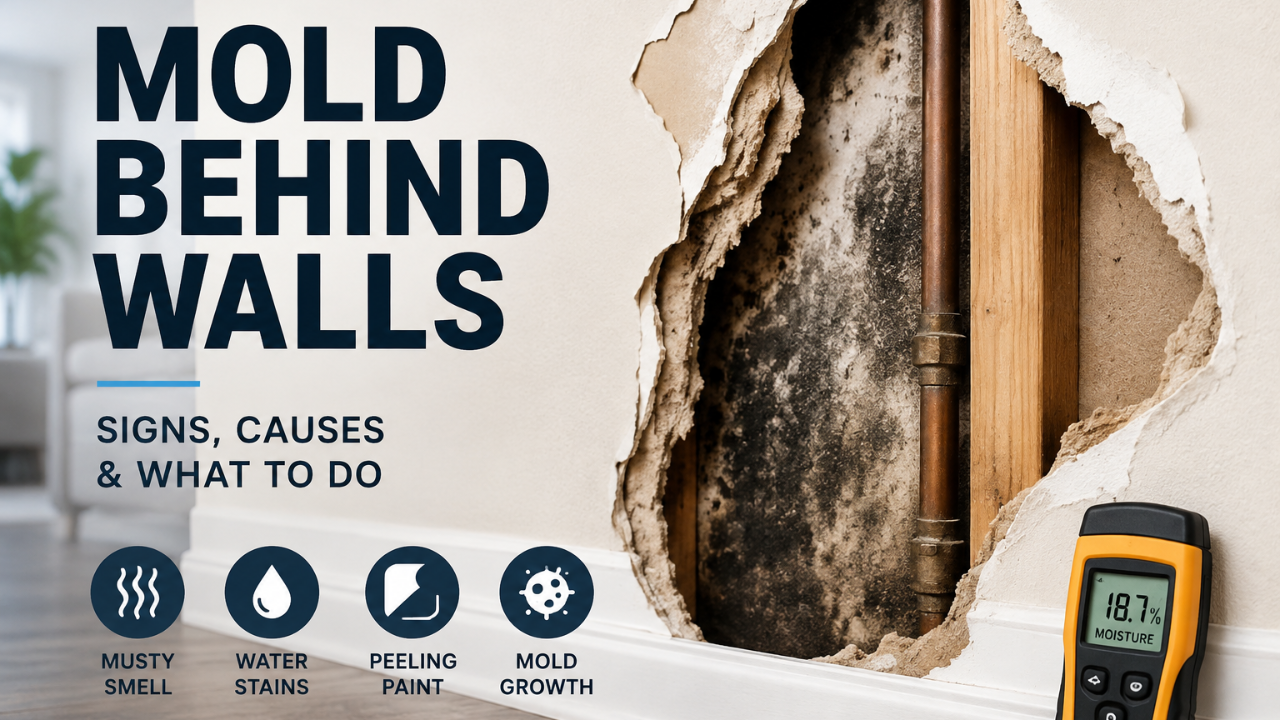
Mold Behind Walls: Signs, Causes & What to Do
Aug 20, 2026
Finding mold behind walls can be worrying because you may not see the problem until it has been there for some time. Mold can grow on the back of drywall, around leaking pipes, behind wallpaper, and inside wall cavities where moisture becomes trapped.
The good news is that there are warning signs you can look for. A musty smell, water stains, peeling paint, or a history of water damage can all point to mold behind walls. Knowing these signs early can help you find the moisture problem before the damage becomes worse.
What Causes Mold Behind Walls?
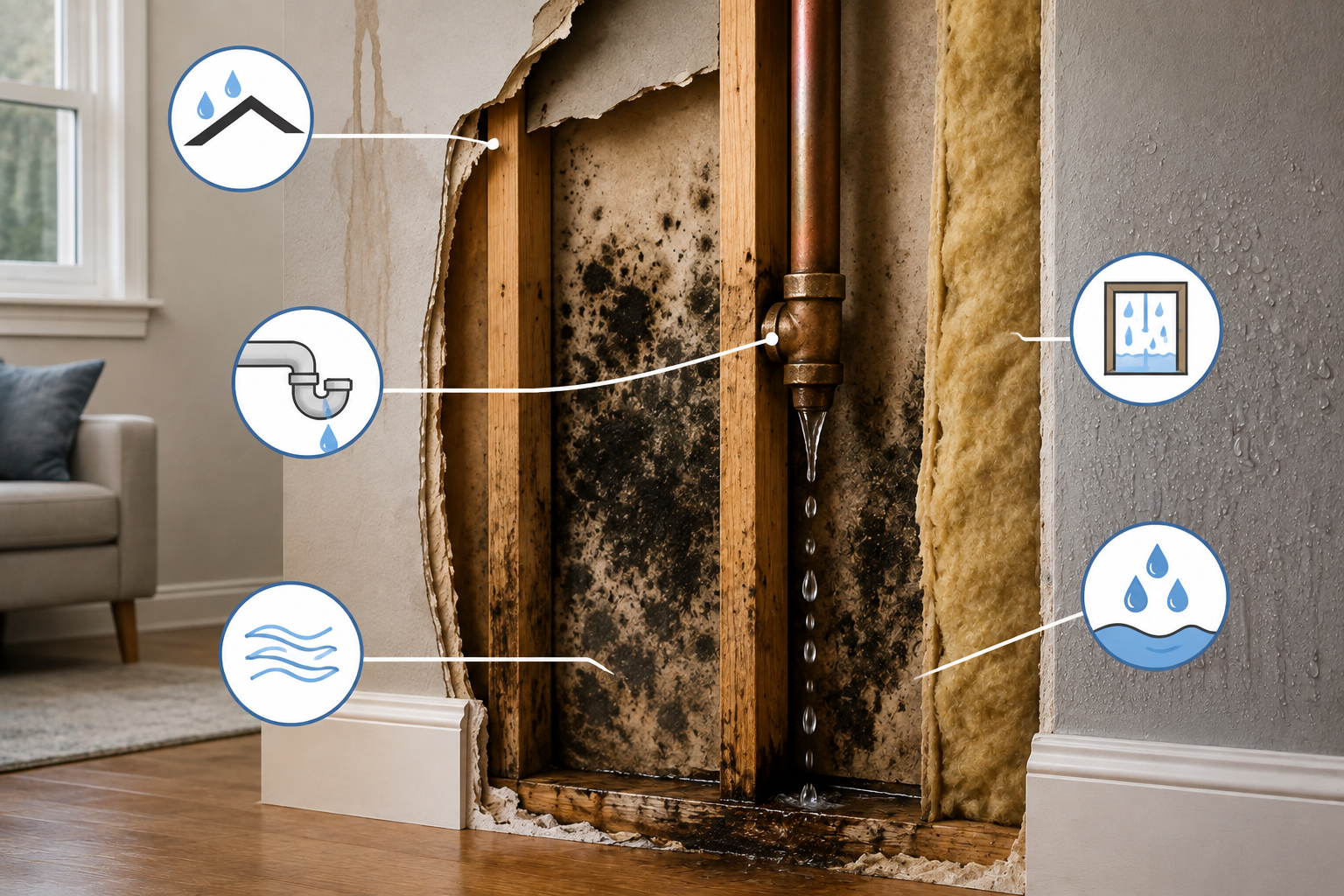
Mold needs moisture and a suitable surface to grow. Inside a wall, drywall paper, wood framing, insulation, and dust can provide materials that support mold growth when they stay damp.
A leaking plumbing pipe is one of the most common causes of hidden mold. Roof leaks, damaged windows, flooding, condensation, and high indoor humidity can also allow moisture to enter a wall cavity. Poor ventilation can make the problem worse by slowing the drying process.
This is why water damage and mold are closely connected. Even if a wall looks dry on the outside, moisture can remain trapped behind the drywall.
Signs of Mold Behind Walls
One of the biggest challenges with hidden mold is knowing it is there without opening the wall. However, your home may give you several clues.
1. A Persistent Musty Smell
A strong musty or earthy smell is one of the most common signs of hidden mold. If you notice the smell in one room but cannot find visible mold, check nearby walls, ceilings, closets, and areas where water damage has occurred.
If you want to learn more, see our guide on what mold smells like.
2. Water Stains or Discoloration
Brown, yellow, gray, or dark marks on a wall can indicate previous or ongoing moisture problems. A stain does not automatically mean there is mold, but it deserves attention if it appeared after a leak or flooding.
Pay particular attention if the stain keeps returning after the wall has been cleaned or painted.
3. Peeling or Bubbling Paint
Moisture trapped behind drywall can cause paint to bubble, peel, or crack. You may also notice wallpaper separating from the wall or sections of drywall becoming soft or warped.
These changes are often signs of a moisture problem, which can create the conditions needed for mold growth.
4. Mold Keeps Coming Back
If you repeatedly clean mold from the same area and it returns, the problem may be deeper than the surface. Cleaning visible mold without fixing the moisture source will not solve the underlying problem.
Mold may be growing behind the drywall or inside the wall cavity.
Can Mold Grow Inside Drywall?
Yes. Mold can grow on the back of drywall when moisture gets into the wall cavity. The EPA notes that hidden mold may occur behind drywall, wallpaper, paneling, around leaking or condensing pipes, and other concealed areas.
This makes mold in drywall particularly difficult to identify. The visible side of the wall may look normal while the back side remains damp.
For more information about mold and indoor air problems, you can also read our guide to the hidden causes of poor indoor air quality.
How to Check for Mold Behind Walls
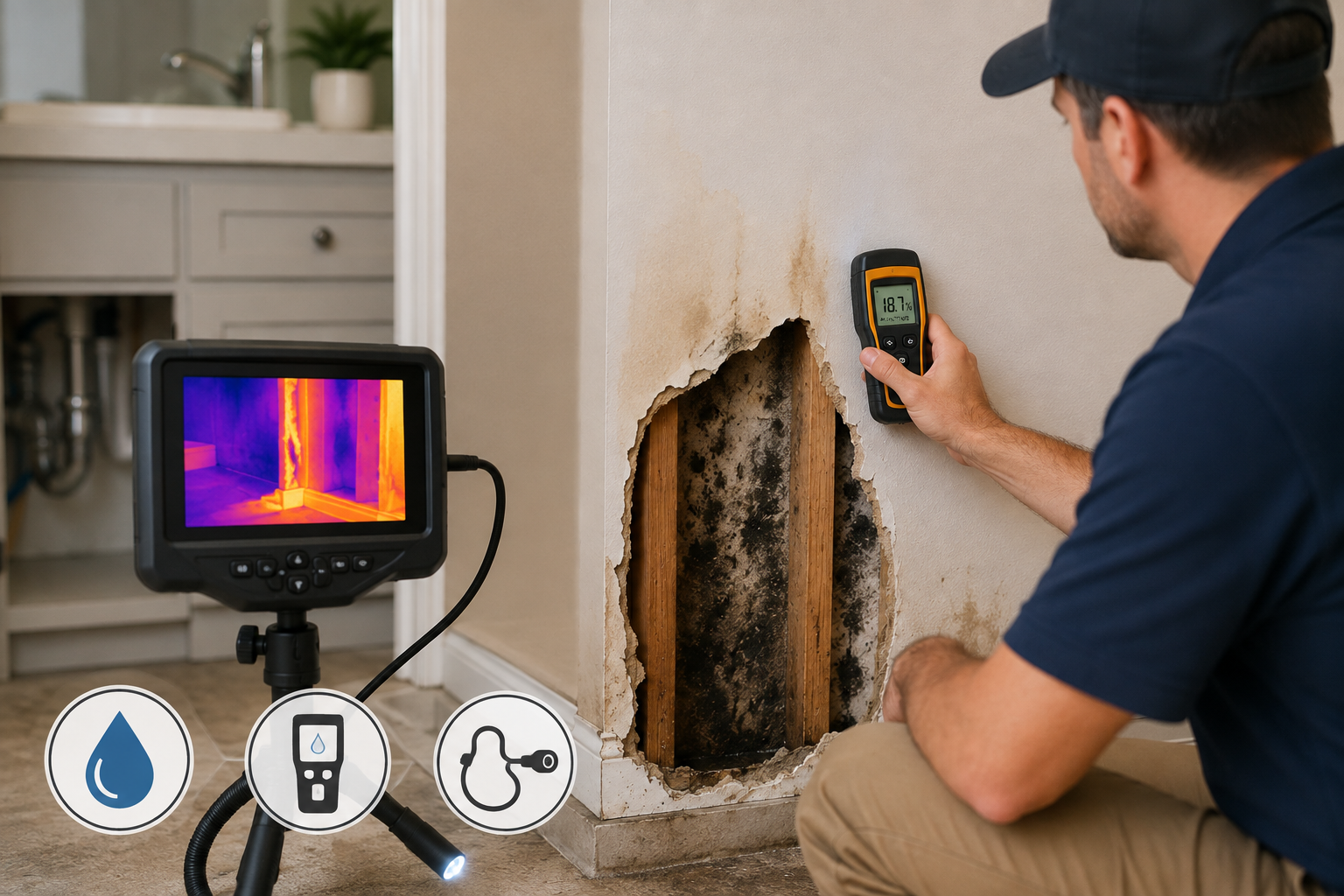
Start by looking for moisture. Check plumbing fixtures, pipes, ceilings, windows, baseboards, and nearby areas for signs of leaks or water damage.
A moisture meter can help identify areas with unusual moisture levels without immediately opening the wall. In more difficult cases, a professional may use moisture meters, thermal imaging, or a small inspection camera to investigate concealed areas.
Avoid cutting large sections of drywall simply to look for mold. Disturbing hidden mold can release spores into the air and spread contamination. The EPA recommends caution when investigating suspected hidden mold.
What Should You Do If You Find Mold Behind a Wall?
The first step is to find and fix the moisture source. This could mean repairing a leaking pipe, fixing a roof leak, improving ventilation, or controlling excess humidity.
If mold has affected drywall, insulation, or other porous materials, simply wiping the surface may not be enough. Damaged materials may need to be removed and the affected area properly cleaned and dried.
If the mold is extensive, hidden, keeps returning, or is located inside a wall cavity, consider having the area professionally inspected. Professional testing can also help when the source of a musty odor is unclear.
Can Mold Behind Walls Affect Indoor Air Quality?
Hidden mold can contribute to indoor air quality concerns because mold can release microscopic spores into the surrounding environment. However, the presence of mold does not automatically mean that everyone in the home will experience health effects.
The best approach is to identify the moisture source, determine whether mold is present, and address the affected materials rather than simply trying to cover the smell.
For additional background, you can read the Indoor mold article on Wikipedia, which explains how moisture, building materials, and hidden areas can contribute to indoor mold growth.
Final Thoughts
Mold behind walls can remain hidden for a long time, but it often leaves clues. A persistent musty odor, water stains, bubbling paint, warped drywall, or a history of leaks should not be ignored.
If you suspect hidden mold, focus first on finding the source of moisture. When the problem is difficult to locate or appears to be inside the wall, a professional inspection can help identify what is happening without unnecessary damage to your home.
Schedule Your Indoor Air Quality Check Today
Worried about the air inside your home? Our professional indoor air quality inspections help identify hidden pollutants, allergens, and airflow issues so you can breathe cleaner, healthier air with confidence.