
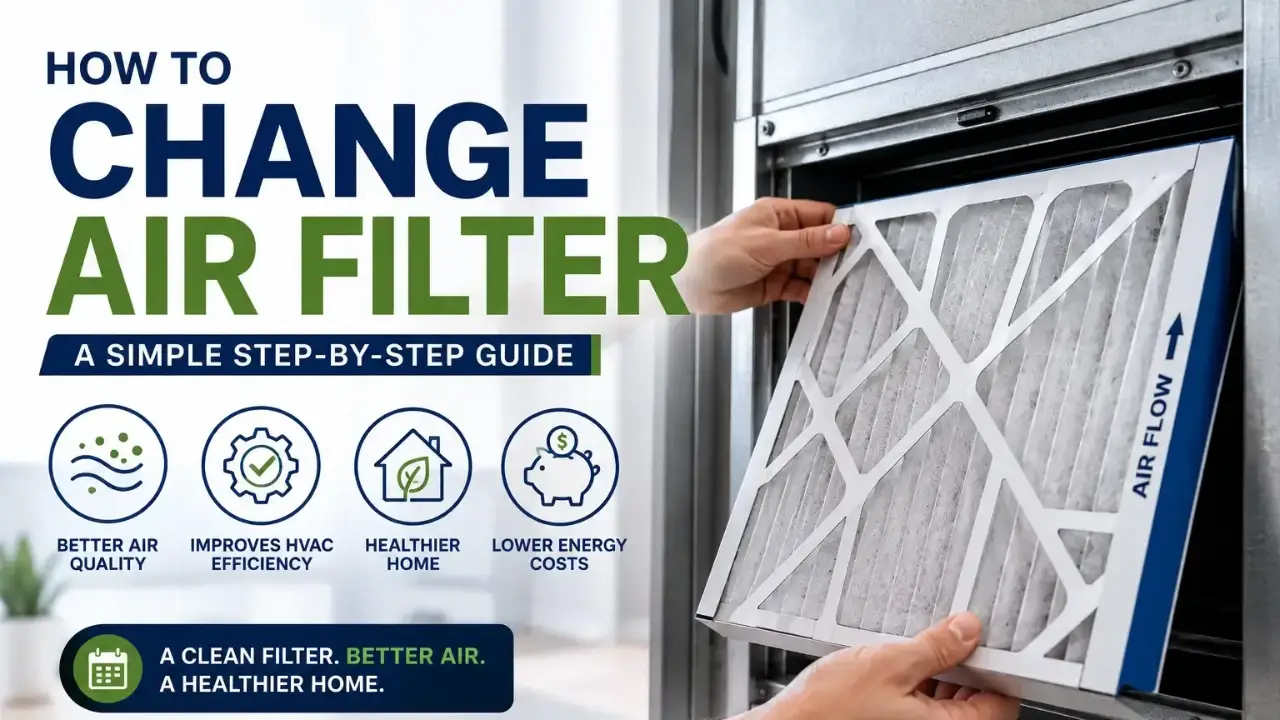
How to Change Air Filter: A Complete Step-by-Step Guide
Aug 19, 2026A clean air filter keeps your HVAC system running efficiently, improves indoor air quality, and helps you avoid costly repairs down the road. Yet many homeowners aren't quite sure how often to replace theirs or where to even begin. This guide walks you through everything you need to know, from the tools required to a simple process anyone can follow at home.
Why Learning How To Change Air Filter Matters
Your air filter traps dust, pollen, pet dander, and other airborne particles before they circulate through your living space. Over time, filters become clogged, forcing your HVAC system to work harder than it should. This not only raises your energy bills but can also shorten the lifespan of your entire unit. Replacing your filter regularly is one of the simplest ways to protect your equipment and improve indoor air quality.
Tools You'll Need Before You Start
Before you begin, gather the following items so the job goes smoothly:
- A replacement filter that matches your system's exact size (check the frame of the old filter for dimensions)
- A screwdriver, which is only needed for certain filter housings
- A flashlight, if your filter slot sits in a dark or tight space
- A trash bag for disposing of the old, dirty filter
Having everything within reach before you start makes the entire process quick, simple, and mess-free.
How To Change Air Filter In House: Step-by-Step Instructions
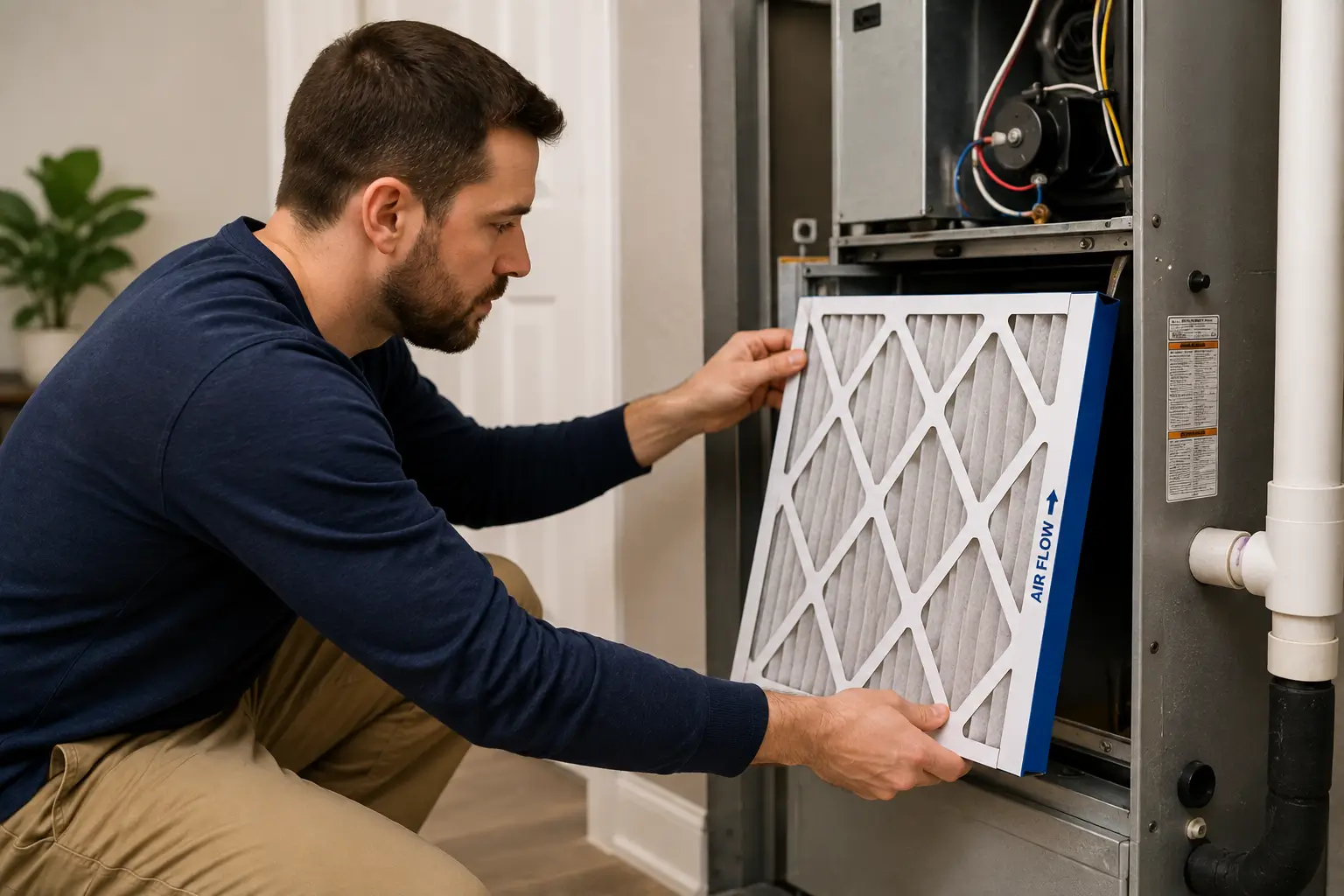
If you're wondering how to change air filter in house units without calling in a technician, the process is easier than most people expect. Follow these steps below.
Step 1: Turn Off Your HVAC System
Switch off your furnace or air handler before you start working. This prevents loose dust from blowing into the room and keeps you safe while your hands are inside the unit.
Step 2: Locate the Filter Slot
Most residential systems keep the filter near the return air duct, inside the furnace cabinet, or behind a wall or ceiling return grille. Check your owner's manual if you're not sure where yours is located.
Step 3: Remove the Old Filter
Slide out the old filter carefully and set it aside. Take note of the airflow direction arrow printed on the frame, since this tells you exactly how the new filter should be inserted.
Step 4: Check the Size
Compare the size printed on the old filter's frame against your replacement before installing it. A filter that doesn't match the slot won't seal properly, which lets unfiltered air pass straight through.
Step 5: Insert the New Filter
Slide the new filter into place, making sure the airflow arrow points toward the furnace or air handler rather than away from it.
Step 6: Turn the System Back On
Once the filter is secure, restart your HVAC system and confirm that it's running smoothly and quietly.
That covers the basics for most residential HVAC systems, whether you have a central furnace, a wall-mounted unit, or a standalone air purifier.
How Often Should You Change Your Air Filter?
Most experts recommend swapping a standard fiberglass filter every 30 days, while thicker pleated filters can often last 60 to 90 days between changes. Homes with pets, allergy sufferers, or higher dust levels may need more frequent replacements. Checking your filter once a month is the easiest way to know exactly when it's time for a fresh one.
Signs You Need To Change Your Air Filter
Not sure whether it's time yet? Watch for these common warning signs:
- Visible dust or debris buildup across the filter's surface
- Noticeably reduced airflow coming from your vents
- Higher energy bills without any clear explanation
- Increased dust settling around the house
- A musty or stale odor whenever the system runs
If you notice any of these signs, it's a good reminder that knowing how to change air filter promptly, rather than waiting for a scheduled date, can save you money and hassle.
Common Mistakes When Changing an Air Filter
Even a simple task like this can go wrong if you're not careful. Avoid these common mistakes:
- Installing the filter backward — always double-check the airflow arrow before sliding it in
- Using the wrong size — a loose fit lets unfiltered air bypass the filter entirely
- Forgetting to check regularly — set a monthly reminder on your phone so it doesn't slip your mind
- Choosing a filter that's too restrictive for your system, which can strain the blower motor over time
Final Thoughts
Replacing your filter is one of the easiest and most affordable ways to maintain a healthy, efficient home. With just a few basic tools and a few minutes each month, you can improve your indoor air quality, lower your energy costs, and extend the life of your HVAC system. Whether you're a first-time homeowner or simply need a refresher, this guide to how to change air filter in house units gives you everything required to keep your system running smoothly all year round.
Schedule Your Indoor Air Quality Check Today
Worried about the air inside your home? Our professional indoor air quality inspections help identify hidden pollutants, allergens, and airflow issues so you can breathe cleaner, healthier air with confidence.