
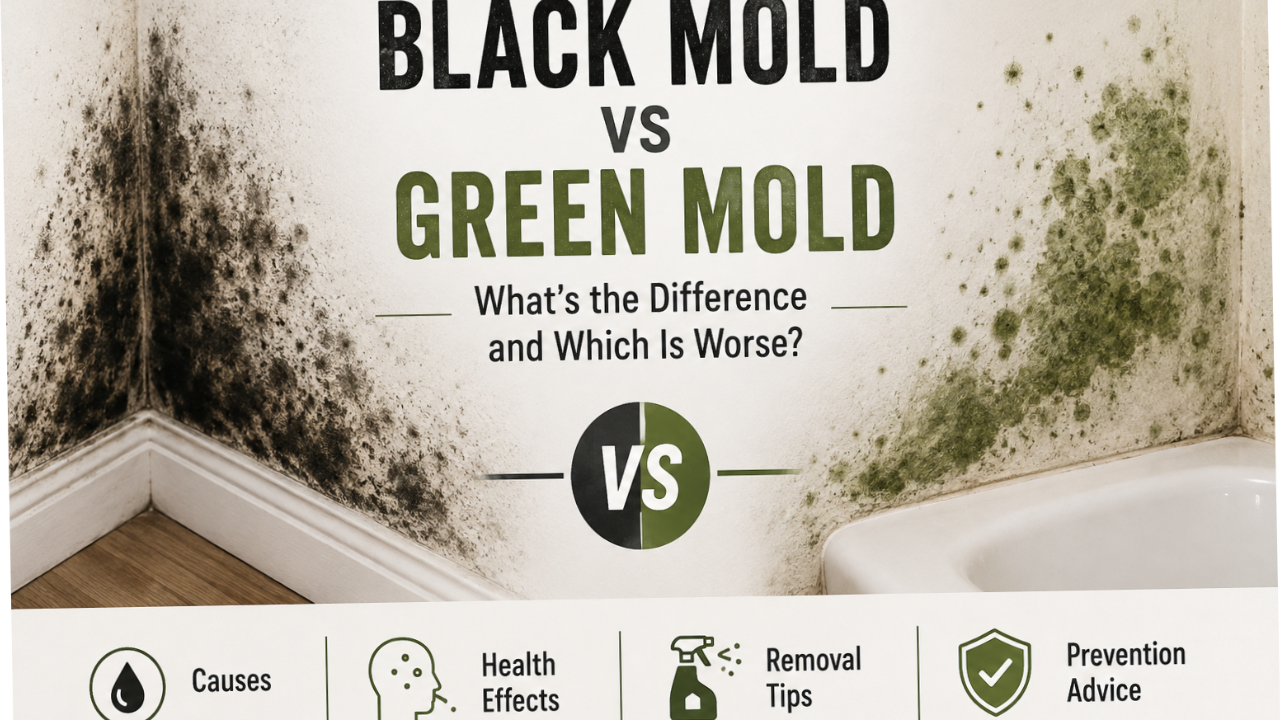
Black Mold vs Green Mold: What’s the Difference and Which Is Worse?
Aug 22, 2026If you have noticed black or green patches on a wall, ceiling, bathroom surface or other damp area, you may be wondering about the difference between black mold vs green mold. While the colour can look very different, it does not tell you exactly what type of mould you have or how dangerous it is.
Both black and green mould can grow when there is excess moisture. The most important step is to remove the mould and deal with the source of dampness, condensation or water damage.
Black Mold vs Green Mold: What’s the Difference?
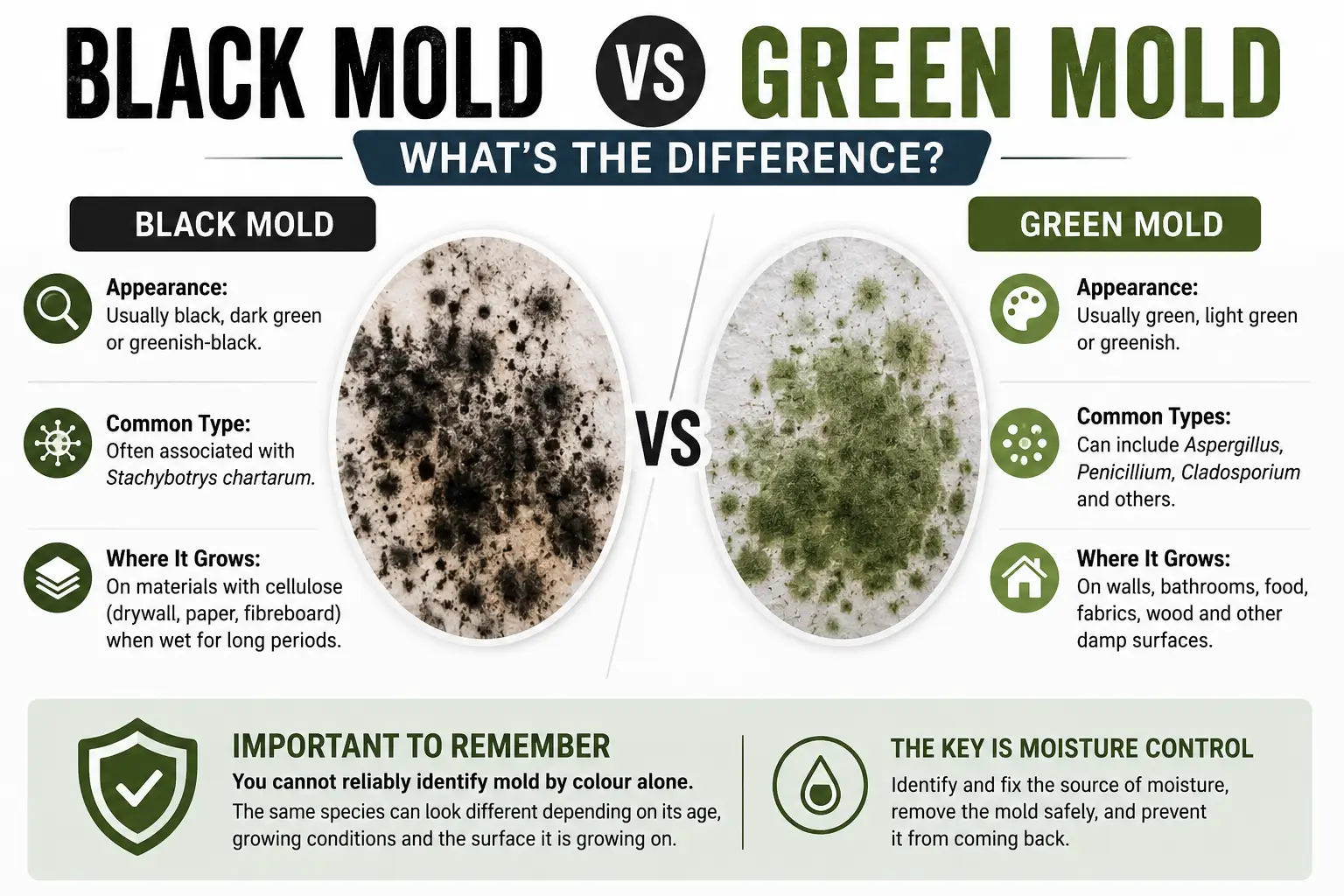
Black mould is usually dark green, black or greenish-black in appearance. One species commonly associated with the term “black mould” is Stachybotrys chartarum. It can grow on materials containing cellulose, such as drywall, paper and fibreboard, when they remain wet for a long time.
Green mould is a general description rather than one specific type of mould. Several species, including Aspergillus, Penicillium and Cladosporium, can appear green or greenish.
This means you cannot reliably identify mould by colour alone. The same species can look different depending on its age, growing conditions and the surface it is growing on.
Is Black Mold Worse Than Green Mold?
Black mould is often described as more dangerous than green mould, but this is an oversimplification.
The colour of mould does not necessarily indicate whether it is more or less dangerous. The CDC advises that mould should be dealt with regardless of its colour or type.
Some moulds can produce substances called mycotoxins, but simply seeing black mould does not mean you are being exposed to dangerous levels of toxins.
The important point is that both black and green mould can cause problems, particularly for people who are sensitive to mould.
Can Black and Green Mold Make You Sick?
Mould exposure can cause different reactions depending on the person and the amount of exposure.
Possible symptoms include:
- Sneezing and a runny or blocked nose
- Coughing
- Wheezing
- Red or itchy eyes
- Skin irritation
- Throat irritation
- Worsening asthma symptoms
People with mould allergies or asthma can be more sensitive to exposure.
This is why visible mould should not simply be painted over or ignored.
What Causes Black and Green Mold?
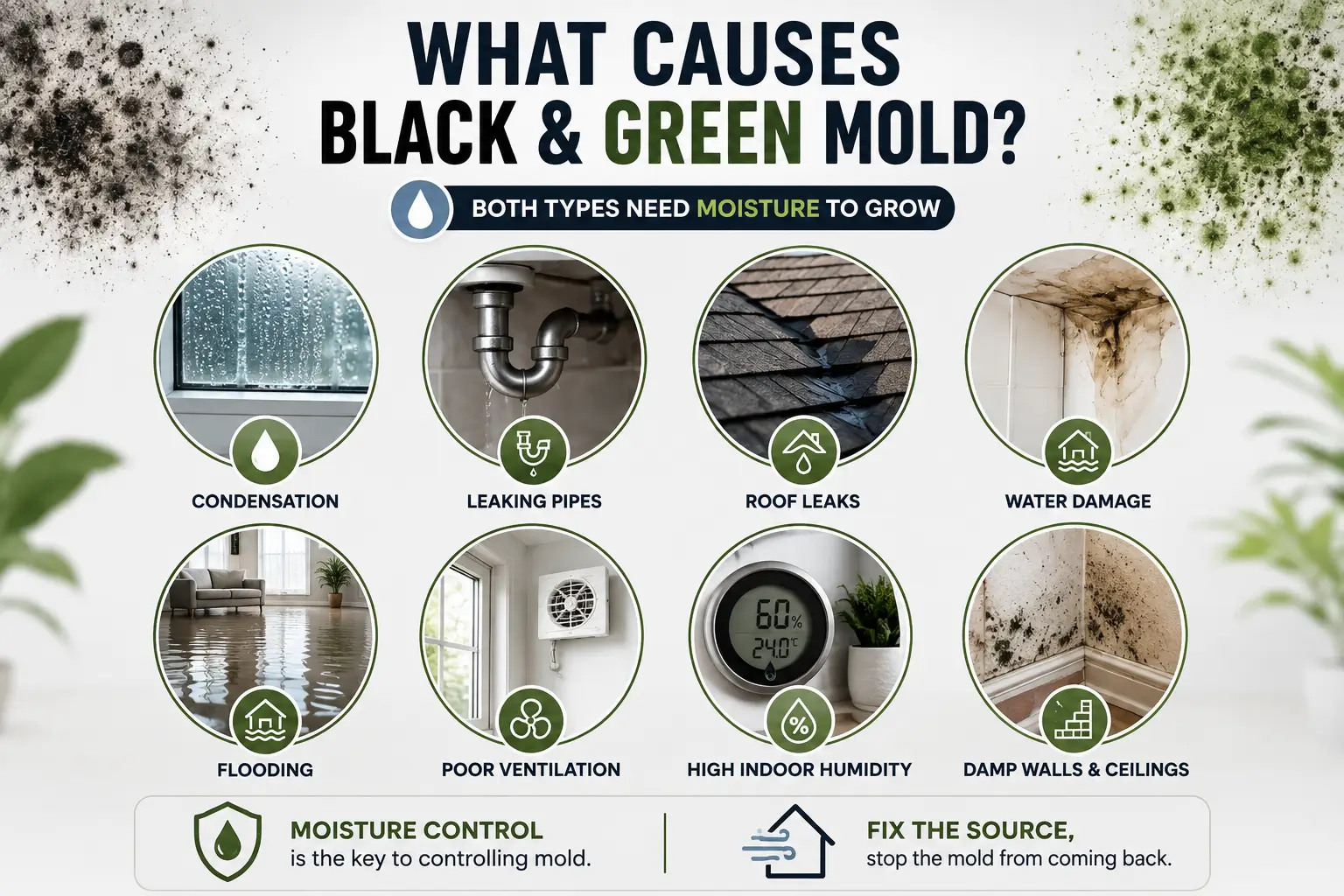
Both types need moisture to grow. Common causes include:
- Condensation
- Leaking pipes
- Roof leaks
- Water damage
- Flooding
- Poor ventilation
- High indoor humidity
- Damp walls and ceilings
Mould spores are naturally present in the environment. Problems start when those spores land on a damp surface and have the conditions they need to grow. The EPA states that moisture control is the key to controlling mould.
If you have recurring mould around windows or on walls, fixing the underlying moisture problem is just as important as cleaning the visible growth.
How to Remove Black and Green Mold
Small areas of mould on hard surfaces can often be cleaned using appropriate household cleaning products. However, you should take care not to spread mould spores during cleaning.
The CDC recommends protecting your eyes, skin and airways when cleaning mould and advises people who are more vulnerable to mould exposure not to carry out the cleanup themselves.
If the mould covers a large area, keeps returning, or is connected to significant water damage, professional help may be the better option.
For more information, see our guide on how to remove mould from walls and our guide to cleaning damp and mould.
How to Prevent Black and Green Mold
The best way to prevent mould is to control moisture.
Improve ventilation in bathrooms and kitchens, repair leaks quickly, keep condensation under control and make sure damp areas are properly dried. Using extractor fans and keeping air moving can also help reduce moisture levels.
If you want to learn more about the mould commonly known as black mould, you can read the Stachybotrys chartarum page on Wikipedia.
Black Mold vs Green Mold: The Bottom Line
When comparing black mold vs green mold, colour is not the best way to judge the risk. Black mould is not automatically more dangerous than green mould, and green mould should not be considered harmless.
Both can indicate an underlying moisture problem and may cause health effects in sensitive people. Rather than focusing only on the colour, identify the source of moisture, remove the mould safely and take steps to prevent it from coming back.
Schedule Your Indoor Air Quality Check Today
Worried about the air inside your home? Our professional indoor air quality inspections help identify hidden pollutants, allergens, and airflow issues so you can breathe cleaner, healthier air with confidence.