Will Vinegar Kill Mold? Here's What the Science Says. What Homeowners Need to Know.
Jun 24, 2026Vinegar is one of the most talked-about "natural" mold killers on the internet. It's cheap, it's already in your pantry, and it doesn't come with the harsh fumes or warning labels that bleach does. But does vinegar actually kill mold, or is it just another kitchen myth that homeowners keep repeating?
The short answer: yes, vinegar can kill mold, and there's real science behind it. But like any mold-killing method, it has limits. In this guide, we'll break down how vinegar works against mold, where it's most effective, how to use it safely, and when a DIY fix isn't enough to protect your home and health.
What Is Mold and Why Does It Grow?
Mold is a fungus that thrives wherever there's moisture, warmth, and a food source like wood, drywall, dust, or fabric. It spreads by releasing microscopic spores into the air, which settle on surfaces and begin to grow once they find enough humidity to take hold. Signs of mold in your house often show up first as discoloration, a musty smell, or unexplained allergy symptoms long before mold becomes visible.
Bathrooms, kitchens, basements, and crawl spaces are the most common trouble spots because they combine moisture with poor airflow. Once mold spores find a damp surface, they can establish a colony in as little as 24 to 48 hours.
Will Vinegar Kill Mold? What the Science Says
White distilled vinegar is roughly 5% acetic acid and 95% water. Acetic acid is mildly acidic, and that acidity is what makes vinegar effective against mold. It disrupts the cell membranes of mold spores, which interferes with their ability to grow and reproduce.
Research on acetic acid's antifungal properties shows it's effective against many common household mold species found on walls, fabric, and bathroom surfaces. It won't work identically on every strain, but for the mold most homeowners encounter, undiluted white vinegar is a legitimate, science-backed treatment, not just a folk remedy. It just works more gradually than stronger disinfectants, breaking down mold over time rather than killing it instantly on contact.
Vinegar vs. Bleach vs. Hydrogen Peroxide
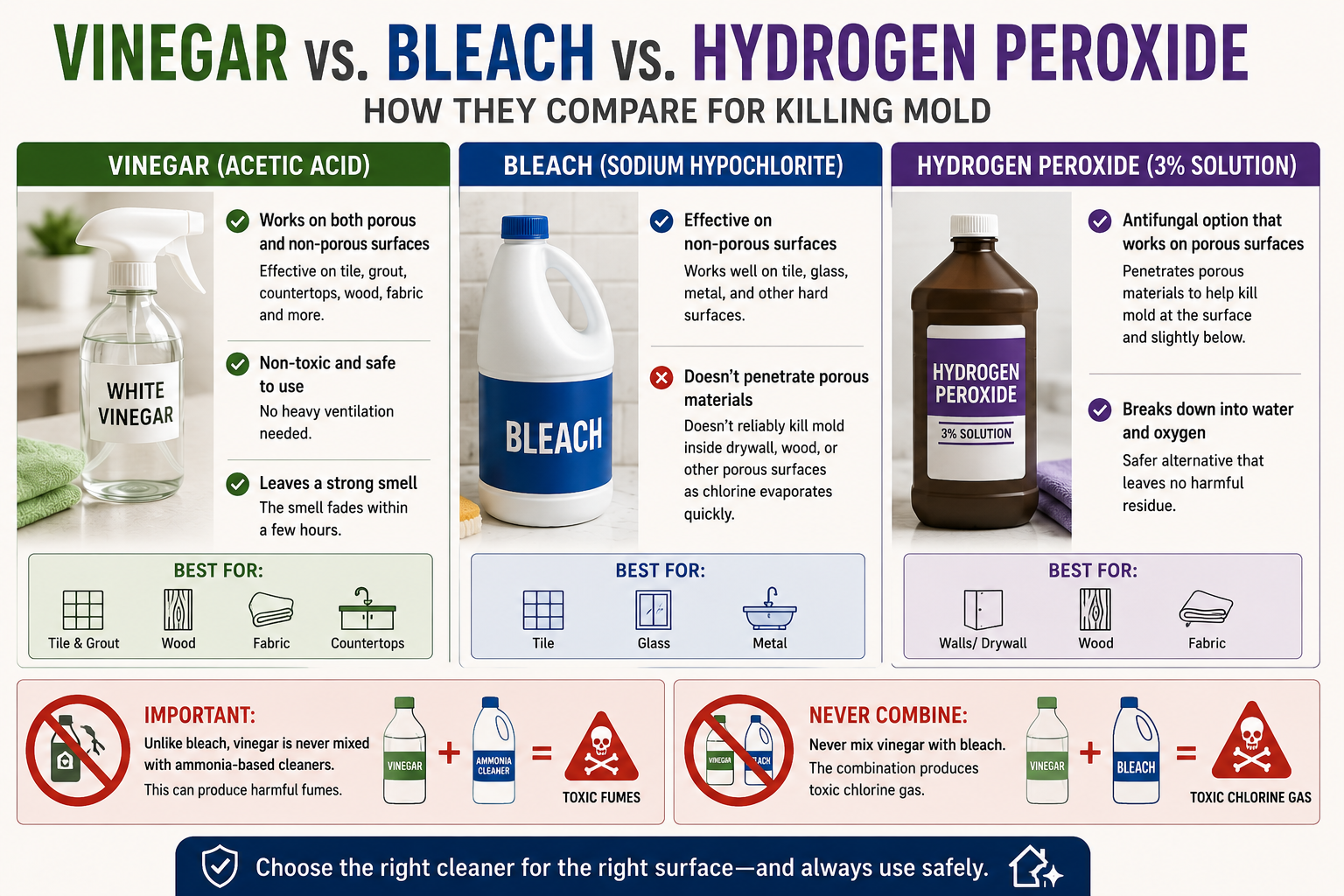
It helps to know how vinegar stacks up against the other common household mold treatments:
- Vinegar (acetic acid): Works on both porous and non-porous surfaces. Non-toxic and safe to use without heavy ventilation. Leaves a strong smell that fades within a few hours.
- Bleach (sodium hypochlorite): Effective on non-porous surfaces like tile and glass, but doesn't reliably kill mold growing inside porous materials like drywall or wood, since the chlorine evaporates before it can penetrate.
- Hydrogen peroxide (3% solution): An antifungal option that works on porous surfaces and breaks down into water and oxygen, making it another safer alternative to bleach.
Unlike bleach, vinegar is never mixed with ammonia-based cleaners, and you should never combine vinegar with bleach either, since the combination produces toxic chlorine gas.
How to Use Vinegar to Kill Mold Safely
If you're dealing with a small, surface-level mold problem, here's how to use vinegar correctly:
- Pour undiluted white vinegar into a spray bottle. Diluting it with water reduces its effectiveness, so skip the water for actual mold treatment.
- Spray the moldy surface generously and let it sit for at least 60 minutes.
- Scrub the area with a stiff brush or sponge to lift the mold from the surface.
- Wipe the area clean with a damp cloth and let it dry completely.
- Spray the area again and let it air dry without wiping, this leaves a residual layer of acetic acid that helps prevent regrowth.
Always wear gloves when handling mold directly, and ventilate the room while you work. While vinegar fumes aren't toxic, they can be irritating in an enclosed space.
Where Vinegar Works Best (and Where It Falls Short)
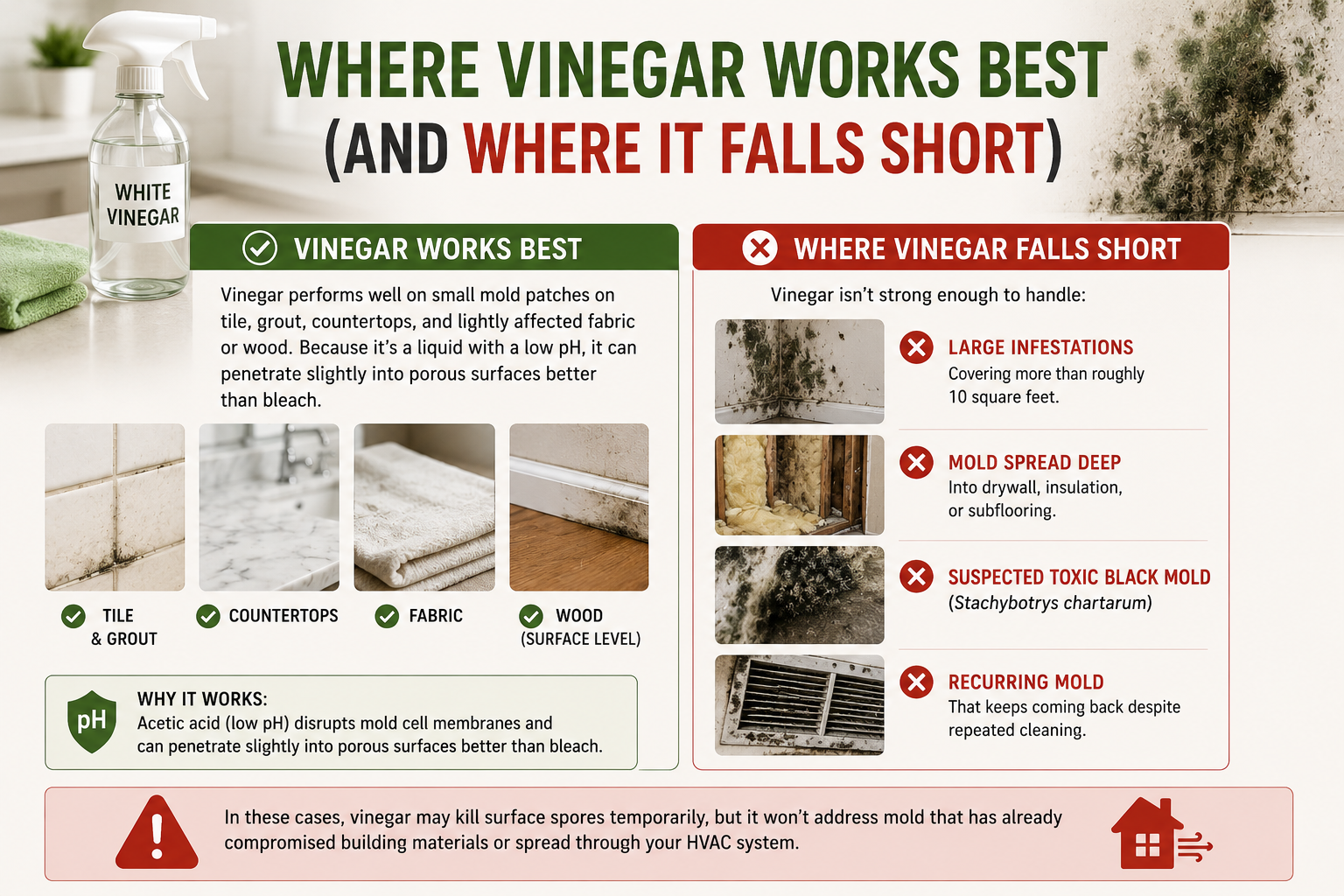
Vinegar performs well on small mold patches on tile, grout, countertops, and lightly affected fabric or wood. Because it's a liquid with a low pH, it can penetrate slightly into porous surfaces better than bleach.
That said, vinegar isn't strong enough to handle:
- Large infestations covering more than roughly 10 square feet
- Mold that has spread deep into drywall, insulation, or subflooring
- Suspected toxic black mold (Stachybotrys chartarum)
- Recurring mold that keeps coming back despite repeated cleaning
In these cases, vinegar may kill surface spores temporarily, but it won't address mold that has already compromised building materials or spread through your HVAC system.
When to Call a Professional Mold Remediation Service
If household members are experiencing ongoing respiratory symptoms, headaches, or allergy flare-ups, or if mold keeps returning no matter how often you clean, it's time to bring in a professional. A mold inspection can identify hidden moisture sources, test indoor air quality for airborne spore levels, and confirm whether remediation is needed beyond what surface cleaning can fix.
According to the overview of mold-related health issues, prolonged exposure to certain mold species has been associated with respiratory and allergic symptoms in sensitive individuals, which is one more reason not to rely on guesswork when an infestation is extensive.
Preventing Mold From Coming Back
Killing visible mold is only half the job. To stop it from returning:
- Keep indoor humidity below 50% with a dehumidifier or proper air conditioning
- Repair leaks and water damage as soon as they're discovered
- Run exhaust fans in bathrooms and kitchens during and after use
- Improve ventilation in attics, basements, and crawl spaces
- Dry any wet materials within 24–48 hours
Final Verdict: Should You Use Vinegar for Mold?
Vinegar is a genuinely effective, science-backed option for treating small, surface-level mold growth on both porous and non-porous materials. It's safer than bleach, gentle on most surfaces, and won't introduce harsh chemical fumes into your home. But it isn't a cure-all. For large infestations, recurring mold, or suspected black mold, vinegar alone won't solve the underlying problem.
If you're unsure how serious your mold situation is, the safest next step is a professional assessment. Our team can test your air, identify the source of moisture, and recommend the right solution for your home.
Schedule Your Indoor Air Quality Check Today
Worried about the air inside your home? Our professional indoor air quality inspections help identify hidden pollutants, allergens, and airflow issues so you can breathe cleaner, healthier air with confidence.