
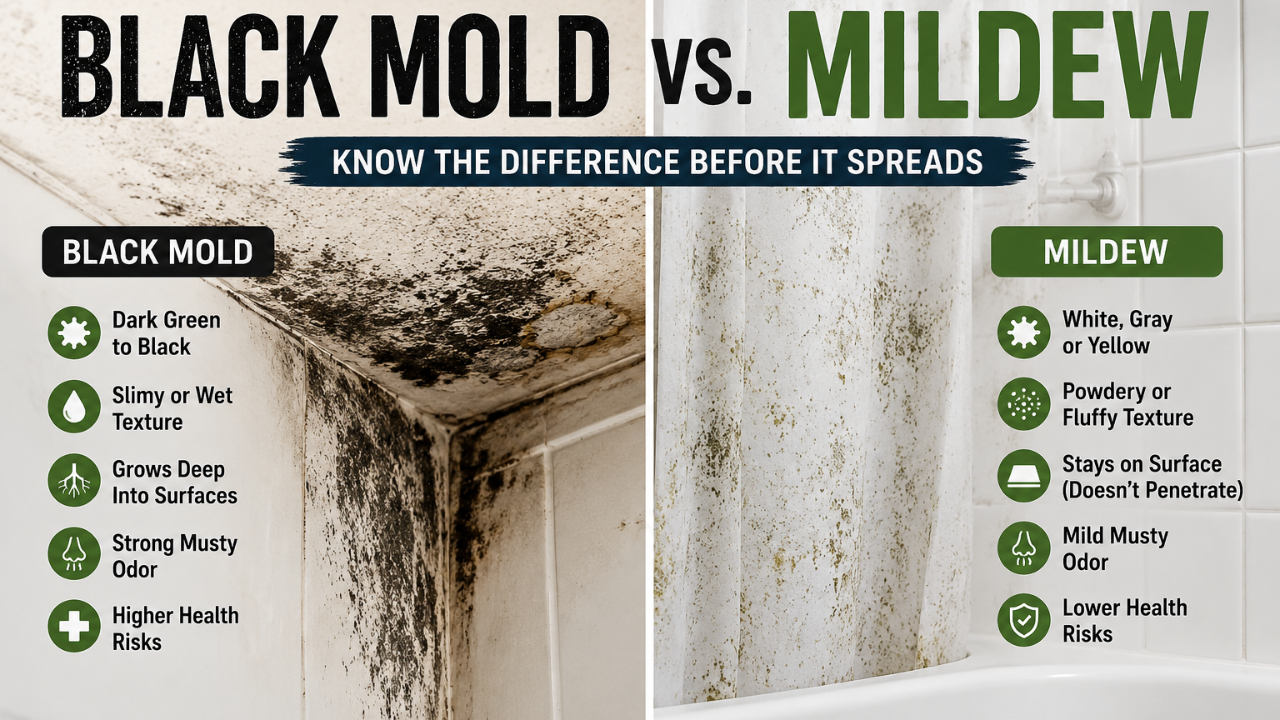
Black Mold vs. Mildew: How to Tell the Difference and What to Do
Jun 20, 2026You spot a dark patch on the bathroom ceiling or a musty smell coming from the basement. Is it mildew you can wipe away in five minutes, or black mold that needs serious attention?
Telling the two apart matters more than most homeowners realize. Mildew is usually a minor nuisance. Black mold can be a real health hazard that requires professional remediation. This guide breaks down exactly how to tell black mold and mildew apart, and what to do once you know which one you're dealing with.
What Is Mildew?
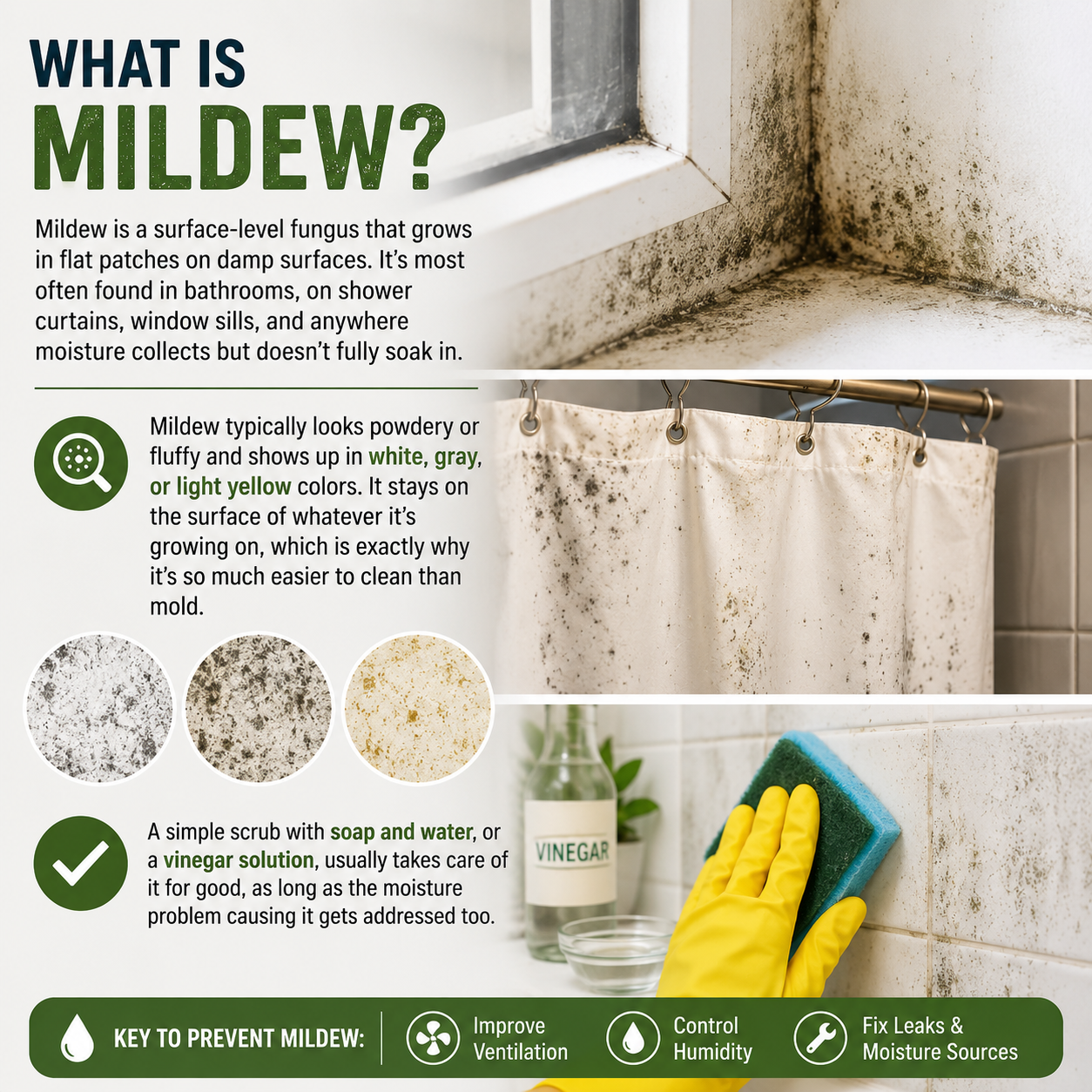
Mildew is a surface-level fungus that grows in flat patches on damp surfaces. It's most often found in bathrooms, on shower curtains, window sills, and anywhere moisture collects but doesn't fully soak in.
Mildew typically looks powdery or fluffy and shows up in white, gray, or light yellow colors. It stays on the surface of whatever it's growing on, which is exactly why it's so much easier to clean than mold. A simple scrub with soap and water, or a vinegar solution, usually takes care of it for good, as long as the moisture problem causing it gets addressed too.
What Is Black Mold?
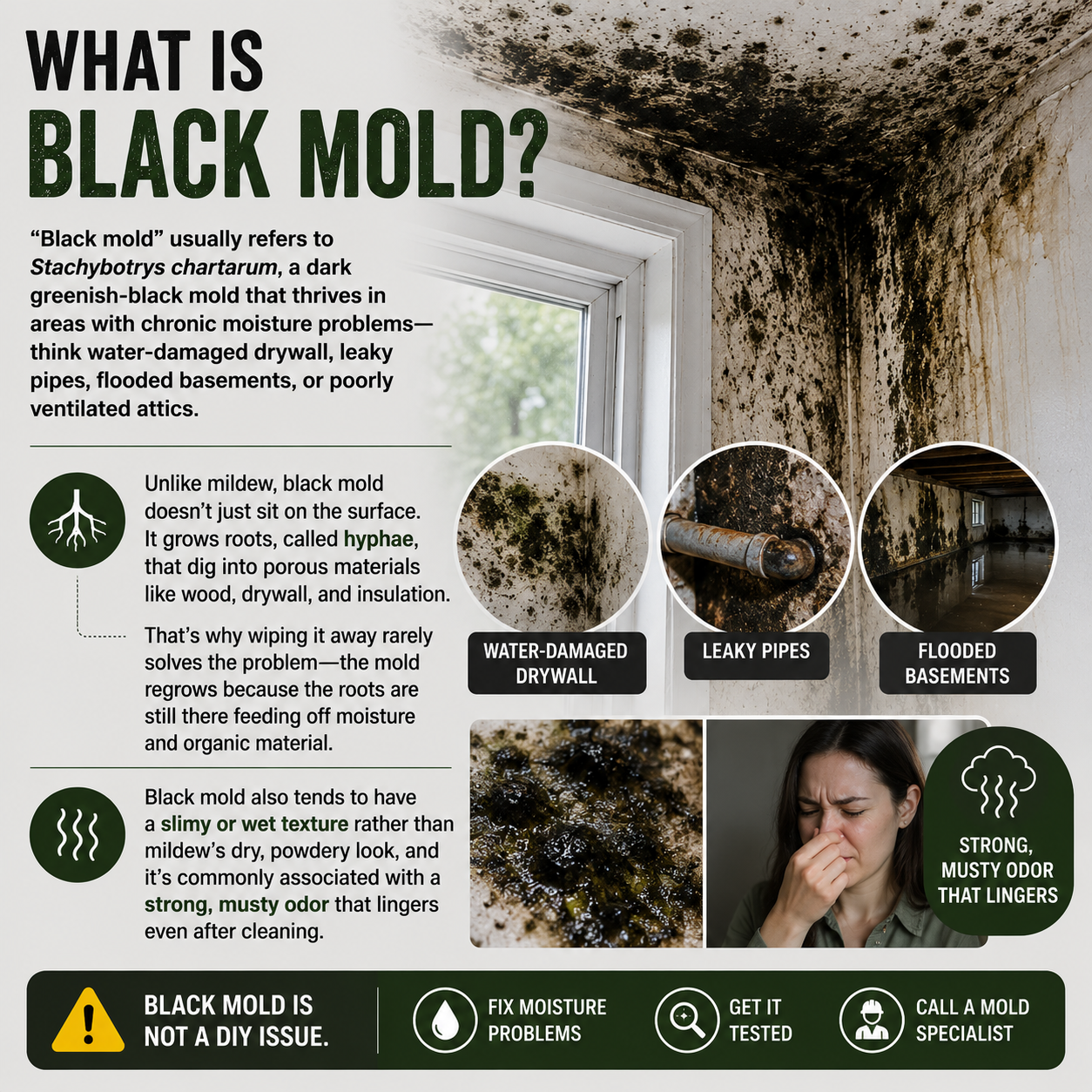
"Black mold" usually refers to Stachybotrys chartarum, a dark greenish-black mold that thrives in areas with chronic moisture problems think water-damaged drywall, leaky pipes, flooded basements, or poorly ventilated attics.
Unlike mildew, black mold doesn't just sit on the surface. It grows roots, called hyphae, that dig into porous materials like wood, drywall, and insulation. That's why wiping it away rarely solves the problem the mold regrows because the roots are still there feeding off moisture and organic material. Black mold also tends to have a slimy or wet texture rather than mildew's dry, powdery look, and it's commonly associated with a strong, musty odor that lingers even after cleaning.
Black Mold vs. Mildew: Key Differences
Color
Mildew tends to stay light usually white, gray, or a pale yellow. Black mold, on the other hand, shows up in much darker shades, ranging from dark green to black.
Texture
Mildew has a powdery or fluffy appearance sitting right on the surface, while black mold often looks slimy, wet, or fuzzy. This is one of the easiest ways to tell them apart at a glance.
Growth Pattern
Mildew stays on top of the surface it's growing on. Black mold penetrates porous materials, digging deeper into whatever it's attached to which is why it's so much harder to fully remove.
Common Locations
Mildew typically shows up in bathrooms, on shower curtains, and around window sills anywhere moisture collects on a surface. Black mold prefers drywall, wood framing, basements, and attics, where chronic moisture problems give it a deeper foothold.
Health Risk
Mildew is mostly a source of minor irritation. Black mold can pose more serious health concerns, especially with prolonged exposure.
How to Tell Them Apart at Home
If you're staring at a suspicious patch and not sure what you're looking at, a few quick checks can point you in the right direction:
Look at the texture. Mildew is flat and powdery. Black mold often looks raised, slimy, or fuzzy.
Check the color. Mildew stays in the white-to-yellow range. If what you're seeing is dark green, brown, or black and spreading, treat it as a potential mold problem.
Do the bleach test. Dab a small amount of diluted bleach on the spot. If it lightens significantly within a couple of minutes, it's likely mildew. Mold tends to keep its dark color since bleach struggles to penetrate the surface it's growing into.
Smell matters too. A musty, earthy smell that gets stronger over time especially near a known leak or water-damaged area is a strong indicator of mold rather than simple surface mildew. If you're unsure what you're smelling, our guide on what mold smells like breaks down the common scent patterns by type and severity.
Keep in mind that visual identification has limits. Several mold species look similar to the naked eye, and the only way to know for certain what you're dealing with is lab testing.
Health Risks: Mildew vs. Black Mold
Mildew exposure typically causes mild symptoms like sneezing, a stuffy nose, or minor skin irritation for sensitive individuals. It's unpleasant, but rarely dangerous.
Black mold is a different story, particularly with prolonged or heavy exposure. Reported symptoms range from respiratory irritation and headaches to more persistent issues in people with asthma, allergies, or compromised immune systems. Children, pets, and elderly family members tend to be more vulnerable we cover this in more detail in how mold affects children, pets, and elderly family members. If you've noticed unexplained symptoms at home, our article on warning signs of mold toxicity is worth a read.
What to Do If You Find Mildew
Mildew is usually manageable on your own:
- Ventilate the area open a window or run an exhaust fan.
- Scrub the spot with soap and water, or a vinegar-and-water solution.
- Dry the surface completely.
- Address the moisture source, whether that's a leaky faucet, poor airflow, or high indoor humidity.
If mildew keeps coming back despite cleaning, that's usually a sign of an underlying moisture issue that needs more attention.
What to Do If You Suspect Black Mold
Black mold is not a DIY situation in most cases, especially if the affected area is larger than a couple of square feet or located inside walls, ceilings, or HVAC systems.
- Don't disturb it. Scrubbing or sanding mold can release spores into the air, spreading the problem.
- Identify and fix the moisture source. Mold can't survive without water, so this step is non-negotiable.
- Avoid relying on bleach alone. Bleach often only kills mold on the surface and doesn't reach the roots. For a deeper look at why, see does bleach kill mold?
- Get it tested. Visual inspection alone can't confirm whether you're dealing with Stachybotrys or another species, and that distinction matters for both health risk and remediation approach.
When to Call a Professional
It's time to bring in a certified mold inspector or remediation specialist if:
- The affected area is larger than about 10 square feet
- You notice a strong, persistent musty smell with no visible source
- Mold keeps returning after cleaning
- Mold is inside HVAC systems, air ducts, or behind walls
- Anyone in the household has ongoing respiratory symptoms, headaches, or allergy flare-ups
- You're dealing with a recent water damage event and want to rule out hidden growth
Professional testing identifies exactly what species you're dealing with and how widespread the problem actually is information that's nearly impossible to get from a visual inspection alone.
Conclusion
Mildew and black mold may look similar at a glance, but they behave very differently. Mildew is a surface-level annoyance you can usually clean up yourself. Black mold digs into materials, can be tied to more serious health effects, and often requires professional remediation to fully resolve. When in doubt especially after water damage or with unexplained symptoms at home testing is the only way to know for sure what you're dealing with.
Schedule Your Indoor Air Quality Check Today
Worried about the air inside your home? Our professional indoor air quality inspections help identify hidden pollutants, allergens, and airflow issues so you can breathe cleaner, healthier air with confidence.