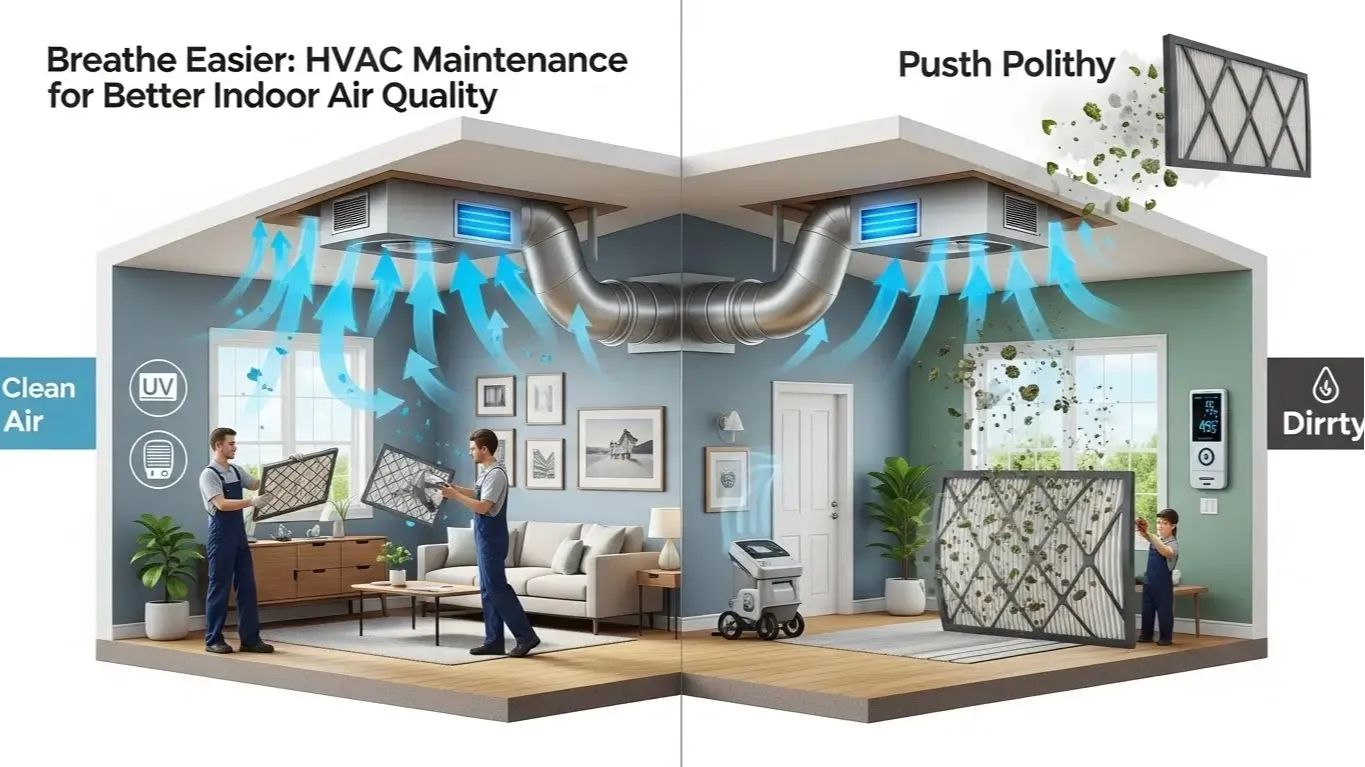
Breathe Easier: HVAC Maintenance Tips for Better Indoor Air Quality
Dec 01, 2025Meta Title: HVAC Maintenance Tips for Better Indoor Air Quality
Meta Description: Improve your home's air today. Discover actionable HVAC maintenance tips for better indoor air quality, from filter changes to duct cleaning.
You probably don’t think about the air inside your home until something feels off. Maybe it's a lingering dusty smell, consistent allergies that won't go away, or just a stuffy feeling you can't shake. While we often worry about pollution outside, the Environmental Protection Agency (EPA) suggests that indoor air can be two to five times more polluted than outdoor air.
Your Heating, Ventilation, and Air Conditioning (HVAC) system is the lungs of your home. When it’s healthy, your home breathes easy. When it’s clogged, dirty, or neglected, every breath you take could be filled with dust, pollen, and mold spores.
This guide breaks down essential HVAC maintenance strategies to help you reclaim your indoor environment. We will explore why indoor air quality matters, the critical role of air filters, and how professional check-ups can save your health and your wallet.
Why Your HVAC System Is Critical for Air Quality
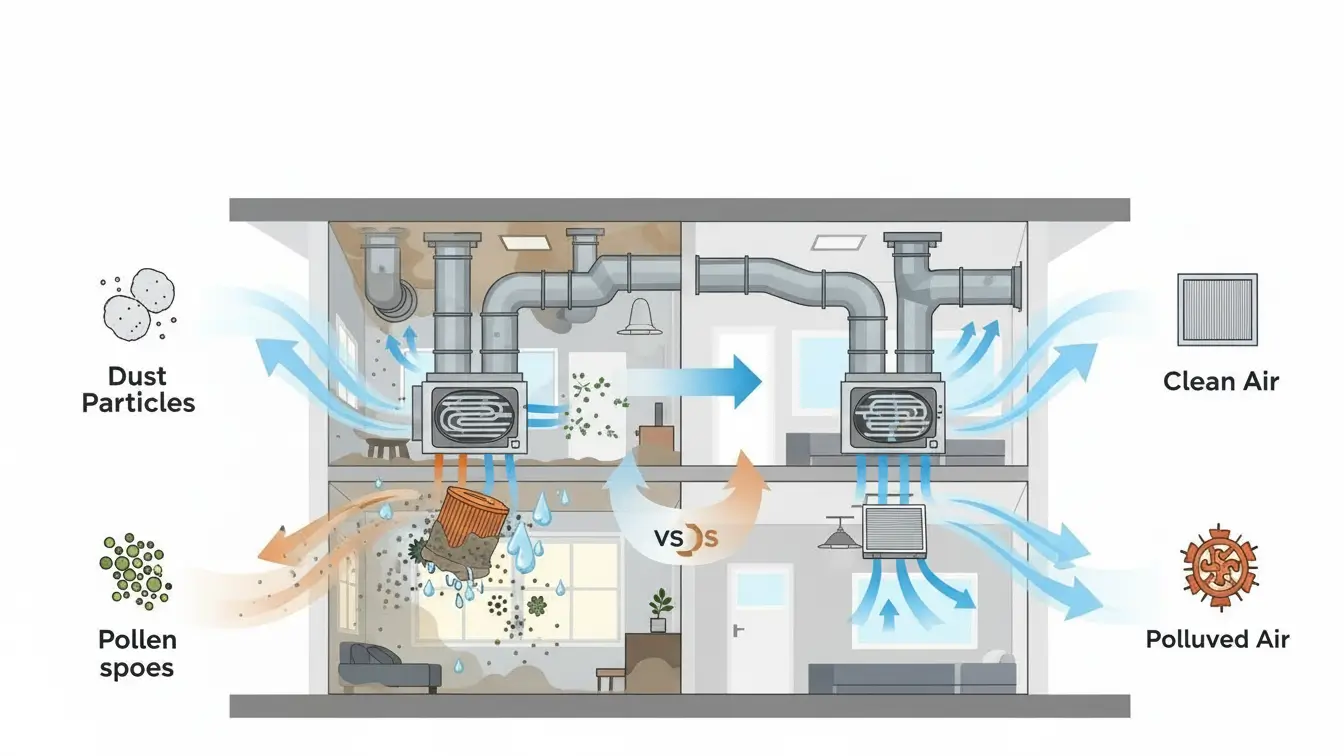
Your HVAC system does more than just keep you cool in July and warm in January. It is constantly circulating air throughout your living space. Every time the fan kicks on, it pulls air from your rooms, passes it through filters and coils, and pushes it back out.
If that system is dirty, it becomes a distribution center for pollutants. Dust settles in the ducts, moisture builds up on the coils, and filters get clogged. Instead of cleaning the air, a neglected system recirculates contaminants. Proper maintenance ensures your system acts as a shield rather than a source of pollution.
The First Line of Defense: Changing Your Air Filters
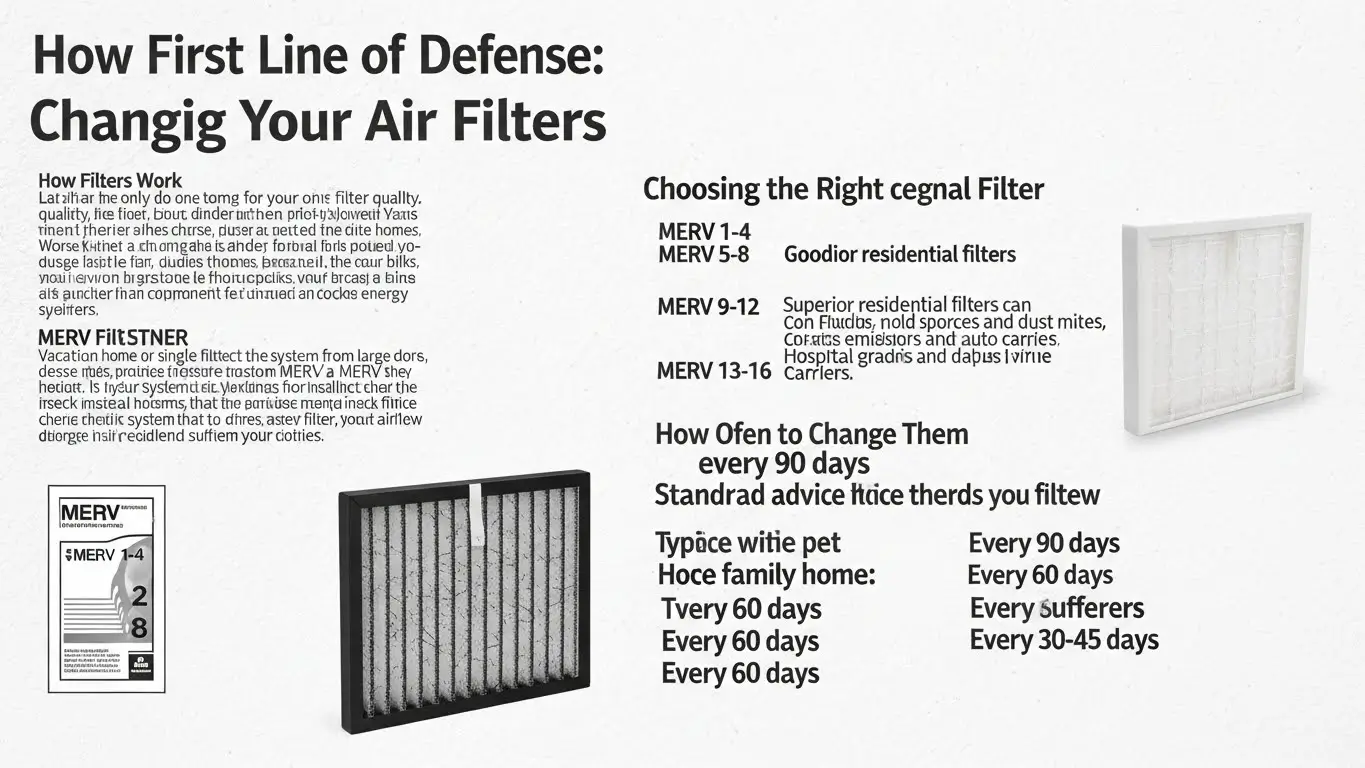
If you only do one thing for your indoor air quality, let it be this: change your air filters regularly. It sounds simple, yet it is the most commonly overlooked maintenance task.
How Filters Work
Filters are designed to trap particles like dust, pet dander, and pollen before they enter the blower fan and travel through your ducts. When a filter is full, it can no longer trap these particles effectively. Worse, a clogged filter forces your system to work harder to pull air through, which can damage the equipment and skyrocket your energy bills.
Choosing the Right Filter
Not all filters are created equal. They are rated by their Minimum Efficiency Reporting Value (MERV).
- MERV 1-4: Basic fiberglass filters. They protect the system from large debris but do little for air quality.
- MERV 5-8: Good for most homes. These capture dust, mold spores, and dust mites.
- MERV 9-12: Superior residential filters. These can trap finer particles like pet dander and auto emissions.
- MERV 13-16: Hospital-grade filtration. These capture bacteria and virus carriers but may restrict airflow too much for standard residential systems.
Check your system’s manual to see the maximum MERV rating it can handle. Installing a filter that is too dense can restrict airflow and damage the motor.
How Often to Change Them?
The standard advice is every 90 days, but that varies based on your lifestyle:
- Vacation home or single occupant without pets: Every 6-12 months.
- Typical family home: Every 90 days.
- Home with one pet: Every 60 days.
- Home with multiple pets or allergy sufferers: Every 30-45 days.
Don't Ignore the Ductwork
Your air ducts are the highways for airflow in your home. Over time, these highways can develop traffic jams of dust, debris, and even pest infestations.
Signs You Need Duct Cleaning
You don’t need your ducts cleaned every year, but you should inspect them if you notice:
- Visible mold growth inside hard surface ducts or on other components of your heating and cooling system.
- Vermin infestations (rodents or insects) in the ducts.
- Excessive dust coming out of your supply registers.
- Musty odors when the air conditioning kicks on.
Sealing Leaky Ducts
Leaks in your ductwork can pull air from dirty places—like your attic, crawlspace, or garage—and mix it with your conditioned air. This introduces fumes, insulation fibers, and humidity into your home. Sealing these leaks improves air quality and significantly boosts energy efficiency because you aren't losing conditioned air to unconditioned spaces.
Manage Humidity Levels
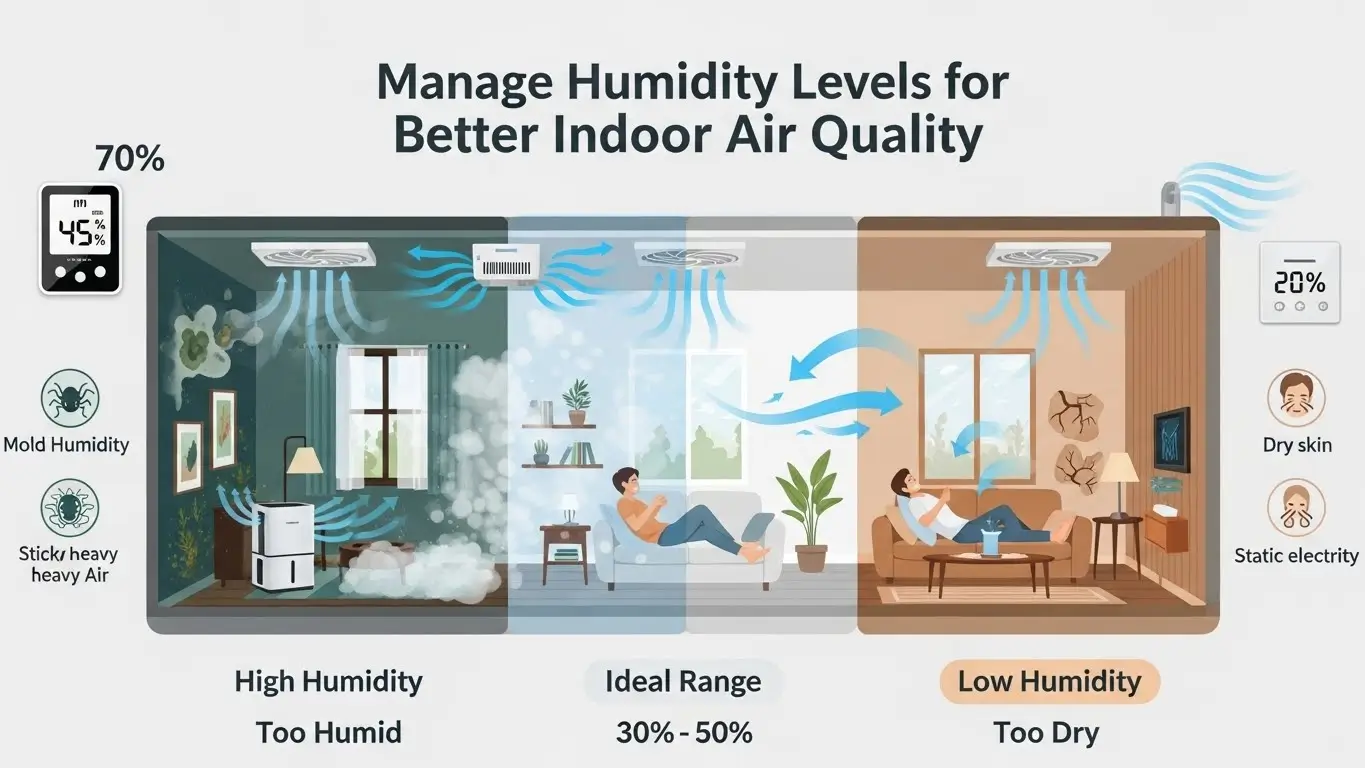
HVAC maintenance isn't just about temperature; it's about humidity control. High humidity encourages the growth of mold and dust mites, two major allergens.
Your AC unit naturally dehumidifies the air as it cools. If your system is too large for your home (short-cycling) or isn't maintained properly, it won't run long enough to remove moisture effectively.
The Ideal Humidity Range
Aim to keep indoor humidity between 30% and 50%.
- If it's too high: Mold thrives, and the air feels sticky.
- If it's too low: Viruses can spread more easily, and wood furniture may crack.
If your current HVAC system struggles to maintain these levels, you might consider installing a whole-home dehumidifier or humidifier, depending on your climate.
The Role of Professional Maintenance
While changing air filters is a great DIY task, comprehensive HVAC maintenance requires a professional touch. Scheduling a tune-up twice a year (once for heating, once for cooling) ensures every component is contributing to clean air rather than hindering it.
What a Pro Does That You Can't
A certified technician will:
- Check Refrigerant Levels: Incorrect levels can cause the coils to freeze, leading to moisture problems.
- Clean the Blower Components: The blower fan can get caked with dust, reducing its ability to circulate air.
- Inspect Electrical Connections: Prevents fire hazards and ensures the system runs safely.
- Clear the Condensate Drain: A clogged drain can cause water damage and mold growth.
- Calibrate the Thermostat: Ensures your system isn't overworking or underperforming.
Regular professional maintenance extends the life of your unit and ensures that the air circulating in your home is as clean as possible.
Advanced Air Quality Solutions
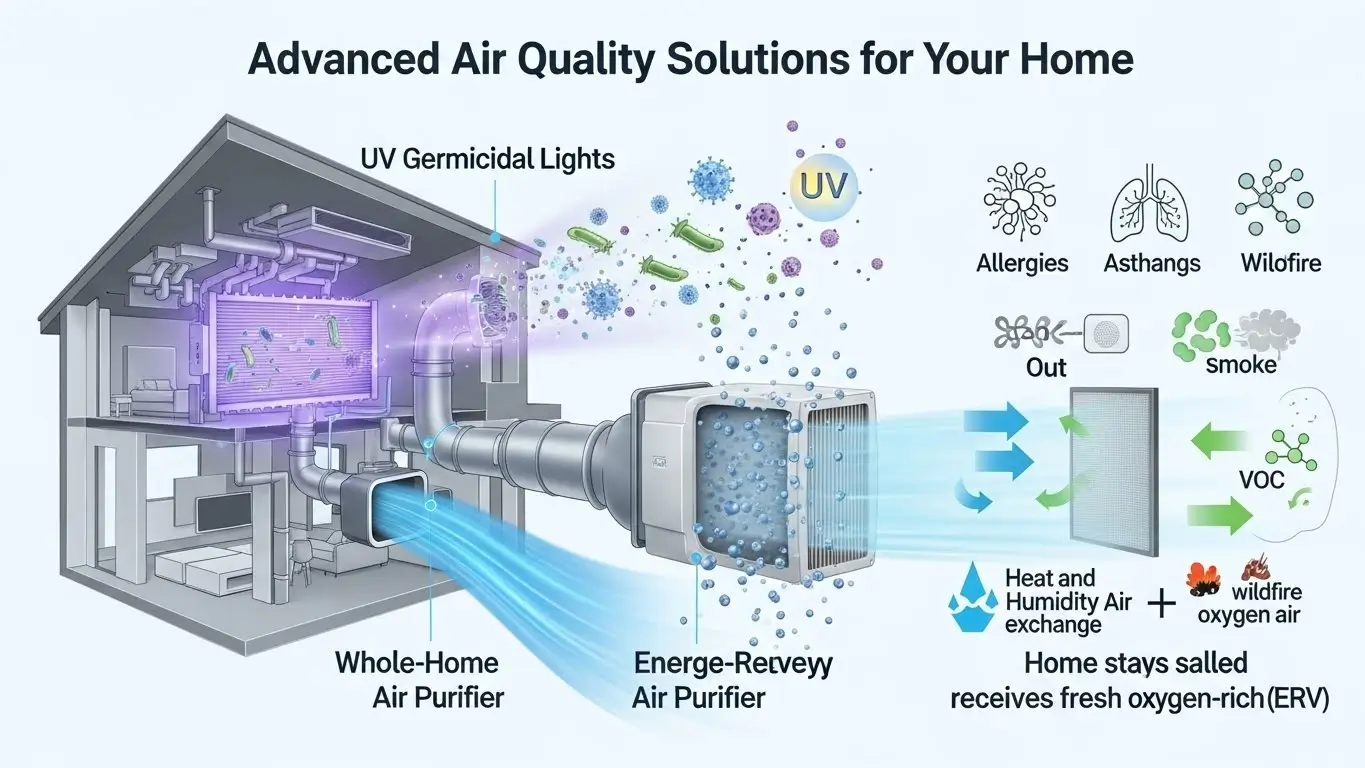
If you have severe allergies, asthma, or live in an area with high pollution or wildfire smoke, standard maintenance might not be enough. You can integrate advanced solutions directly into your HVAC system.
UV Germicidal Lights
These lights are installed inside your ductwork or near the evaporator coil. They use ultraviolet light to kill bacteria, viruses, and mold spores that pass through the system. They are particularly effective at keeping the coil free of organic growth.
Air Purifiers
Whole-home air purifiers attach to your HVAC system and provide filtration far superior to standard air filters. They can capture microscopic particles, smoke, and even volatile organic compounds (VOCs) from household cleaners and off-gassing furniture.
Energy Recovery Ventilators (ERVs)
Modern homes are built tight to save energy, but this traps stale air inside. An ERV swaps stale indoor air with fresh outdoor air but transfers the heat (and humidity) energy in the process. This gives you fresh air without the energy penalty of opening a window in the middle of summer or winter.
Actionable Checklist for Homeowners
Ready to improve your air quality? Here is a quick checklist to get you started:
- Check your filter monthly. Even if it says it lasts 90 days, check it every 30. Change it if it looks dirty.
- Clear the area around outdoor units. Keep leaves, grass, and debris at least two feet away to ensure proper airflow.
- Vacuum vents and registers. Don't let dust accumulate on the grilles where air enters your room.
- Schedule a tune-up. If you haven't seen a technician in over a year, call one today.
- Monitor humidity. Buy a cheap hygrometer to track indoor moisture levels.
Conclusion
Your home should be a sanctuary, not a source of sickness. By prioritizing HVAC maintenance, you are investing in the health and comfort of everyone who walks through your door.
Better indoor air quality starts with small habits—like swapping out those air filters—and extends to professional care and smart upgrades. Don't wait for a breakdown or a flare-up of allergies to pay attention to your system. Start your maintenance routine today and breathe easier tomorrow.
Schedule Your Indoor Air Quality Check Today
Worried about the air inside your home? Our professional indoor air quality inspections help identify hidden pollutants, allergens, and airflow issues so you can breathe cleaner, healthier air with confidence.